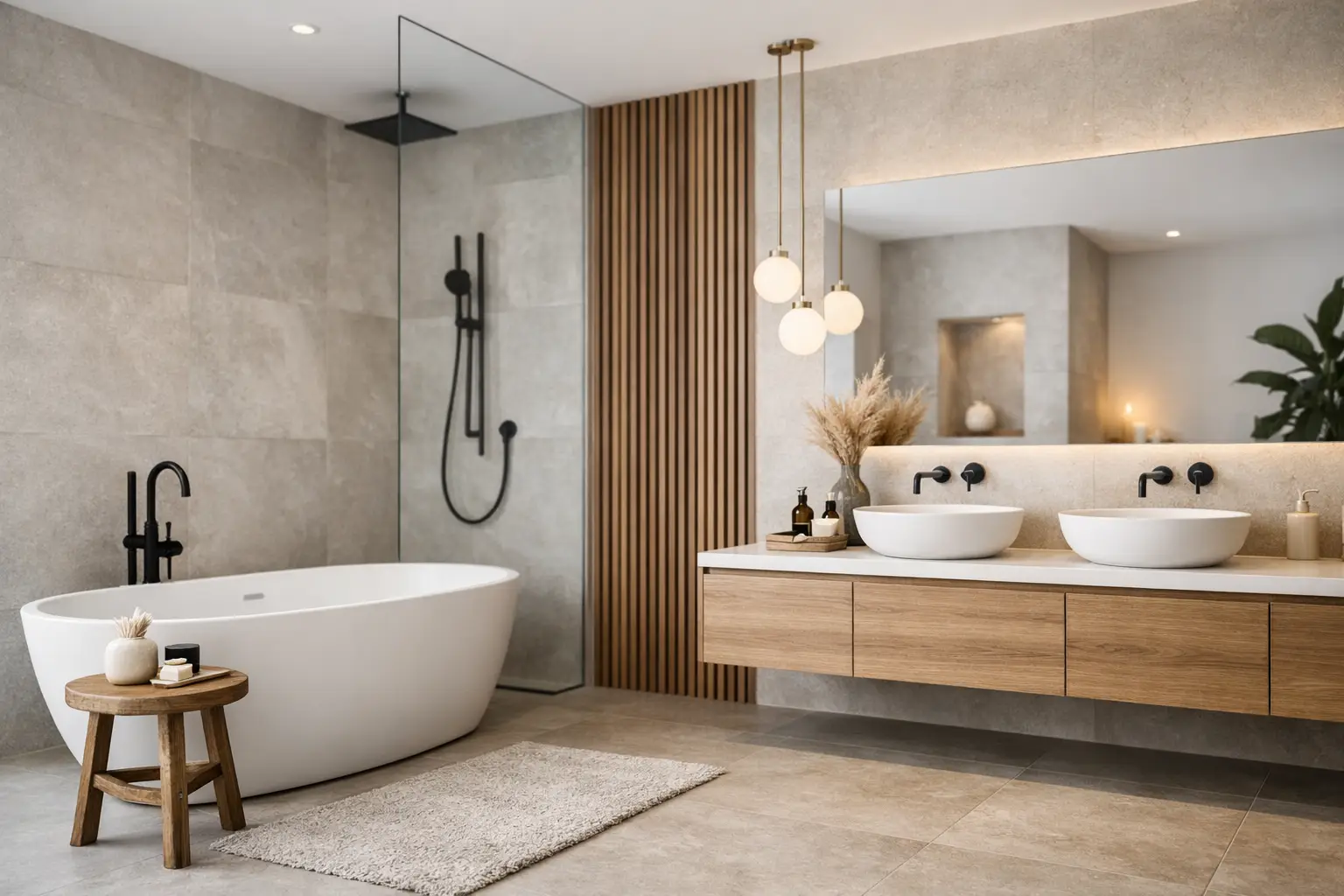
A bathroom can look sharp in a showroom and still be a poor fit for everyday use. That is the gap many homeowners notice when they start planning a renovation. The best modern bathroom design trends are not just about clean lines and new finishes. They are about making the room easier to use, easier to clean and better built for the long term.
For most homes, that means balancing style with practical trade work. A floating vanity might look great, but it also needs the right wall support. A larger walk-in shower can open the room up, but only if the drainage, waterproofing and tile falls are done properly. Good design starts with looks, but it has to finish with workmanship.
Modern bathroom design trends are getting more practical
A few years ago, a lot of bathroom inspiration leaned heavily on luxury hotel styling. It looked impressive, but it did not always suit family homes in Melbourne’s western suburbs. What we are seeing now is a more grounded approach. Homeowners still want a modern finish, but they also want better storage, stronger materials and layouts that make sense for daily life.
That shift matters because bathrooms get hard use. Steam, water, cleaning products and constant foot traffic all test the quality of every surface and fixture. Trends that last are the ones that work well under pressure, not just the ones that photograph nicely.
One of the biggest changes is the move toward simpler spaces with less visual clutter. That does not mean a bathroom has to feel cold or plain. It means every choice has a job to do. Vanities provide storage without making the room feel bulky. Wall-hung fixtures make cleaning easier. Larger tiles reduce grout lines. Recessed niches keep shower products off the floor and out of the way.
Layout first, finishes second
When people think about updating a bathroom, they often start with tile colours, tapware or mirror styles. In practice, the layout usually has the biggest impact. A modern bathroom that feels spacious and easy to move through will generally perform better than one with expensive finishes but awkward planning.
Walk-in showers are a clear example. They remain one of the strongest current trends because they suit both style and function. Without a bulky shower base or framed enclosure, the room feels more open. They are also easier to access, which makes sense for growing families and homeowners planning to stay in the property long term.
That said, walk-in showers are not a one-size-fits-all answer. In a compact bathroom, splash control becomes more important. Tile selection, floor grading, drainage placement and screen size all need to be thought through early. If those details are rushed, the bathroom may look modern but become frustrating to use.
Floating vanities are another layout-driven trend that continues to hold up. They create a cleaner sightline across the floor and can make smaller bathrooms appear larger. They also allow room for under-vanity lighting or easier mopping. The trade-off is that storage needs to be designed properly. If the vanity is too shallow or too minimal, the room can end up looking tidy while lacking enough usable cupboard space.
Natural finishes with a cleaner edge
Modern bathrooms have moved away from overly glossy, high-contrast styling. The stronger trend now is warmer and more restrained. Timber-look vanities, stone-inspired tiles, brushed metal tapware and softer neutral tones are being used to make bathrooms feel calmer and less sterile.
This does not mean everything has to be beige. It means the palette is more considered. Off-whites, warm greys, muted greens and earthy tones are working well because they add character without dating too quickly. For homeowners who want a bathroom that still looks current in five or ten years, that is usually a smarter direction than chasing bold novelty finishes.
Texture is also doing more of the heavy lifting than colour. Matte tiles, fluted vanity panels and subtle feature walls can create interest without making the room feel busy. Used well, these details give a bathroom a modern feel while still keeping the overall finish clean and easy to live with.
Lighting is now part of the design, not an afterthought
One of the more useful modern bathroom design trends is the way lighting is being treated as part of the build rather than a final accessory. A single ceiling light in the middle of the room is rarely enough, especially around mirrors and vanity areas.
Layered lighting gives better results. Mirror lighting helps with daily tasks like shaving or makeup. Softer ambient lighting can make the room feel more comfortable at night. Feature lighting under a floating vanity or inside a niche can add a high-end finish without overdoing it.
The key is keeping it practical. Bathrooms need proper moisture-rated fittings in the right zones, and the lighting plan should match how the room will actually be used. A stylish fitting means very little if it throws poor light across the vanity or creates shadows where you need clarity.
Storage that disappears into the room
A modern bathroom should not feel crowded by toiletries, spare towels and cleaning products. That is why integrated storage has become one of the more valuable design shifts. The best storage is often the storage you barely notice.
Shaving cabinets remain popular because they combine mirror space and concealed storage in one element. Custom vanities are also gaining ground because they can be sized to the room rather than forced to fit. In many renovations, that makes better use of wall space and helps avoid dead corners.
Recessed shower niches are now close to standard in many quality builds, and for good reason. They keep products contained, reduce clutter and look far neater than wire baskets or plastic shelves. Like most good bathroom features, though, they only work when the waterproofing and tiling are done correctly around them.
Bigger tiles, finer detail
Tile trends have also shifted toward larger formats and cleaner lines. Larger wall and floor tiles can help a bathroom feel more open, and they cut down the amount of grout that needs cleaning over time. That is a practical win as much as a visual one.
Rectified tiles with tighter joints are often used to create that sharper modern finish, but they demand accurate prep work. If the substrate is not level or the setting out is poor, mistakes show quickly. This is where quality installation matters more than the tile itself.
There is also growing interest in feature tiling that is more controlled than flashy. Instead of covering every wall with a statement tile, many homeowners are choosing one focal area, such as the shower wall or vanity splashback. That approach often gives a better result because it adds personality without overwhelming the room.
Black fixtures are no longer the only modern option
For a while, matte black tapware and fittings were the default modern choice. They still have their place, but they are no longer the only look people want. Brushed nickel, gunmetal, brushed brass and chrome are all being used depending on the style of the home and the level of upkeep the owner is comfortable with.
This is where trend and practicality meet again. Some finishes show water spots more than others. Some suit warm-toned bathrooms better than cool-toned ones. A finish that looks right in a display may not be the easiest one to live with in a busy household.
Consistency usually matters more than chasing a particular finish. When the tapware, shower fittings, handles, mirrors and lighting all work together, the bathroom feels considered. When too many finishes compete, even an expensive renovation can feel disjointed.
Modern design still depends on the hidden work
The visible parts of a bathroom get most of the attention, but the long-term result depends on what sits behind them. Waterproofing, plumbing rough-in, drainage, ventilation and substrate preparation are not design trends, but they are what allow a modern bathroom to stay in good condition.
That is especially important in full renovations where old bathrooms may already have movement, moisture damage or outdated plumbing. A fresh finish over poor preparation is a short-term fix. A proper renovation deals with the cause, not just the appearance.
For homeowners planning work in Caroline Springs and surrounding western suburbs, that usually means choosing a renovation team that can handle both the design intent and the trade-critical parts of the job. BP Building & Maintenance sees this often – clients want a bathroom that looks current, but they also want confidence that the waterproofing, plumbing and fit-off have been done properly the first time.
What is worth following and what is easy to overdo
Not every trend deserves to be copied straight into a home. Some ideas have real staying power because they improve function, while others can date quickly or create more maintenance than expected. The safest modern choices tend to be the ones that improve layout, light, storage and durability.
If you are planning a bathroom renovation, it is worth asking a simple question before locking anything in: will this still work when the novelty wears off? A well-built walk-in shower, practical vanity storage, good lighting and quality tiling usually pass that test. Overly complicated shapes, trendy colours used everywhere or fixtures chosen only for appearance often do not.
A modern bathroom should feel current, but it should also feel easy to live with. That is usually the difference between a renovation that still looks good in photos and one that still works well years later.