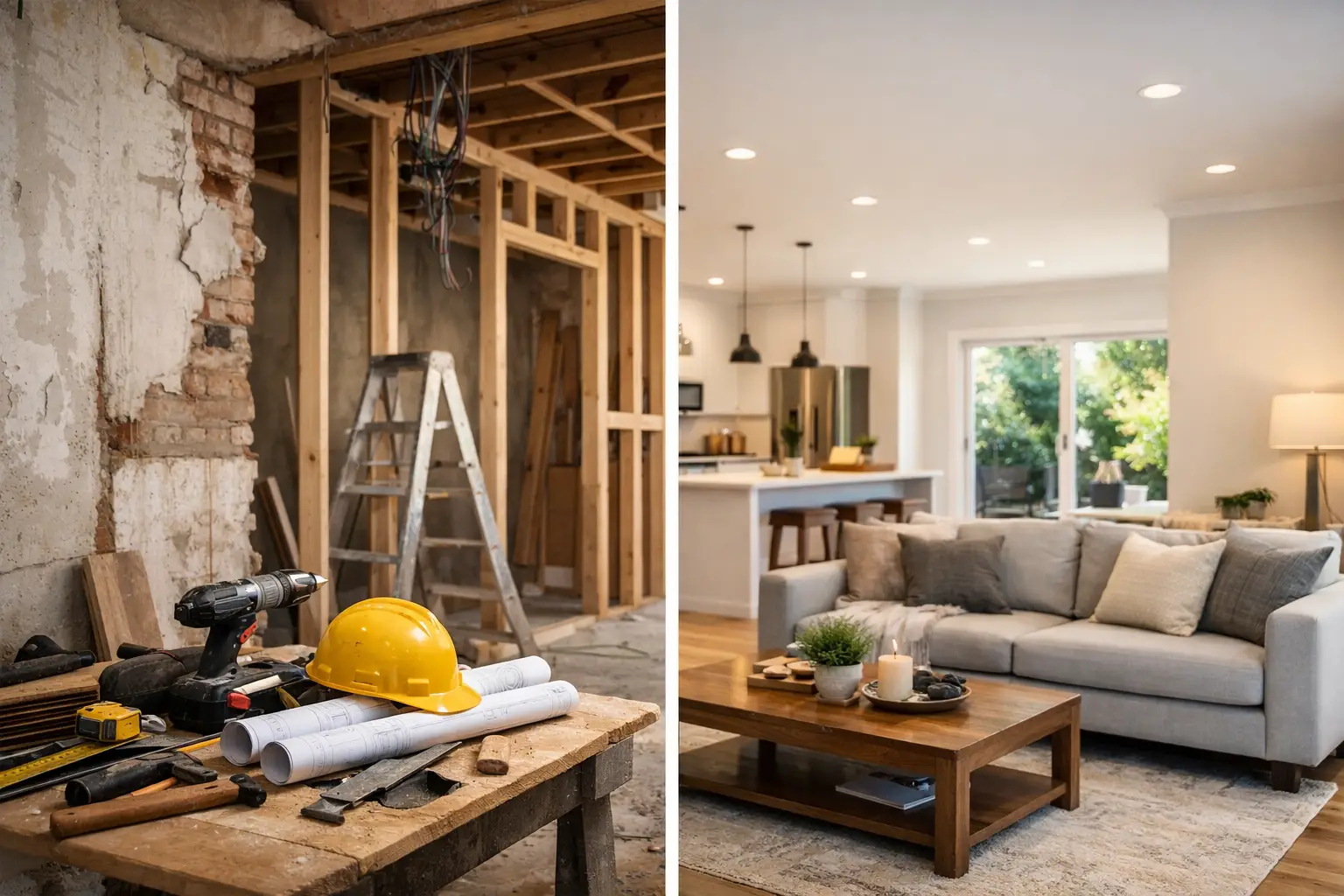
Most renovation problems do not start with tiles, tapware or paint colours. They start when the work behind the walls is rushed, trades are poorly coordinated, or no one takes real ownership of the job. That is why complete home renovations need to be planned and delivered properly from day one, especially in bathrooms, laundries and kitchens where water, drainage and compliance matter most.
For many homeowners, a full renovation is not about chasing trends. It is about fixing layouts that no longer work, replacing tired finishes, improving storage, and making sure the home stands up to daily use. If you are investing serious money into your property, cosmetic improvements alone are not enough. The structure, waterproofing, plumbing, fit-off and finish all need to line up.
What complete home renovations actually involve
A true renovation is more than swapping a vanity or retiling a floor. In practical terms, complete home renovations usually mean stripping the space back, assessing what is underneath, and rebuilding it to a standard that looks better and performs properly.
In wet areas, that can include demolition, plumbing adjustments, new waterproofing, floor preparation, wall and floor tiling, shower construction, fixture installation, cabinetry and final fit-off. In kitchens and laundries, it often extends to cabinetry, benchtops, splashbacks, appliance integration and layout improvements. The exact scope depends on the age of the home, the existing condition, and how far you want to go.
This is where a lot of people get caught. A renovation can look straightforward on the surface, but older homes often hide uneven floors, damaged substrates, ageing pipework or previous poor workmanship. Once the strip-out starts, the real condition of the room becomes clear.
Why trade-qualified work matters more than the showroom choices
It is easy to get pulled into the visible side of a renovation. Tile selections, brushed brass fittings and custom joinery all have their place. But the quality of the finished result depends heavily on the parts you do not see once the job is complete.
Waterproofing is a good example. If it is not carried out correctly, the nicest bathroom in the street can turn into an expensive problem. The same applies to drainage falls, plumbing rough-in, substrate preparation and shower construction. These are not details to leave to guesswork.
A proper renovation team should be able to manage the technical side without cutting corners. That means licensed plumbing where required, qualified carpentry for structural and framing work, compliant waterproofing, and attention to how each trade affects the next. When that coordination is missing, delays and defects tend to follow.
For homeowners, the benefit is simple. You want one clear plan, one standard of workmanship, and a finished space that lasts. That matters even more in family homes where the bathroom or laundry gets used hard every day.
Complete home renovations in wet areas need a different level of care
Bathrooms, laundries and kitchens are not like repainting a bedroom or updating a hallway. These spaces deal with moisture, drainage, ventilation, movement and constant use. A renovation in these areas has to perform, not just present well on handover day.
Bathrooms are usually the most technical room in the house for their size. There is often not much margin for error. A few millimetres in the wrong place can affect shower falls, tile lines, screen installation or vanity fitment. Good planning avoids that, but so does experience.
Laundries can be deceptively demanding as well. Homeowners often want more storage, better bench space and a cleaner layout, but the room still needs to handle appliances, services and water exposure. Kitchens bring another layer again, with electrical, plumbing, cabinetry and usability all interacting.
If your renovation includes more than one wet area, consistency becomes important. You want the same level of workmanship across the entire project, not one room done properly and another pieced together.
The biggest mistakes homeowners make before the job starts
The first mistake is choosing on price alone. Everyone wants value, but a cheap quote can leave out key parts of the job or allow too little time for proper preparation. If demolition reveals hidden issues, a weak quote often becomes a string of variations.
The second mistake is treating specialist work like a general handyman job. Some work genuinely needs qualified trades and proper sequencing. Waterproofing, plumbing and structural changes are not areas where shortcuts pay off.
The third is underestimating the design and layout stage. A renovation should solve problems, not just update finishes. If the shower is cramped, the vanity has poor storage, or the room feels awkward to move through now, simply replacing fixtures in the same positions may not improve much.
This is why clear early discussions matter. You want to know what is practical, what can be improved, what the likely constraints are, and where the budget is best spent.
How a well-run renovation should feel
A good renovation process should feel organised, not chaotic. That does not mean there are never surprises, because existing homes can always throw up a few. It means those issues are handled properly, explained clearly and worked through without the whole project losing direction.
Homeowners generally want the same few things. They want straight answers, realistic timeframes, tidy workmanship and confidence that the finished room will hold up. They also want to avoid managing multiple trades themselves.
That is where end-to-end delivery makes a difference. When one team takes responsibility for strip-out, preparation, waterproofing, plumbing, tiling, carpentry and fit-off, there is less finger-pointing and less room for quality to slip between stages. It also makes communication simpler.
In suburbs across Melbourne’s west, where many homes range from older established properties to newer builds ready for an upgrade, that practical approach matters. Different houses come with different issues, but the need for reliable execution stays the same.
Where to spend and where to be sensible
Not every part of a renovation needs the top-end option. Some selections should be driven by durability and maintenance rather than showroom appeal.
Tiles are one example. Large-format tiles can look sharp and modern, but they are not always the best fit for every room, especially if the space is small or the floor has limitations that need careful preparation. Tapware and fixtures should look good, but they also need to be practical to use and easy to maintain. Custom cabinetry can add real value when storage is poor, although in some layouts a simpler solution may do the job just as well.
Where it rarely makes sense to cut costs is in waterproofing, plumbing, substrate preparation and the trades that affect how the room performs long term. If the budget needs balancing, it is usually better to simplify selections than reduce the standard of the underlying work.
Why local experience helps on complete home renovations
Local experience is not just about being nearby. It helps when a renovation team understands the common housing styles, build quality and expectations in areas like Caroline Springs, Taylors Hill, Sunshine, Werribee or Point Cook.
That local knowledge can shape practical recommendations. Some homes need smarter use of compact bathroom footprints. Others need full updates because the original finishes and waterproofing are reaching the end of their life. In family homes, durability and easy cleaning often matter just as much as appearance.
A no-nonsense builder will tell you when an idea is worth doing and when it is likely to create more cost than benefit. That kind of honesty is valuable during planning because it keeps the renovation grounded in how the space will actually be used.
Choosing the right team for the job
If you are comparing renovation providers, look past the glossy photos for a moment. Ask who is actually doing the work, what trade qualifications back the project, how the wet-area components are handled, and whether the business takes responsibility for the whole process.
You also want to know how the team approaches detail. Are they focused on speed at any cost, or on delivering a result that is both efficient and properly finished? Fast turnaround is useful, but only when the work is still done to a standard.
That balance matters in complete home renovations. Homeowners do not want their house tied up for longer than necessary, but they also do not want to revisit the same problems in a year or two because the job was rushed.
For that reason, many people prefer a practical, trade-led business over a sales-heavy operation. BP Building & Maintenance fits that model by focusing on qualified execution, wet-area expertise and renovations that are built to last, not just look good for photos.
A renovation should leave you with a home that works better every day, not a list of corners you wish had been handled differently. If you are planning major changes, choose the team that treats the hidden work with the same care as the finish you see.