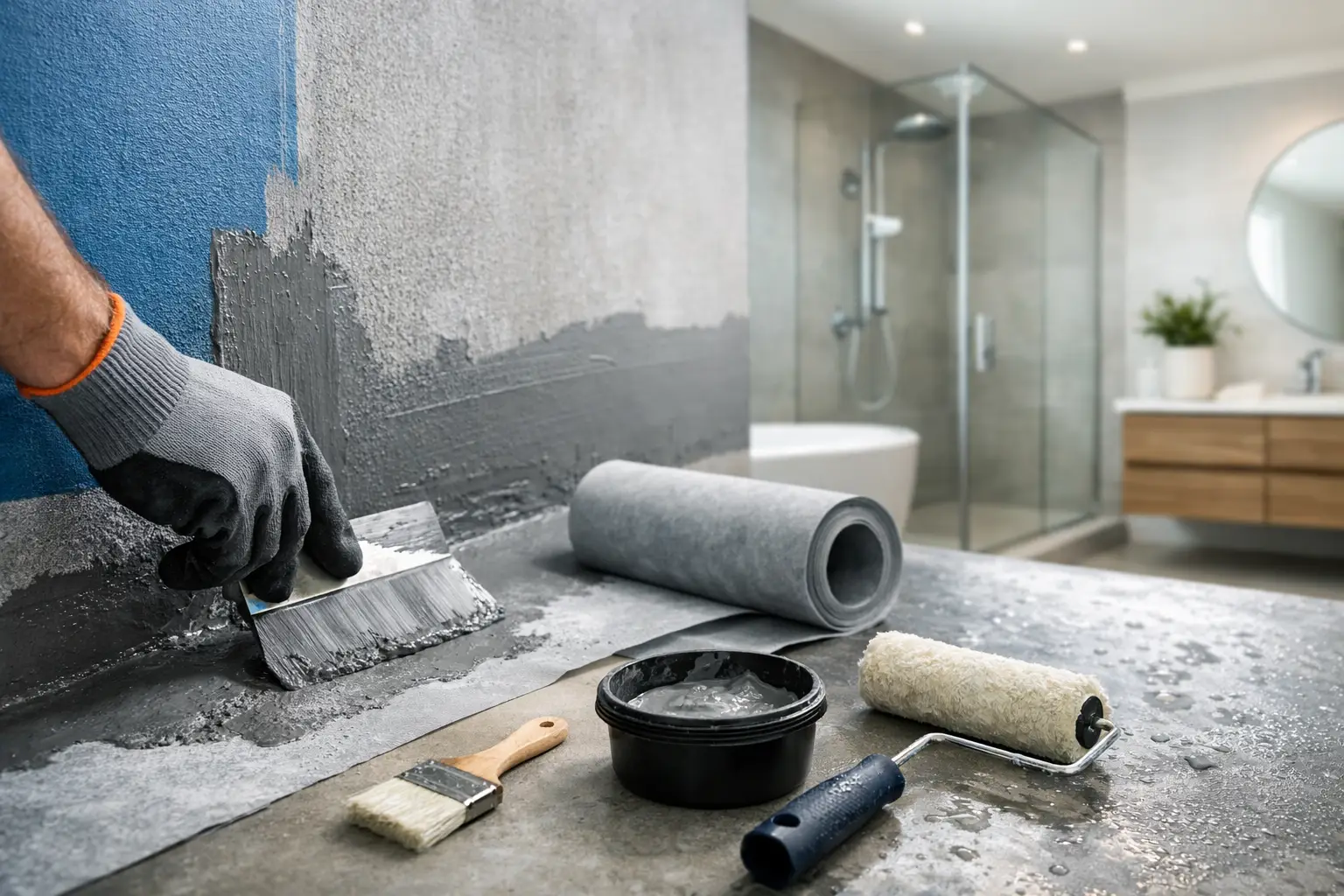
A bathroom can look finished the day the grout is cleaned, then reveal the real quality years later. Water that gets behind tiles can damage plaster, timber framing, adjoining rooms and flooring long before there is an obvious leak. Knowing how to choose bathroom waterproofing means looking past the tile selection and making sure the work behind it is right from the start.
For homeowners planning a bathroom renovation, waterproofing is not an optional extra or a place to chase the lowest quote. It is the protective system that allows your shower, bath and basin area to cope with daily moisture without putting the structure of your home at risk.
How to choose bathroom waterproofing for your renovation
The right waterproofing solution depends on the bathroom layout, the surfaces being waterproofed and the type of shower or bath being installed. A compact bathroom with a shower over bath has different risk areas from a large walk-in shower with a tiled linear drain. The key is choosing a system and installer that suit the whole wet area, not simply applying a membrane where it is easiest.
Start by asking what is included in the scope. A proper waterproofing allowance should identify the shower area, floor, wall junctions, penetrations, hob or walk-in shower transition, niches and any bath surrounds that require protection. Vague wording such as “waterproof bathroom” is not enough when comparing renovation quotes.
The work should also be planned before demolition is complete and well before tiles are ordered. Falls to drains, framing adjustments, shower screen positions, plumbing locations and tile thickness all affect how the waterproofing needs to be detailed.
Choose a compliant system, not just a product name
There are many quality waterproofing membranes available, but a recognised product alone does not guarantee a watertight bathroom. The membrane, primer, tapes, sealants and compatible adhesives need to work together as a system and be installed to the manufacturer’s requirements.
For residential bathrooms, the work must meet the relevant requirements for wet-area waterproofing, including Australian Standard AS 3740 where applicable. This covers the areas that need waterproofing and the way the membrane is carried across floors, walls, corners and penetrations. Your renovation may also need to meet Victorian building and plumbing requirements depending on the scope of work.
Ask your contractor which system they use, why it suits your bathroom and how they manage corners, pipe penetrations and drain connections. A good tradesperson should answer clearly. They should not brush off questions with “we always do it that way”.
Liquid-applied membranes are common in bathroom renovations because they can be applied around complex corners and details. Sheet membranes can also be suitable in some applications. Neither option is automatically better in every bathroom. Correct preparation, compatible materials and careful application matter more than a sales claim on a bucket.
Look closely at the bathroom’s high-risk areas
Waterproofing failures often begin at changes in surface or where another trade has penetrated the membrane. These are the details worth discussing during the quote stage.
Shower floors, walls and drains
The shower is the highest-use wet area in most homes. The floor needs correct falls so water moves to the drain rather than sitting in corners. The membrane must connect properly with the drainage arrangement and continue up walls to the required height. In a walk-in shower, the floor layout, screen position and water containment need extra attention because there may be no raised hob to stop water travelling across the room.
A tiled shower niche is another common weak point when rushed. It needs to be properly formed, waterproofed and detailed before tiling. It should not be treated as a simple hole cut into the wall at the last minute.
Corners, wall-to-floor junctions and penetrations
Bathrooms move slightly over time. Different materials can also expand and contract at different rates. Internal corners, floor-to-wall junctions and plumbing penetrations need flexible detailing so the membrane remains continuous rather than cracking or separating.
Every pipe, mixer, shower rail and tap point creates a penetration. These must be sealed correctly before tiles are installed. Once the wall is tiled and fixtures are fitted, it is far harder to confirm what has been done behind the surface.
Baths, vanities and adjoining rooms
A bath against a wall, particularly a shower-over-bath setup, needs more than a bead of silicone around its edge. The wall area is regularly exposed to water and needs appropriate waterproofing behind the tiles.
Vanities and toilets can also conceal small leaks for months. A well-planned renovation considers how plumbing is located, how the floor is protected and whether water can migrate toward a bedroom, hallway or timber flooring outside the bathroom. The aim is not only to prevent a shower leak, but to manage moisture throughout the room.
Check the substrate before waterproofing starts
Waterproofing cannot fix poor preparation underneath it. Before membrane application, the floor and walls need to be sound, clean, dry and suitable for the chosen system. Loose sheeting, damaged plaster, cracked screed, dusty surfaces and poorly prepared cement sheets can all compromise adhesion.
This is why strip-out and preparation should be part of the conversation, especially in older homes across Melbourne’s western suburbs. Once old tiles come off, hidden issues can appear: water-damaged wall linings, uneven floors, unsuitable previous repairs or timber movement around the shower. A contractor who identifies these issues early is protecting the renovation, not creating unnecessary work.
The substrate also affects the tile finish. If floors are not properly prepared and falls are wrong, a waterproof membrane may be intact but the shower can still drain poorly. Good waterproofing and good tiling are connected, yet they are separate stages that both need to be completed properly.
Do not confuse grout and silicone with waterproofing
Tiles, grout and silicone are finish materials. They help manage surface water, but they are not the primary waterproof barrier behind a tiled bathroom. Grout is porous to varying degrees, can crack over time and requires maintenance. Silicone seals movement joints and fixture edges, but it also deteriorates and needs replacement when mouldy, split or lifting.
The waterproof membrane is the layer that protects the building when moisture passes through grout lines, small cracks or failed sealant. This is one reason a newly tiled bathroom can still leak if the work behind the tiles was incomplete.
Choose a renovation team that treats waterproofing as a dedicated trade stage. The installer should allow the membrane to cure as required, inspect coverage and complete the work before tiling covers it. Rushing from membrane application to tile adhesive can create problems that are expensive to uncover later.
Compare quotes on scope and accountability
The cheapest bathroom quote is not always the least expensive result. If waterproofing is priced as a minimal allowance, the gap can reappear later as variations, shortcuts or repairs. Compare written scopes line by line, particularly where one quote seems significantly lower than the others.
A useful quote should make clear who is responsible for demolition, substrate preparation, plumbing changes, waterproofing, tiling and final fit-off. It should also state whether waterproofing is completed by a qualified, experienced professional and whether documentation or warranty information will be provided.
It is reasonable to ask for photos of waterproofing before tiles are laid. This gives you a record of the work and provides reassurance that key areas were covered. It is also worth asking who will manage the job if an issue is found during demolition. End-to-end coordination reduces the risk of one trade blaming another when details are missed.
BP Building & Maintenance approaches bathroom renovations with qualified trade involvement across the job, including certified waterproofing, plumbing, carpentry and tiling coordination. That matters because a waterproof bathroom relies on the details lining up from strip-out through to final fit-off.
Questions worth asking before you approve the work
Before committing to a contractor, ask how they will waterproof your specific layout, what system they will use and what preparation is included. Ask how shower falls and drainage will be handled, how niches and pipe penetrations will be sealed, and when tiling can begin after the membrane is applied.
You should also ask what happens if hidden water damage is found once the old bathroom is removed. A straightforward answer, supported by a clear process for variations, is a better sign than a fixed promise that ignores the realities of renovation work.
The best choice is not simply the most expensive membrane or the most attractive tile. It is a properly planned system installed by people who understand wet areas, follow the required process and take responsibility for the work behind the finished bathroom. When that foundation is right, your new bathroom has a far better chance of staying dry, sound and easy to enjoy for years.
Leave a Reply