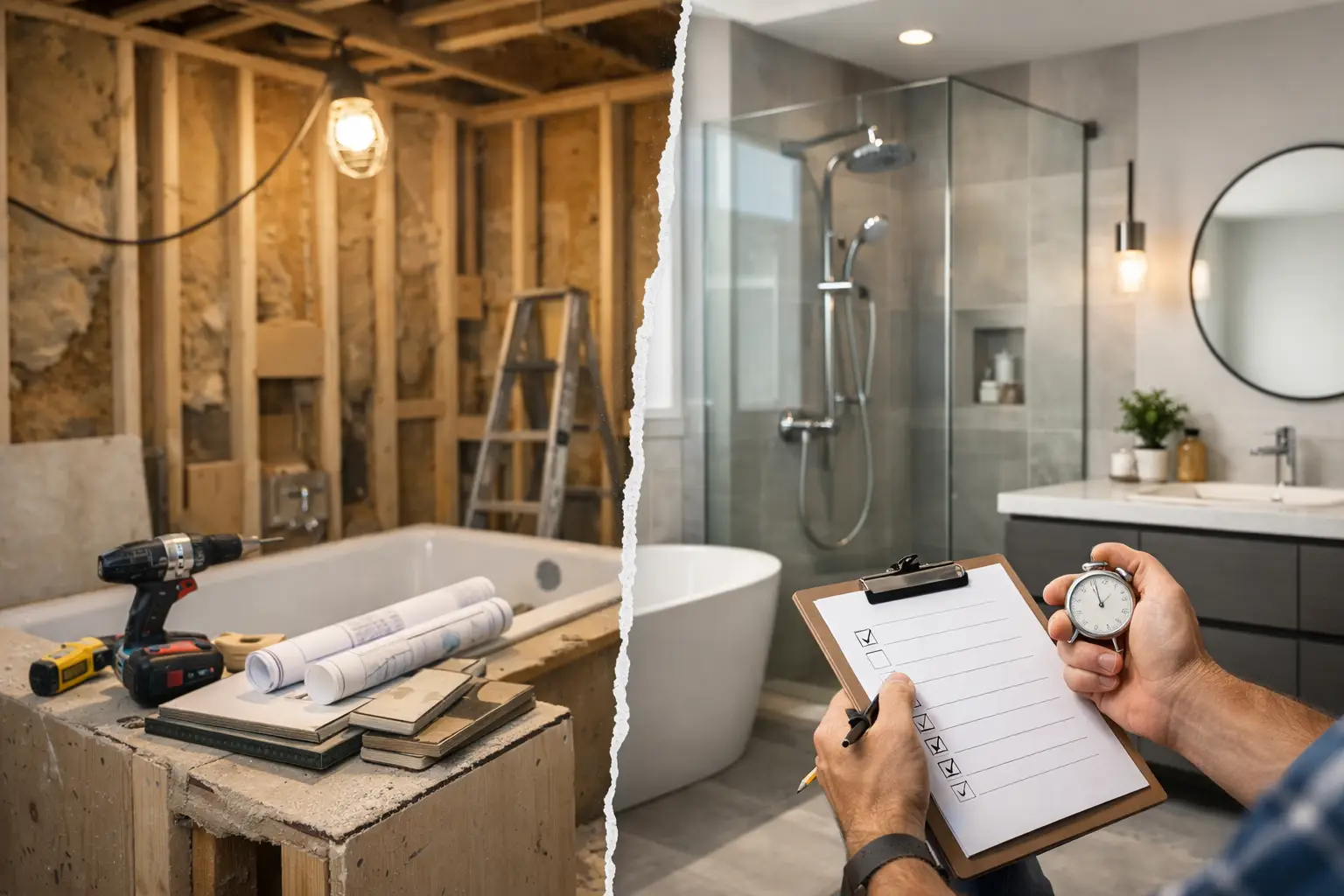
If you are asking how long does it take to do a complete bathroom remodel, you are usually really asking two things at once: how long your bathroom will be out of action, and what could slow the job down. That is the right way to look at it. A bathroom renovation is not one trade turning up for a day or two. It is a staged process where demolition, plumbing, carpentry, waterproofing, tiling and fit-off all need to happen in the right order.
For most standard bathrooms, a complete remodel takes around 2 to 4 weeks once work starts on site. Smaller, straightforward bathrooms can move faster. Larger bathrooms, custom layouts and jobs with structural or plumbing changes can push beyond that. The honest answer is not just about size. It comes down to planning, trade coordination, drying times and whether surprises show up once the old bathroom is stripped out.
How long does it take to do a complete bathroom remodel on average?
A realistic timeframe for a full bathroom renovation is often 10 to 20 working days. That covers a proper strip-out, any required rough-in work, waterproofing, tiling, fixture installation and final finishing. If the job is being handled properly, there are some stages that simply cannot be rushed.
Waterproofing is one of the biggest examples. It has to be done to standard and it needs cure time. The same goes for tile adhesive, grout and silicone. A fast bathroom renovation sounds good until it causes leaks, cracked tiles or movement later on. Good workmanship usually saves time in the long run because it avoids repairs and call-backs.
If you are renovating the only bathroom in the house, this timing matters even more. Even when the work is moving well, there will be periods where the room is not usable at all. That is why a proper programme before the first tool comes out matters just as much as the on-site work.
The stages that affect bathroom remodel timing
The easiest way to understand the timeline is to look at the job in stages. Some overlap slightly, but most happen in a fixed order.
1. Planning, quoting and selections
Before any demolition starts, there is usually a planning phase. This includes site inspection, measuring, discussing the layout, confirming fixtures and selecting tiles, tapware, vanity and shower fittings. This stage can take a few days or a few weeks depending on how quickly decisions are made.
For many homeowners, this is where the job either stays on track or starts drifting. If tiles are on backorder or a custom vanity has a long lead time, the whole renovation can be delayed before site works begin. One of the best ways to keep the build moving is to finalise selections early.
2. Demolition and strip-out
The strip-out itself is usually quick. In many bathrooms, demolition can be completed in 1 to 2 days. Old tiles, shower screens, vanities, bath units and wall linings come out, and the room is cleared so the underlying structure and services can be checked.
This is also the point where hidden issues can appear. Water damage behind tiles, rotten timbers, non-compliant plumbing or failed waterproofing are all common in older bathrooms. When that happens, the timeline can extend, but dealing with it properly is better than covering it up.
3. Framing, carpentry and rough-in work
Once the bathroom is opened up, any framing adjustments, niche construction, walk-in shower formation or wall straightening can begin. Plumbing rough-in and electrical rough-in also happen at this stage if fixtures are moving.
If you are keeping the same layout, this stage is usually fairly efficient. If you are relocating the toilet, changing the shower position or adding more storage, there is more involved. Layout changes nearly always add time because more trades need to coordinate and more compliance checks may apply.
4. Wall sheeting and waterproofing
After the rough-in work is complete, wall and floor surfaces are prepared. Cement sheeting or other suitable substrates are installed where needed, and then waterproofing is applied.
This is one of the most important stages in the whole bathroom. A proper waterproofing system protects the room, the surrounding structure and the rooms below or beside it. It also needs time to cure. In a standard bathroom, this part may take 1 to 2 days of work, but the total time can be longer when drying time is included.
5. Tiling
Tiling often takes several days and can be one of the most time-sensitive parts of the project. Floor tiles, wall tiles, shower recesses, niches and feature sections all add labour and precision.
Large-format tiles, mitred corners, herringbone patterns and full-height wall tiling can all extend the schedule. They can look excellent, but they need more time and skill than a basic tile layout. That is a normal trade-off. Better finishes usually mean more detail, and more detail takes longer.
6. Fit-off and installation
Once tiles are set and grouted, the bathroom starts to come together quickly. This stage includes installing the vanity, toilet, shower fittings, tapware, mirror, bath, shower screen, lighting and accessories.
A standard fit-off might take a couple of days. Custom joinery, stone tops or made-to-measure shower screens can add time if they are being installed after templating and manufacture. This is why product lead times matter just as much as labour on site.
7. Final checks and finishing touches
The last part of the renovation is usually silicone sealing, paint touch-ups if required, cleaning, testing plumbing fixtures and making sure everything is working as it should. This is also when defects or minor adjustments are addressed before handover.
A bathroom should not just look finished. It should be properly sealed, level, functioning correctly and ready for daily use.
What can make a bathroom remodel take longer?
The biggest delays are usually not caused by one major problem. More often, it is a combination of smaller issues. Product delays, hidden water damage, layout changes after work starts and poor trade scheduling can all add days to a job.
Older homes are a common example. Once demolition begins, it is not unusual to find damaged wall framing, uneven floors or old plumbing that needs upgrading. These issues are fixable, but they do affect the timeline.
Custom work also adds time. A fully tiled walk-in shower, recessed niches, custom vanity, feature lighting or non-standard fittings can all improve the final result, but they require extra coordination and installation time. If speed is the top priority, simpler finishes and keeping the existing layout usually help.
Another factor is access. In some homes, there is limited room for materials, rubbish removal or parking for trades. It is not always dramatic, but practical site conditions can influence how efficiently a job runs.
How to keep your bathroom renovation on schedule
The best way to avoid delays is to have the renovation planned properly before it starts. That means your layout is locked in, fixtures are selected, lead times are checked and the sequence of trades is organised from the outset.
Working with a team that can manage demolition, plumbing, carpentry, waterproofing, tiling and fit-off under one roof usually helps. It reduces downtime between trades and avoids the usual problem of one contractor waiting on another. It also means there is clearer accountability if something needs adjusting along the way.
For homeowners in Caroline Springs and Melbourne’s western suburbs, that local coordination matters. A team that knows the process, turns up when booked and handles the full job properly will usually save more time than a rushed quote ever will.
It also helps to be decisive with finishes. Changing your tile choice halfway through or deciding to move the shower after rough-in has started is almost guaranteed to slow things down. Good planning upfront makes a big difference.
Is a faster bathroom remodel always better?
Not necessarily. A bathroom can be renovated quickly, but it still has to be built properly. If waterproofing is rushed, tiles are laid over poor preparation or fixtures are fitted before surfaces have cured, you may not see the problem straight away. You will see it later.
The better question is whether the renovation is being completed efficiently and correctly. A solid 2 to 4 week turnaround for a full bathroom is often a far better result than a rushed job finished in record time but needing repairs six months later.
If you are planning a complete bathroom renovation, the right timeframe is the one that allows the job to be done once and done properly. A clear scope, qualified trades and realistic scheduling usually deliver the best result – and that is what makes the wait worthwhile.