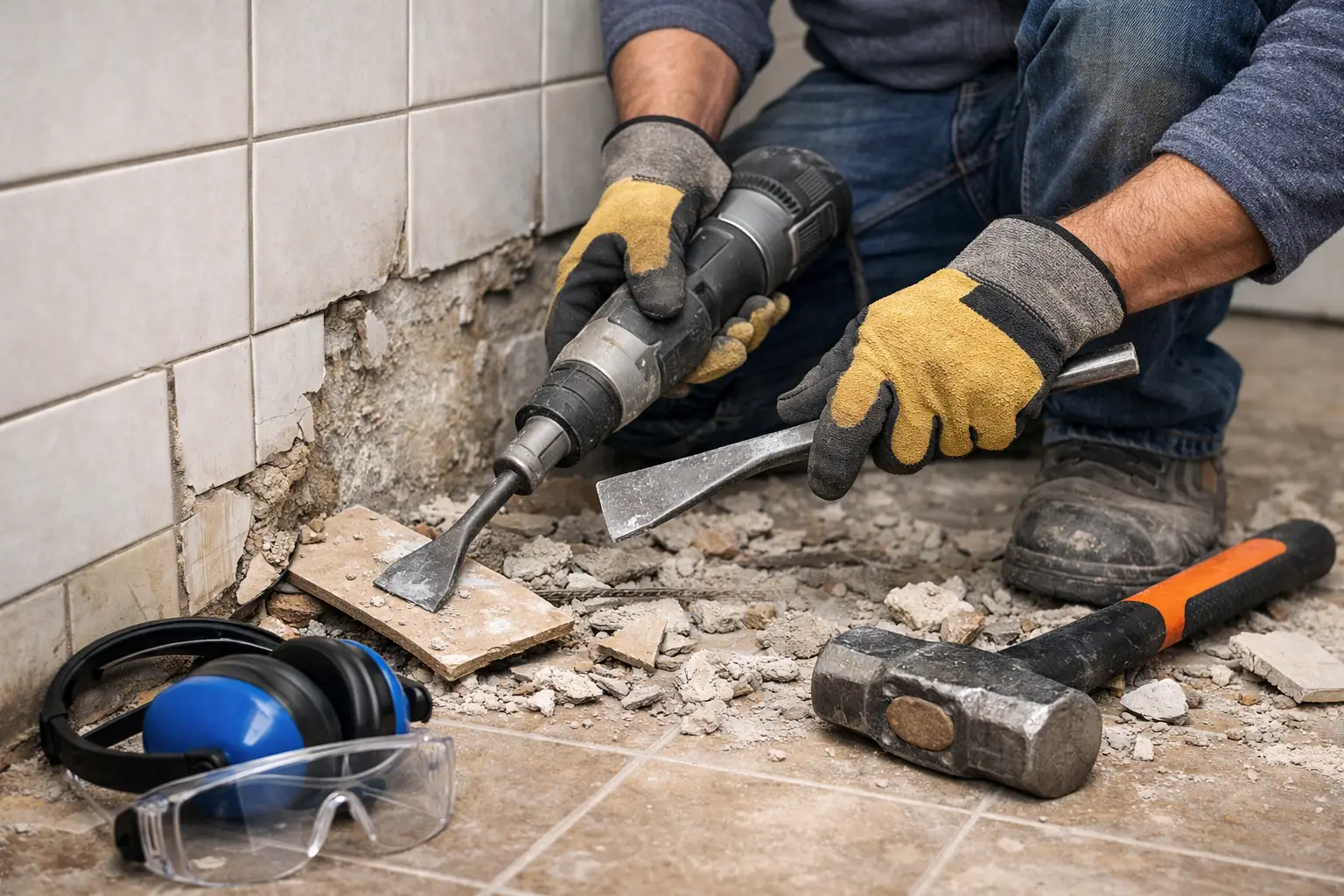
The first tile always looks easy. It is the next twenty, plus the dust, the sharp edges, the adhesive left behind and the risk of damaging what sits underneath, that turns tile removal into a proper demolition job. If you are looking up how to remove wall and floor tiles, the real question is usually whether it is worth tackling yourself or whether it makes more sense to have it done properly as part of a bathroom renovation.
In bathrooms, laundries and other wet areas, tile removal is not just about getting old finishes off the wall or floor. It can expose waterproofing, sheeting, screeds, plumbing penetrations and substrate damage that were hidden for years. That is why tile removal needs a bit more thought than simply grabbing a hammer and starting in the corner.
How to remove wall and floor tiles without creating bigger problems
The basic process sounds straightforward. Remove fittings if needed, protect surrounding areas, lift the first tile, then keep working across the surface while clearing away adhesive and rubble. In practice, the condition of the substrate matters more than the tile itself.
Wall tiles are often fixed over plaster, cement sheet or villaboard. Floor tiles may sit over a screed bed or concrete slab. Some come off in large sections. Others shatter into small, sharp pieces and take chunks of backing with them. If the area is part of a bathroom, there is also the question of what happens to the waterproofing once the tiles are removed. In many cases, it will be compromised and need to be redone before any new tiling goes in.
That is one of the biggest reasons homeowners call in a renovation team rather than treating tile removal as a weekend job. The strip-out is only one part of the work. What comes after matters more.
What needs to be checked before any tiles come off
Before removal starts, the area should be assessed properly. This is where experience saves time and expensive rework.
The first check is what sits behind the tile. In an older bathroom, wall tiles may be bonded directly to plaster that will not survive demolition cleanly. In newer installations, the backing may be cement sheet, but even then, if the adhesive bond is strong, the sheet can tear or delaminate during removal. On floors, cracked tiles can point to movement underneath, while loose tiles may suggest a failing bed or moisture issue.
The second check is services. Plumbing lines, wastes and fittings are often close to wall chases, shower areas and vanities. If you are removing tiles around a shower mixer, toilet or basin, one careless strike can damage pipework or fittings hidden behind the wall.
The third check is asbestos risk in older homes. While the tiles themselves are not the issue, some backing materials, adhesives or wall linings in older wet areas may require specialist assessment. That is not something to guess your way through.
Wall tile removal is usually messier than people expect
Removing wall tiles tends to be more destructive than floor tile removal. Once the first tile is lifted, the rest often come away unevenly, taking adhesive and surface layers with them. In some bathrooms, the right approach is not to preserve the wall lining at all. It is faster, cleaner and more reliable to remove the tiled sheeting and reline the area properly.
That matters in a full renovation because patching damaged walls can cost more in labour than a fresh start. It can also leave you with an uneven surface that causes problems when the new tiles are installed.
Where tiled walls form part of a shower enclosure, the waterproofing is a major issue. Once demolition starts, you should assume the system will need to be replaced. There is no shortcut there if you want a bathroom that lasts.
Floor tile removal can reveal the real condition of the room
Floor tiles often hide more than wall tiles do. A bathroom floor may look tired but sound, or it may be covering cracked screed, poor falls, old patch repairs or water damage around the shower base and waste.
Lifting floor tiles usually involves a jackhammer or demolition hammer with the right bit, especially where the bond is strong. The challenge is not just getting the tiles up. It is removing the adhesive cleanly enough to prepare for the next stage. If the substrate is uneven, contaminated or damaged, the new tile job will only be as good as the surface beneath it.
In wet areas, correct falls to the waste are critical. If those falls were wrong to begin with, tile removal is the point where the issue becomes obvious. That is why experienced bathroom renovators treat demolition as an inspection stage, not just a strip-out.
Safety matters more than speed
Anyone asking how to remove wall and floor tiles should understand that this is not a low-risk job. Broken tiles are sharp, demolition creates airborne dust, and power tools in confined wet areas carry their own hazards.
Proper PPE is the minimum. That means eye protection, gloves, a suitable dust mask or respirator, hearing protection and solid footwear. The room should be isolated as much as possible to stop dust travelling through the house. Fixtures, screens, vanities and nearby flooring need protection or removal before the demolition begins.
There is also the manual handling side of it. Tile rubble gets heavy quickly. A small bathroom can generate a surprising amount of waste, and it all needs to be bagged, carried and disposed of properly.
When tile removal makes sense as part of a full renovation
If you are replacing tiles because they are dated, cracked or lifting, there is a fair chance the room needs more than a cosmetic update. Old bathrooms often have multiple issues happening at once – poor waterproofing, tired fittings, inefficient layout, water damage around the shower, or plumbing that no longer suits the way the room is used.
In that situation, isolated tile removal can be false economy. Once the room is stripped back, it is often more practical to address the waterproofing, plumbing adjustments, shower base, vanity placement and retiling in one coordinated job.
That is where a qualified renovation team adds value. Instead of treating demolition as a stand-alone task, they manage what follows: substrate repair, compliant waterproofing, plumbing and carpentry works, then accurate wall and floor tiling. It is a better way to protect the finish and the long-term performance of the room.
Why bathrooms are different from other tiled areas
Removing tiles in a kitchen splashback is one thing. Removing tiles in a shower recess or bathroom floor is another.
Bathrooms are high-risk areas because water exposure is constant and failures are expensive. Once tiles are removed, every hidden weakness tends to show up. A swollen wall lining, loose sheeting, mould, cracked bedding or failed waterproofing membrane is not unusual. If any of that is left unaddressed, new tiles will not solve the actual problem.
For homeowners in older parts of Melbourne’s western suburbs, this is especially relevant. Many bathrooms built years ago were finished to the standard of the time, not current expectations for waterproofing detail, drainage performance and durability. Demolition is often the point where those differences become very clear.
The trade-off between saving money and getting it right
There are cases where limited tile removal is manageable, particularly in a dry area or where the substrate is being replaced anyway. But in bathrooms and laundries, the trade-off is simple. You might save on upfront labour by doing the strip-out yourself, but if you damage pipework, framing, sheeting or surrounding finishes, the repair cost can wipe that out quickly.
There is also the quality issue. Clean demolition makes the rest of the renovation easier. Rough demolition creates delays, extra prep work and uneven surfaces that need correction before anything can be rebuilt.
A no-nonsense approach is to look at the whole project, not just the first step. If the room needs new waterproofing, retiling, plumbing changes or a new walk-in shower, proper demolition by the same team handling the renovation usually leads to a cleaner result and a faster turnaround.
When to bring in a professional
If the tiled area is inside a bathroom, shower, ensuite or laundry, professional removal is generally the safer call. The same applies if there are signs of water damage, cracked substrates, drummy tiles, plumbing changes or older construction materials.
A qualified team can assess whether tiles should be removed individually, whether wall linings should come out with them, whether the floor bed needs replacement and what needs to happen next to keep the job compliant. That is the difference between a messy strip-out and a renovation that is built to last.
For homeowners planning a bathroom upgrade, tile removal should be seen as the first construction stage, not a separate handyman task. Done properly, it clears the way for correct preparation, reliable waterproofing and a finish that will hold up over time.
If your tiles are coming loose, the bathroom feels dated, or you suspect there is more going on beneath the surface, it is worth treating removal as an opportunity to fix the room properly rather than patching around the edges.