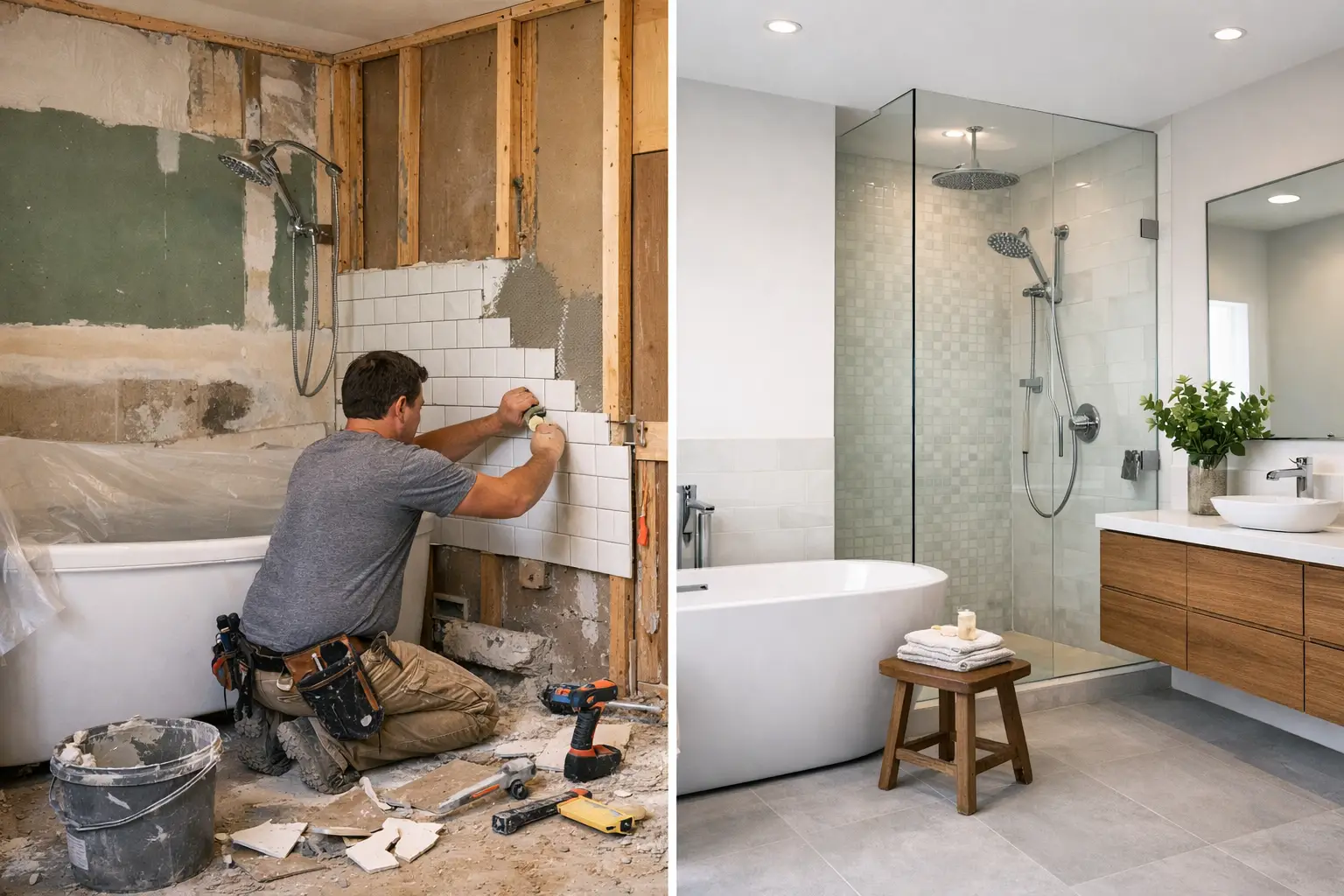
If your bathroom feels dated, cramped or tired, the first question is usually not what tiles to pick. It is whether you need a bathroom renovation versus remodel. Those two terms get used as if they mean the same thing, but on a real project they can point to very different levels of work, cost and disruption.
For homeowners, that difference matters. A bathroom that only needs new finishes and fixtures is a different job from one that needs walls moved, plumbing altered or a complete layout rethink. Getting clear on that early helps you budget properly, avoid shortcuts and choose the right trades from the start.
Bathroom renovation versus remodel: what is the difference?
In practical terms, a bathroom renovation usually means improving what is already there without completely changing the structure or layout. You might replace old tiles, update the vanity, install a new shower screen, swap out fittings or refresh lighting and finishes. The room gets brought up to a better standard, but the bones of the bathroom largely stay in place.
A remodel goes further. It changes how the bathroom works. That can mean moving plumbing points, reconfiguring the shower, shifting the toilet, building a walk-in shower, altering walls or changing the whole layout to use the space better. A remodel is less about surface upgrades and more about redesigning the room.
The tricky part is that many bathroom projects include both. You might start with a simple update in mind, then discover water damage behind the walls, poor waterproofing or a layout that wastes half the room. At that point, what looked like a renovation can quickly become a remodel.
When a renovation is the smarter choice
A renovation makes sense when the bathroom layout already works and the main issue is age, wear or appearance. If the shower is in the right place, the vanity size suits the room and the plumbing locations are sensible, there is often no reason to start moving everything around.
This approach can be a strong option if your goal is to modernise the bathroom, replace worn materials or lift the value of your home without adding unnecessary structural work. New tiling, updated tapware, a better vanity and clean fit-off details can completely change how the bathroom feels.
It can also be the right call when the budget needs to stay controlled. Keeping key services in roughly the same position generally avoids some of the extra labour involved in a full redesign. That does not mean it is a small job. Waterproofing, plumbing, tiling and fixture installation still need to be done properly. It simply means you are improving the room without rebuilding its entire layout.
For many established homes in Melbourne’s western suburbs, this is enough. The bathroom may be old, but the footprint is workable. In that case, a quality renovation can deliver a cleaner, sharper and more durable result without overcomplicating the job.
When a remodel is worth it
A remodel becomes the better option when the bathroom is not just outdated, but poorly planned. Maybe the shower is too tight, the vanity blocks movement, there is no storage, or the room feels awkward for a family to use. Sometimes the issue is accessibility. Sometimes it is wasted space. Sometimes it is an older design that simply does not suit how people live now.
This is where layout changes can make a big difference. Moving to a walk-in shower, opening up floor space, improving storage or repositioning fixtures can turn a frustrating bathroom into one that actually functions well day to day.
A remodel is also common when there are deeper construction issues. Failed waterproofing, recurring moisture problems, water damage or poor previous workmanship often require more than a cosmetic update. If the room needs to be stripped back properly, it can make sense to redesign it at the same time rather than spend money reinstalling a layout that was never right to begin with.
Yes, remodels usually cost more and take more planning. But they can offer better long-term value when the existing bathroom has major functional problems.
Cost, time and disruption
This is where bathroom renovation versus remodel becomes a practical decision, not just a wording issue.
A renovation is often more straightforward because the main services stay close to where they are. That can reduce demolition, simplify plumbing and help keep the timeline tighter. There is still a lot happening behind the scenes, especially when waterproofing and tiling are involved, but the scope is usually easier to contain.
A remodel can increase costs because layout changes affect multiple trades at once. If you move a shower, you may also need new plumbing runs, altered drainage falls, adjusted waterproofing details, changed tiling set-out and different fixture placements. Each change has a flow-on effect.
There is also the question of disruption. Any bathroom project is inconvenient while the room is out of action. A remodel can stretch that period further, particularly if unexpected issues are uncovered during strip-out. Homes with older bathrooms often reveal hidden damage once tiles and sheeting are removed.
That does not mean a renovation is always the cheaper option in every case. If a bathroom looks simple but has failed waterproofing, rotted substrate or non-compliant past work, even a so-called refresh can require a full strip-out. That is why proper quoting and site assessment matter. The cheapest plan on paper can become the expensive one if the real condition of the room has not been understood from the start.
The hidden factor: waterproofing and trade quality
Homeowners often focus on finishes first. Tiles, tapware and vanity style are the visible parts, so they get attention early. But the lasting quality of a bathroom depends far more on what sits behind those finishes.
Whether you choose a renovation or a remodel, waterproofing integrity is non-negotiable. A bathroom can look brand new and still fail if the substrate preparation is poor, the detailing is rushed or the waterproofing is not done to standard. The same goes for plumbing and fit-off work. A clean-looking finish means little if leaks appear later or fixtures are not installed correctly.
This is where experience matters. A bathroom is not one trade’s job. It is a coordinated sequence of demolition, preparation, plumbing, waterproofing, carpentry, tiling and final installation. If those stages are not handled properly, the project can look finished while problems are already built in.
For that reason, many homeowners are better served by choosing a qualified bathroom specialist rather than trying to piece the job together through separate contractors. A well-managed project tends to run cleaner, faster and with fewer headaches.
How to decide what your bathroom actually needs
The best way to decide is to look at the bathroom in two parts: function and condition.
If the condition is poor but the function is fine, a renovation may be enough. If the layout still suits your household and the problems are mainly worn finishes, ageing fixtures or an outdated look, improving the existing room often makes sense.
If the function is poor, a remodel is worth considering. That includes bathrooms that feel too tight, have awkward fixture placement, lack storage or simply do not work for your family anymore. It also applies when you are planning for easier access or want to future-proof the space.
Then there is the middle ground. Some bathrooms need a renovation with a few smart structural changes rather than a full redesign. For example, removing a hob shower base to create a walk-in shower can modernise the room and improve usability without completely reinventing the layout. These hybrid projects are common because they balance practical improvement with sensible spending.
A detailed site inspection usually gives the clearest answer. Once the existing bathroom is assessed properly, it becomes much easier to separate cosmetic wants from structural needs.
Why language matters less than scope
Plenty of people use renovation and remodel interchangeably, and that is fine. What matters more is being clear about the scope of work.
If you ask for a renovation but expect walls to move, plumbing to shift and the whole room to be reworked, there is room for confusion from day one. The better approach is to explain what you want the bathroom to do differently, what problems need fixing and how far you are willing to go with the project.
That gives your contractor something real to price and plan around. It also leads to better advice. A dependable tradesperson will tell you when a simple renovation is enough and when a remodel is the smarter long-term decision. Sometimes the honest answer is to keep it straightforward. Other times, it is to stop patching an old bathroom and rebuild it properly.
If you are weighing up a bathroom renovation versus remodel, start with the result you want, not the label. A bathroom should do more than look good on handover day. It should work properly, stay watertight and hold up for years after the trades have packed up and left.