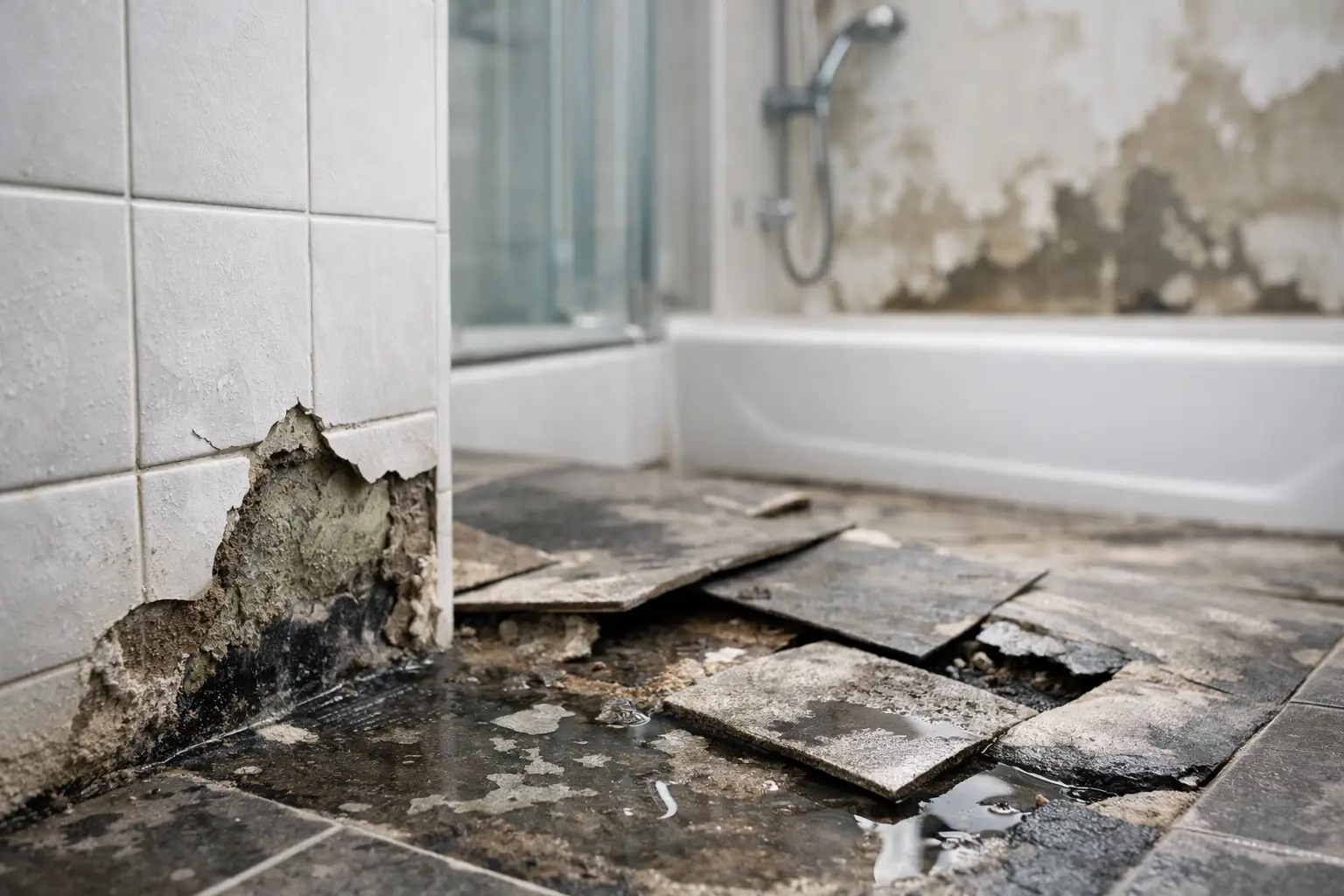
A bathroom can look finished, clean and modern while water is already finding its way behind the tiles. That is what makes bathroom waterproofing failure examples so costly: the problem is usually hidden until it has damaged plaster, timber framing, adjoining rooms or the floor below.
For homeowners planning a renovation, waterproofing is not a cosmetic step to rush through between plumbing and tiling. It is the protective system that keeps water where it belongs. When it is installed poorly, even premium tiles, tapware and cabinetry will not prevent a leak.
Why waterproofing failures are more serious than a cracked tile
Tiles and grout are not waterproof. They are a hard-wearing finish, but moisture can still pass through grout lines, movement cracks and gaps around fixtures. The waterproof membrane behind or beneath the tiled surface is the layer designed to protect the building structure.
In a properly managed renovation, waterproofing is applied to prepared surfaces, detailed at junctions and penetrations, and allowed to cure before tiling begins. The work must also meet the relevant Australian standards and manufacturer requirements. Skipping a detail to save time can create a failure point that is difficult and expensive to access later.
The earliest signs can be subtle. You may notice peeling paint on the other side of a shower wall, a musty smell, loose tiles, swollen skirting boards or staining on a ceiling below. By that stage, the water issue may have been developing for months.
Common bathroom waterproofing failure examples
Membrane not carried high enough in the shower
A common failure occurs when the waterproofing membrane does not extend to the required height in shower areas, particularly on walls exposed to regular spray. Water can work through grout and adhesive, then enter unprotected wall linings behind the tiles.
This often shows up as drummy or loose wall tiles, deteriorating grout and moisture damage in the room next door. It is especially likely in walk-in showers, where the splash zone can extend further than people expect. A shower screen does not eliminate the need for correct waterproofing coverage.
Poor detailing at wall-to-floor junctions
The joint where the wall meets the floor is a high-risk area. Buildings move slightly over time, and rigid surfaces can crack at these junctions. If the membrane is not correctly bonded and reinforced through the corner, water can bypass the waterproofing layer.
This is one of the bathroom waterproofing failure examples that can cause widespread damage without a visible leak inside the bathroom. Water may travel beneath the floor finish and emerge at a doorway, under a vanity or through a ceiling below.
Unsealed pipe penetrations and floor wastes
Every pipe, mixer, shower outlet and floor waste creates an opening through a waterproofed surface. These penetrations need careful treatment so the membrane forms a continuous seal around them.
When a membrane is cut roughly around plumbing pipes, or when the floor waste connection is not properly detailed, water follows the easiest path into the wall or subfloor. Silicone applied around the visible fitting is not a substitute for a correctly installed membrane system behind it.
Incorrect shower falls
Waterproofing and drainage work together. Even a good membrane is put under unnecessary pressure when the shower floor does not fall properly to the waste. Ponding water can sit along a wall, in a corner or outside the shower area, increasing the chance of water working through grout and joints.
Poor falls are particularly problematic in doorless showers and bathroom renovations where the floor level has been changed. The final tile finish needs to drain effectively, not just the surface underneath it. A qualified team will assess the existing floor, drainage position and proposed shower design before the build starts.
Waterproofing over unsuitable or damp surfaces
Membranes need a sound, clean and dry substrate. Dust, old adhesive, loose sheeting, excessive moisture or poorly prepared screed can stop the coating from bonding correctly. It may look acceptable on the day, but sections can later detach or split.
This is why demolition and substrate preparation matter. Waterproofing should not be treated as a quick coat applied over whatever is left behind after strip-out. The surface needs to be assessed and repaired before the membrane goes on.
Membrane damaged before tiling
Waterproofing can be applied correctly and still fail if it is damaged afterwards. Trades walking over uncured areas, sharp tools, poorly placed fixings or rushed tile preparation can puncture the membrane. Small holes are enough to create a path for water.
The risk is higher when several trades are working to a tight schedule without clear coordination. A complete bathroom renovation needs proper sequencing: plumbing rough-in, carpentry and sheeting, waterproofing, curing, inspection where required, then tiling and fit-off.
Fixing through waterproofed areas
Shower screens, grab rails, vanities and accessories sometimes require fixings into tiled walls. If screws are installed without suitable sealing and consideration of the waterproofed zone, they can become leak points.
Not every fixing is avoidable, and the correct approach depends on the product, wall construction and location. The key is planning these details before tiling, rather than drilling first and hoping sealant will solve the problem.
Why cheap or rushed work often costs more
Waterproofing failures rarely have a simple patch-up solution. Once water has entered behind tiles, the only reliable repair may involve removing part or all of the tiled finish, replacing damaged wall linings or flooring, correcting the waterproofing and rebuilding the area.
That can mean paying twice for demolition, tiles, labour and disruption. It can also affect adjoining rooms, insurance claims and the value of a property if moisture damage is discovered during a sale or building inspection.
A lower quote is not automatically poor workmanship, but homeowners should understand what is included. Ask who is completing the waterproofing, whether they are qualified for the work, what membrane system is being used, how the shower and wet areas will be detailed, and how long the membrane will cure before tiling. Clear answers matter more than vague assurances.
What good waterproofing looks like during a renovation
Quality waterproofing starts before the membrane is opened. The bathroom layout, plumbing positions, shower style, floor waste location and substrate condition all influence the final system. A walk-in shower may need more extensive wall and floor protection than a small enclosed shower. An upstairs bathroom may require extra care because a leak can damage ceilings and rooms below.
The work should be completed as part of a coordinated process, not handed between disconnected trades. A registered plumber, qualified carpenter and certified waterproofer working to the same plan can identify issues early, before they are buried behind tiles.
Homeowners should also expect the renovation team to protect curing time. Fast turnaround is valuable, but a membrane cannot be rushed beyond the manufacturer’s requirements. The right balance is efficient scheduling without cutting out the steps that protect the home long after the renovation is complete.
When a bathroom needs investigation
A cracked grout line does not always mean the waterproofing has failed. Minor movement, age and cleaning products can affect grout and silicone. However, recurring mould, persistent damp smells, lifting tiles, staining outside the wet area or water damage beneath an upstairs bathroom should not be ignored.
Finding the source may require a professional inspection rather than simply resealing the visible joint. Replacing silicone can be appropriate for a local maintenance issue, but it will not repair a failed membrane behind the tiles.
For homeowners in Caroline Springs and Melbourne’s western suburbs, the practical lesson is straightforward: choose qualified trades who treat waterproofing as a critical construction stage, not an invisible extra. BP Building & Maintenance manages bathroom renovations with the right trade coordination and attention to the details that keep a finished bathroom dry, durable and worth the investment.
Leave a Reply