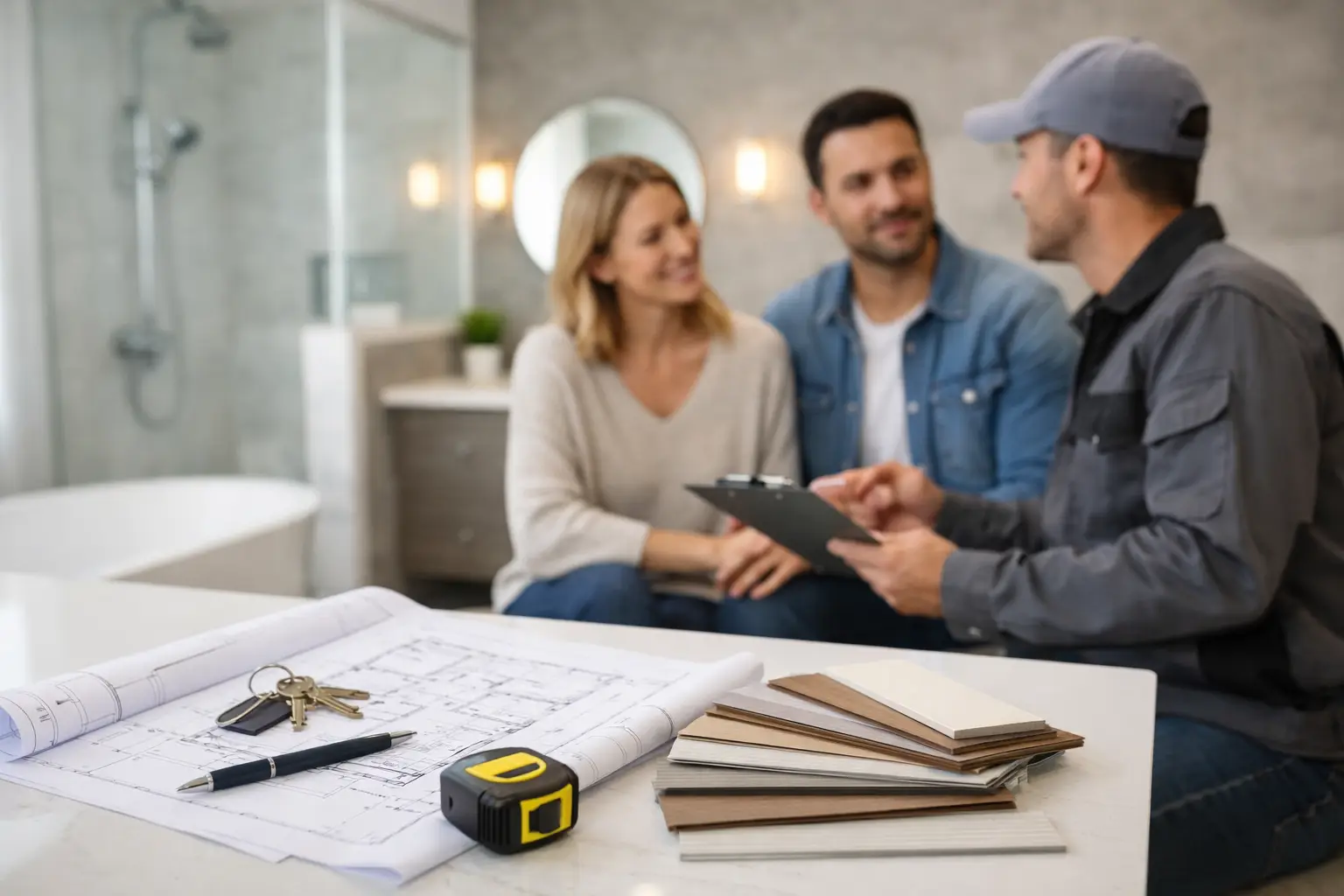
A bathroom can look excellent on handover day and still hide costly problems behind the tiles. Poor waterproofing, incorrect plumbing work and rushed preparation often do not show up until months later, when leaks, loose tiles or mould create a much bigger repair job. That is why working out how to choose a bathroom renovation builder should start with trade capability, not just photos and a low price.
For homeowners across Caroline Springs and Melbourne’s western suburbs, the right builder should make the process clearer from the first inspection. They should understand how all parts of the job connect – demolition, plumbing, waterproofing, tiling, carpentry and final fit-off – and take responsibility for getting them right.
Start with the trades behind the renovation
A complete bathroom renovation is not one trade’s job. It is a sequence of specialised work, and each stage affects the one that follows. If the plumbing rough-in is wrong, the vanity or shower layout may need to change. If the substrate is not prepared properly, even high-quality tiles can fail. If waterproofing is rushed or poorly detailed around penetrations, the damage may remain hidden until it reaches adjoining rooms.
Ask who will carry out the core work and what qualifications they hold. A capable renovation builder should be able to explain who is responsible for plumbing, carpentry and waterproofing, rather than giving vague assurances that it will be “taken care of”. Where work requires licensed or registered trades, confirm the appropriate credentials and paperwork before the project starts.
Waterproofing deserves particular attention. It is not a cosmetic layer and it is not an area to cut corners. Ask how the shower base, wall-to-floor junctions, niches, pipe penetrations and bathroom perimeter will be prepared and waterproofed. A builder who takes pride in this work will be comfortable discussing the process in plain language.
Check experience with bathrooms like yours
Bathroom renovations vary significantly. Replacing a standard vanity and shower in a newer home is different from rebuilding a leaking ensuite, moving plumbing in a slab home or creating a walk-in shower for easier access. The right builder for your job has experience with its specific challenges.
During the site visit, explain what is not working in the current bathroom. It might be poor storage, an awkward shower screen, a cramped toilet position, water damage, weak ventilation or a layout that does not suit a growing family. A good builder will ask practical questions before offering solutions. They will look beyond finishes and consider drainage, wall condition, floor levels, access, existing services and the condition of the room once it is stripped out.
Photos of completed projects are useful, but do not stop there. Ask about comparable work and how the builder handled common issues such as uneven walls, damaged flooring, old pipework or delayed fixture supply. Real experience usually comes through in the details, not broad claims.
How to choose a bathroom renovation builder on quote quality
A detailed quote gives you more than a price. It shows whether the builder has understood the job and whether you are comparing like for like.
A bathroom quote should clearly set out the scope of work. That usually includes demolition and rubbish removal, plumbing changes, carpentry or wall repairs, waterproofing, tiling, shower construction, installation of fixtures and final fit-off. It should also identify what is supplied by the builder, what you are selecting separately, and whether allowances apply to items such as tiles, tapware, a vanity or a shower screen.
Be cautious with a one-line figure for a full renovation. It may look attractive, but it leaves too much open to interpretation. If items are missing from the scope, they can become variations later. The cheapest quote is only cheaper if it includes the work needed to deliver a durable bathroom.
When reviewing quotes, ask these questions:
- What demolition, disposal and preparation work is included?
- Are plumbing and electrical changes included, or priced separately?
- What waterproofing work will be completed and who carries it out?
- Which fixtures, tiles and fittings are included as allowances?
- How are unforeseen issues and variations approved?
- Is final cleaning, sealing and fit-off included before handover?
A transparent builder will not promise that an old bathroom holds no surprises. Once tiles and linings come off, hidden damage can be found. What matters is how this is handled: the issue should be explained, priced clearly and approved before additional work proceeds.
Look for a clear project plan
Bathroom work can disrupt daily life, particularly when it is the only bathroom in the home. Ask how the project will be staged, who will be on site and how long the builder expects the work to take. Fast turnaround is valuable, but only when preparation and curing times are respected. Waterproofing, adhesives, grout and sealants all need suitable conditions and time to perform as intended.
A reliable builder should also explain practical arrangements around site access, dust control, protecting nearby floors, rubbish removal and communication. You do not need a lengthy project manual, but you should know who your point of contact is and what happens if you need to make a decision on tiles, fixtures or a layout change.
There is a trade-off between complete certainty and flexibility. Locking in every product before work begins makes timing and pricing easier to manage. However, some homeowners prefer to choose finishing items after seeing the space opened up. Either approach can work, provided the builder explains the effect on lead times and budget.
Assess workmanship, not just style
Bathrooms are often sold through attractive images of large tiles, freestanding baths and black tapware. Those choices matter, but workmanship is what keeps the room functioning. Look closely at grout lines, tile cuts around fixtures, siliconing, falls to the drain, shower screen alignment and the way vanities meet walls. These details tell you whether the builder values precision.
Reviews can also help, especially when they mention communication, cleanliness, reliability and how issues were resolved. A five-star rating is encouraging, but comments with specific detail are more useful than a short general endorsement. If possible, ask whether the builder has recent local work similar to yours.
For a renovation in an older home, local knowledge can be particularly useful. Builders who regularly work across Melbourne’s western suburbs are more likely to understand the types of construction, access constraints and common renovation conditions found in the area. That does not replace qualifications, but it can make the planning process more efficient.
Choose a builder who takes ownership
Some businesses coordinate subcontractors, while others have key trades in-house or closely managed. Neither model is automatically better. The important question is accountability. If the plumber, waterproofer, tiler and carpenter are involved, you need one builder who coordinates the sequence, checks the quality and remains responsible for the finished result.
Pay attention to how the builder communicates before you sign. Are they on time for the inspection? Do they listen to the problems you want solved? Do they explain limitations honestly, rather than agreeing to every request without considering the consequences? A bathroom builder should be practical and solution-focused, not pushy.
At BP Building & Maintenance, complete bathroom renovations are managed with trade-qualified plumbing, carpentry and certified waterproofing capability because the work behind the walls matters as much as the finishes you see. That approach helps homeowners avoid the gaps that can occur when each trade is treated as a separate job.
Do not rush the final decision
Before accepting a quote, compare the scope, qualifications, timing and communication style of each builder. Give more weight to clear answers and documented inclusions than a polished sales pitch. If something is unclear, ask for it to be clarified in writing.
The builder you choose will be working inside one of the most technical rooms in your home. Choose the one who can explain the job properly, protect the structure from water damage and deliver a bathroom that still feels solid long after the new fixtures have lost their shine.