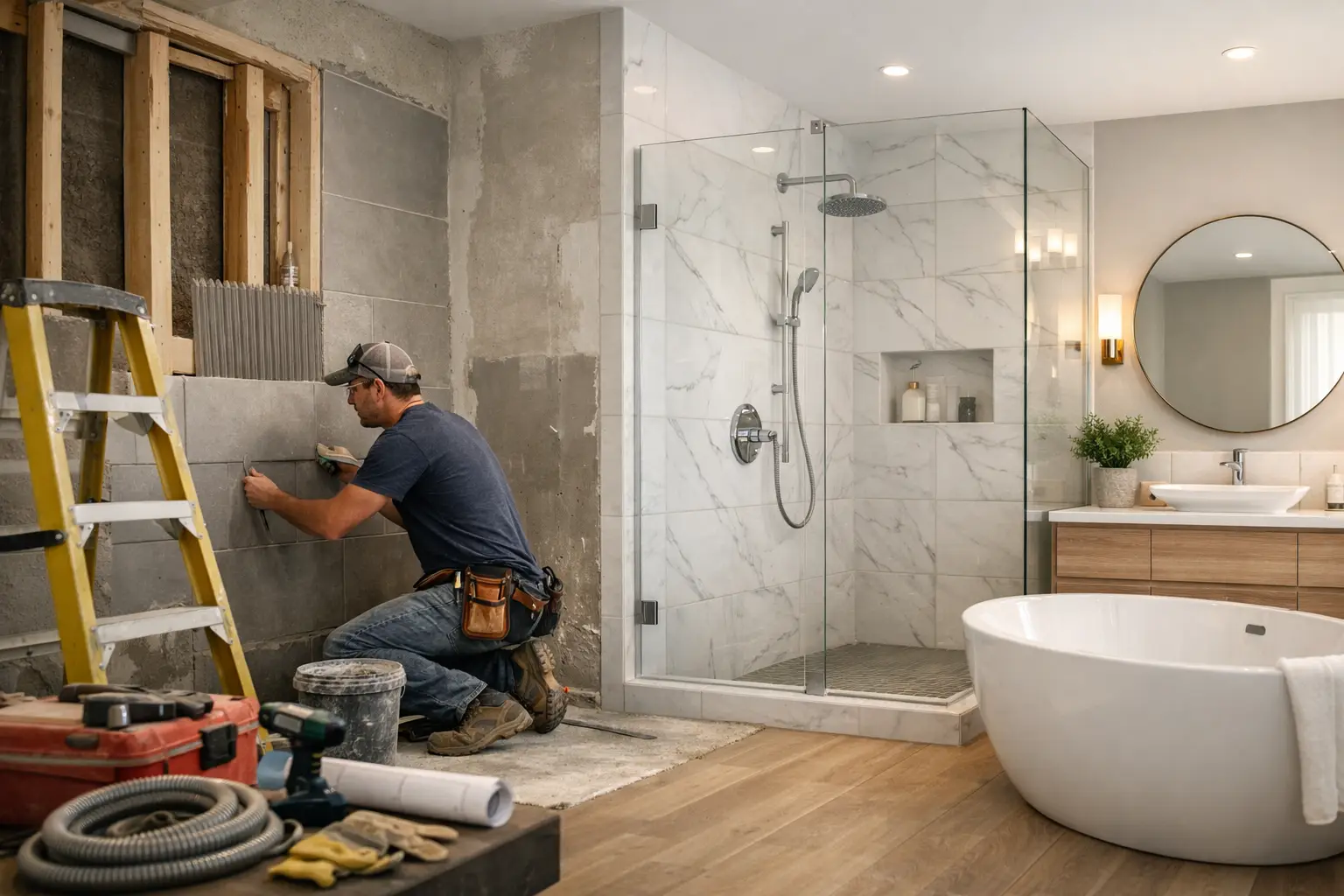
A bathroom can look fine on the surface and still be hiding problems underneath. Loose tiles, tired fittings, poor drainage and failed waterproofing often show up slowly, then all at once. That is why complete bathroom renovations are about more than replacing a vanity or updating tapware. Done properly, they fix the parts you cannot see as well as the parts you use every day.
For homeowners in Caroline Springs and Melbourne’s western suburbs, the main priority is usually simple – get the job done properly, keep the process straightforward, and end up with a bathroom that lasts. That means looking beyond cosmetic updates and taking a whole-of-room approach from demolition through to final fit-off.
What complete bathroom renovations actually include
A full renovation starts with strip-out and demolition. Old tiles, damaged sheeting, outdated fittings and worn fixtures all need to come out before the new work can begin. This stage matters because it exposes the condition of the subfloor, walls, plumbing and drainage. If there is water damage, mould, movement or poor previous workmanship, it is far better to find it early than cover it up.
From there, the project moves into the technical work. Plumbing rough-in, carpentry, substrate preparation and waterproofing all need to be completed to a proper standard before any tiling or fitting installation begins. These are not the parts that get attention in photos, but they are the parts that decide whether your bathroom performs well over time.
A complete renovation generally includes wall and floor tiling, shower construction, vanity installation, toilet and basin fit-off, tapware, mirror placement, lighting updates and finishing details. In many homes, it also includes layout improvements to make the room easier to use. That might mean replacing a hob shower with a walk-in shower, improving storage with a custom vanity, or creating better clearance around the toilet and basin.
Why the hidden work matters more than the surface finish
A bathroom is one of the hardest-working rooms in the house. It handles daily moisture, heat, cleaning products and heavy use. When the waterproofing fails or drainage is not set correctly, the damage spreads beyond the bathroom itself. Rot, swelling, leaks and mould can affect adjoining rooms, internal walls and flooring.
That is why there is a real difference between a quick refresh and complete bathroom renovations. A cosmetic update may improve appearance in the short term, but if the membrane, plumbing or tile base is already compromised, the good look does not last. Spending money twice is rarely cheaper.
Qualified trade work matters here. Waterproofing needs to be done correctly. Plumbing needs to comply. Carpentry and framing need to support the finished room properly. Tiling needs correct falls, clean set-out and a solid substrate. If one stage is rushed or handled by the wrong person, the next stage suffers.
Complete bathroom renovations are not one-size-fits-all
Every bathroom has different constraints. An older home may have uneven floors, outdated pipework or wall damage behind the tiles. A family bathroom might need stronger storage, a larger shower and easier cleaning. An ensuite may be more about making a compact room feel open and functional.
There is also the question of budget versus scope. Some clients want to keep the existing layout to control plumbing costs. Others are better off reworking the space completely because the current arrangement wastes room or makes daily use awkward. Neither option is automatically right. It depends on the existing condition, the room size, and what you need the bathroom to do.
That is where a practical renovation approach helps. Instead of selling features for the sake of it, the focus should be on what improves performance, comfort and long-term value. A walk-in shower can make a small bathroom feel larger, but only if the drainage and screen placement are right. Large-format tiles can create a cleaner look, but the substrate still has to be prepared properly. A floating vanity can open up floor space visually, but storage needs still have to be met.
The process should be clear from start to finish
One of the biggest concerns homeowners have is not just cost. It is uncertainty. They want to know what is happening, who is doing the work, how long it will take, and whether corners are being cut.
A proper renovation process should be straightforward. First comes site inspection and quoting, with a clear look at the existing bathroom and a practical discussion about goals, finishes and layout. Once the scope is confirmed, the work moves in order – demolition, rough-in, preparation, waterproofing, tiling, fixture installation and fit-off.
This sequencing matters. Bathrooms involve multiple trades, and each one depends on the quality of the previous stage. Trying to speed through the technical steps usually creates delays later. A fast turnaround is valuable, but only when it comes with proper coordination and workmanship.
That is one reason many homeowners prefer an end-to-end service rather than juggling separate contractors. With one team managing the job, accountability is clearer and the standard is more consistent. There is less back-and-forth, fewer communication gaps and a better chance of keeping the project moving.
What to look for in a bathroom renovation specialist
When comparing renovation providers, price alone does not tell you much. A cheaper quote may leave out key work, rely on patching over old problems, or underestimate the time needed to do the job correctly. A better way to assess value is to look at capability, qualifications and the level of detail in the scope.
For complete bathroom renovations, trade-backed execution is a major advantage. A registered plumber, qualified carpenter and certified waterproofer bring the essential skills in-house or under tight control. That gives homeowners more confidence that the work behind the tiles is as solid as the finish on top.
You should also look for experience with the type of work your bathroom needs. Not every project is straightforward. Some require custom vanities, non-standard shower builds, drainage corrections or structural repairs once the strip-out begins. A team used to handling these issues will generally manage them with less disruption and fewer surprises.
Attention to detail matters as well. Straight tile lines, neat silicone, level fittings and clean transitions all make a difference to the final result. More importantly, those details usually reflect the standard of the work you cannot see.
Why local knowledge helps
Working with a local renovation business has practical advantages. A team servicing Caroline Springs and Melbourne’s west understands the housing styles common in the area, the expectations of local homeowners and the need for reliable turnaround. Local reputation also matters more when a business depends on repeat work, referrals and five-star reviews from nearby clients.
For many homeowners, trust comes down to this – will the person quoting the job stand by the workmanship once the renovation is finished? That is where a dependable local operator often stands apart from larger, less personal providers or one-off contractors.
BP Building & Maintenance is built around that practical model. The focus is on complete delivery, qualified trade work and bathrooms that are made to handle real everyday use rather than just present well on handover day.
The result should feel better, not just look newer
A good bathroom renovation changes how the room works. It should be easier to clean, easier to move through and more comfortable to use every day. Storage should make sense. The shower should drain properly. Fixtures should feel solid. The room should hold up under regular family use without showing problems six months later.
That is the difference with a full renovation done right. You are not just buying a nicer finish. You are investing in proper preparation, sound construction and a bathroom that adds value to the home because it has been built to last.
If your current bathroom is dated, hard to use or showing signs of wear, the smartest next step is not guessing what can be patched. It is getting clear advice on what the room really needs and having the work done properly from the start.