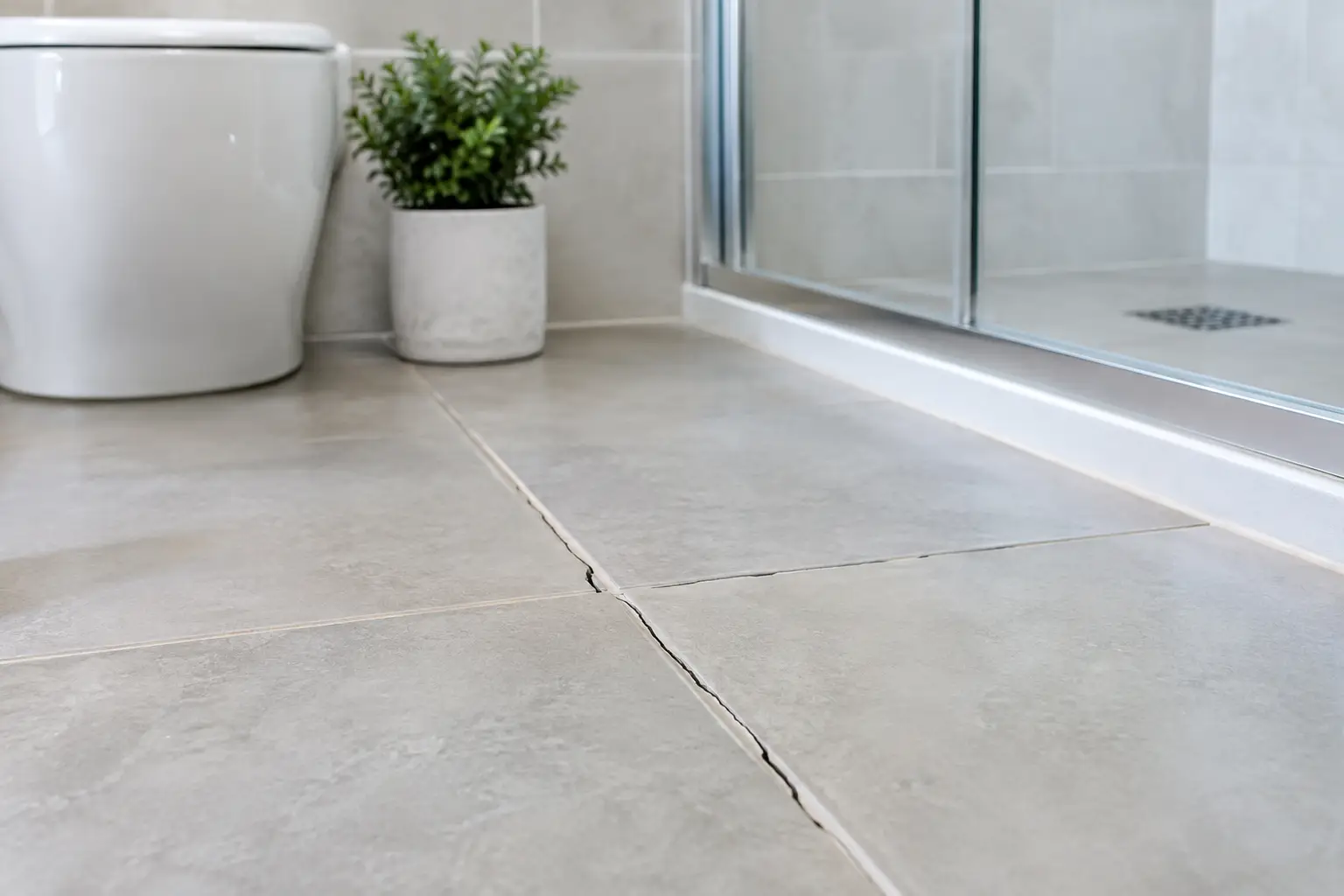
A hairline crack across a shower wall may look like a small cosmetic issue. But when homeowners ask why bathroom grout cracks, the answer is often more than age or normal wear. Grout is the visible finish between tiles, and cracking can point to movement, poor preparation, excess moisture or a bathroom system that was not built to handle wet-area conditions properly.
Some cracks are isolated and repairable. Others are an early warning that water may be getting behind tiles, particularly around showers, baths and bathroom floors. Knowing the difference can help you act before a minor repair turns into damaged wall linings, loose tiles or a larger renovation job.
Why bathroom grout cracks
Grout is a cement-based material designed to fill tile joints. It is hard once cured, but it is not flexible. Bathrooms, however, are exposed to movement. Floors can flex slightly, wall frames can move with seasonal changes, and different materials expand and contract at different rates.
When the tiled surface moves, grout is often the first thing to show it. The crack itself is not always the main problem. It is usually the result of something happening beneath or around the tile installation.
Movement in the wall or floor
Minor building movement is common, especially in homes with timber floors, older wall framing or areas where the substrate has not been adequately prepared. If tiles are fixed over a floor that flexes, the rigid grout joints can crack under everyday foot traffic.
This is particularly common on bathroom floors and at the junction between walls and floors. A crack running in a fairly straight line through several grout joints can suggest that the substrate is moving, rather than one joint simply wearing out.
Tile adhesive also needs sufficient coverage and the correct application method. Voids beneath a floor tile allow it to move slightly when stepped on. Over time, the grout around that tile may crack, crumble or lift out. The tile can eventually sound hollow or become loose.
Missing or failed movement joints
A properly tiled bathroom needs movement joints in the right places. These are flexible sealed joints that allow for controlled movement between different surfaces, such as where a tiled wall meets the floor, where a wall meets a shower base, or around fixtures.
These areas should not be rigidly grouted. They are generally sealed with a suitable sanitary-grade flexible sealant. If grout has been used in corners and changes of plane, cracking is likely because those surfaces naturally move independently.
The same applies where tiles meet a bath, vanity splashback or door frame. Replacing cracked corner grout with more grout may improve the look briefly, but it does not address the reason it cracked.
Poor surface preparation
Tiles need a stable, clean and suitable base. If the wall or floor was not levelled, sheets were not fixed correctly, or old adhesive and contaminants were left behind, the finished tile surface may not have adequate support.
In a bathroom renovation, preparation is not the part anyone sees at handover, but it has a major effect on longevity. Correct substrate selection, secure fixing, waterproofing and compatible adhesives all matter before grout is applied.
Shortcuts at this stage can leave tiles under stress from day one. Cracked grout might only become visible months later, after regular shower use and normal movement have exposed the weak point.
Incorrect grout selection or application
Not every grout suits every bathroom. Joint width, tile type, location and expected movement all affect the product that should be used. A shower floor, for example, has different demands from a decorative wall tile outside the wet area.
Problems can occur when grout is mixed too wet or too dry, applied over joints that are not properly cleaned, or washed out during installation. Rushing cure times can also weaken the finish. Grout that is powdery, pitted or falling away from joints may be an application issue rather than a structural one, although both need to be considered.
Older grout can also lose strength after years of cleaning products, moisture exposure and general wear. This tends to look more like gradual deterioration than a sharp crack running through otherwise sound joints.
Cracked grout and waterproofing failures
Grout is not waterproof. This is one of the most common misunderstandings in bathrooms. Even well-installed grout is water resistant, not a substitute for a compliant waterproofing system behind the tiles.
A correctly waterproofed shower is designed so that moisture passing through grout and tile adhesive is managed by the membrane beneath. When grout cracks, it can allow more water into the tiled assembly, but a sound waterproofing membrane should still protect the structure behind it.
The concern is greater when cracked grout appears alongside other symptoms. These may include loose or drummy tiles, swollen skirting boards outside the bathroom, peeling paint on the adjoining wall, mould that returns quickly, a musty smell, or staining below an upstairs bathroom.
In these situations, simply regrouting the visible crack is rarely a reliable fix. The bathroom needs to be assessed to establish whether the waterproofing, substrate or plumbing is compromised.
Cracks around the shower are worth checking early
Shower walls and floors receive constant water exposure, so defects there deserve prompt attention. Cracks around the shower screen, floor waste, wall-to-floor junctions and mixer plumbing penetrations are especially worth inspecting.
A failed silicone joint is not always a sign of major water damage, but it should not be ignored. Flexible sealant can split because it has aged, lost adhesion or been installed over a damp or contaminated surface. Replacing it correctly can prevent water from tracking into areas it should not reach.
What the crack pattern can tell you
The location and shape of the crack provide useful clues. A single fine crack in an older grout joint may be isolated wear. Repeated cracks, widening gaps or cracks that return after repair suggest movement or moisture that has not been resolved.
Cracks in internal corners are often caused by a rigid grout joint where flexible sealant should have been used. Cracks around one floor tile can indicate poor adhesive coverage or a tile that is moving underfoot. A line of cracked joints across a wall or floor can point to substrate movement, while crumbling grout throughout a shower may indicate poor installation, unsuitable materials or long-term moisture exposure.
No crack pattern gives a complete diagnosis on its own. The surrounding tiles, the feel of the floor, the age of the bathroom and any signs outside the room all need to be considered together.
When regrouting is enough – and when it is not
Regrouting can be a sensible repair where the tiles are firmly bonded, the crack is localised and there are no signs of water damage. The old failed grout needs to be removed to an appropriate depth, the joint cleaned and dried, and the correct grout or flexible sealant used for that location.
It is not a cure for loose tiles, a flexing floor, failed waterproofing or a plumbing leak. Applying new grout over cracked or missing grout without preparing the joint properly is a temporary cosmetic patch at best.
Where several tiles are loose, moisture damage is evident, or the shower has a history of recurring cracks and mould, a more thorough repair may be needed. Depending on the condition of the bathroom, that can involve removing affected tiles, repairing the substrate, replacing waterproofing and retiling the area. In older bathrooms, a full renovation can be the more cost-effective option than repeated patch repairs.
A proper bathroom inspection looks beyond the grout
A qualified bathroom tradesperson should inspect more than the visible joints. They should check whether tiles sound hollow, whether floors feel soft or move underfoot, the condition of silicone joints, drainage around the shower, ventilation and signs of moisture on adjoining surfaces.
They should also consider plumbing. A leaking shower mixer, waste connection or pipework behind a wall can create symptoms that look like grout failure. Identifying the source before repair work begins avoids spending money on the wrong solution.
For homeowners in Caroline Springs and Melbourne’s western suburbs, BP Building & Maintenance can assess cracked grout as part of a broader bathroom repair or renovation scope. With registered plumbing, qualified carpentry and certified waterproofing capability, the focus is on fixing the cause rather than covering the symptom.
If grout cracks are new, spreading or returning after previous repairs, arrange an inspection before water has more time to travel behind the tiles. A timely, well-scoped repair can protect the parts of your bathroom that matter most but cannot be seen.