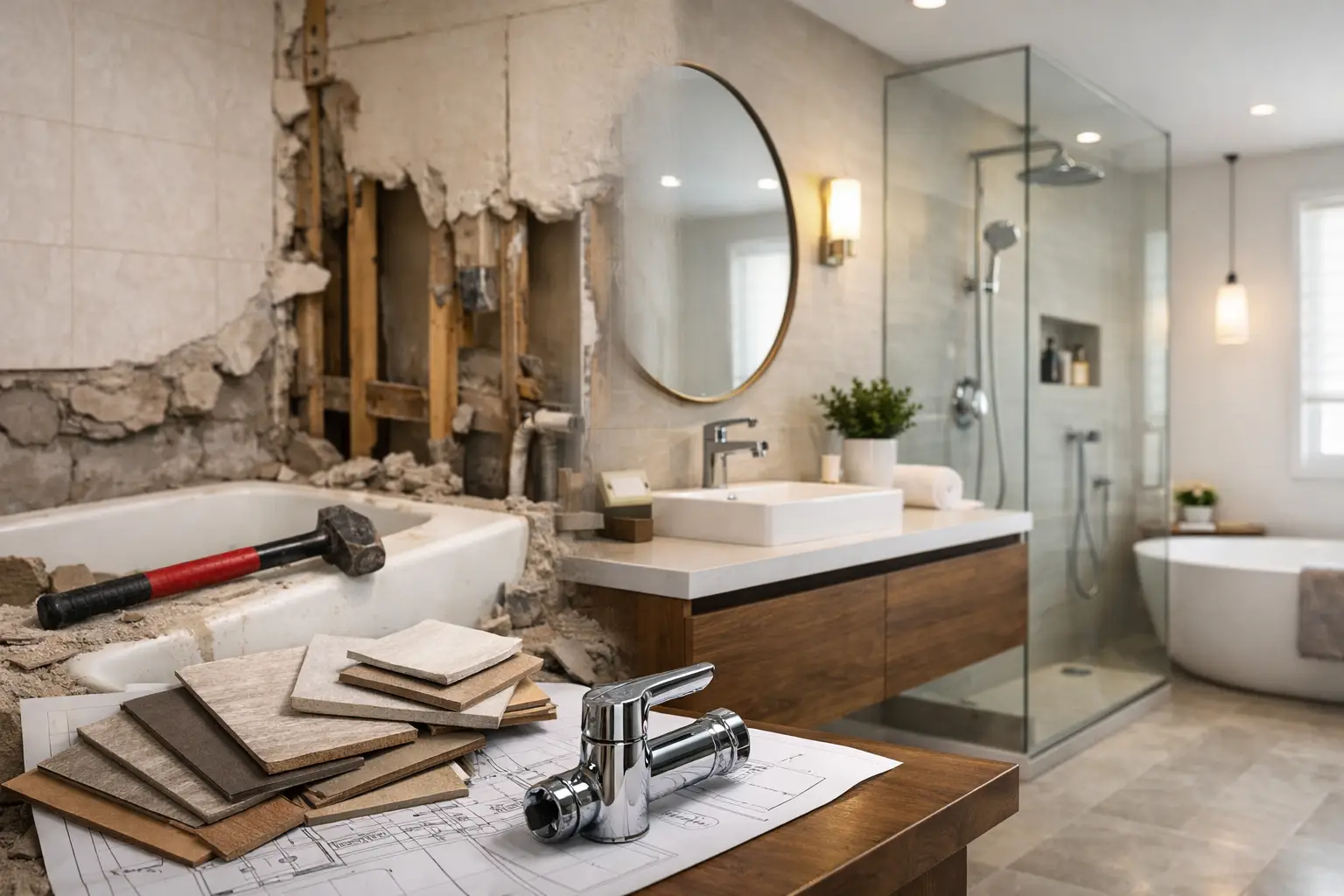
If you have to ask what is a full bathroom renovation, chances are your current bathroom is well past a simple update. Maybe the tiles are dated, the shower leaks, the layout wastes space, or the whole room just feels tired. A full renovation is the point where patch-up work stops making sense and the bathroom gets rebuilt properly from the ground up.
For most homeowners, that means more than swapping a vanity or replacing tapware. It means stripping the room back, fixing what sits underneath, and rebuilding it so it works better, lasts longer, and meets current standards. If you want a bathroom that looks good but also performs properly day after day, this is the level of work that matters.
What is a full bathroom renovation in practical terms?
A full bathroom renovation is a complete rebuild of the bathroom space. The existing fittings, finishes and often the wall and floor linings are removed so the room can be reworked from the base structure up. That usually includes demolition, plumbing changes where needed, waterproofing, tiling, fixture installation and fit-off.
In plain terms, the old bathroom is stripped out and a new one is built in its place. Depending on the condition of the room and the new design, this can also include structural carpentry, new lighting, ventilation improvements, custom joinery and a walk-in shower conversion.
That is very different from a cosmetic refresh. A refresh might involve painting, replacing a mirror, updating a screen or installing a new vanity in the same spot. A full renovation goes further because it addresses the parts you cannot afford to ignore, especially in a wet area.
What is included in a full bathroom renovation?
The exact scope depends on the bathroom, but a true full renovation usually starts with demolition and strip-out. Old tiles, shower screens, vanities, baths, toilets and wall linings are removed so the room can be assessed properly. Once everything is opened up, it is much easier to spot hidden water damage, poor previous workmanship or framing issues.
From there, plumbing and drainage are checked and altered if the layout is changing. If you are moving a shower, toilet or vanity, the rough-in work needs to be done before the room is closed up again. Electrical work may also be required for lighting, exhaust fans, heated towel rails or power points.
Then comes one of the most important stages – waterproofing. This is not the glamorous part, but it is the part that protects the rest of the job. Good waterproofing helps prevent leaks, structural damage, mould and expensive repairs later. In many older bathrooms, failed waterproofing is the real reason a renovation becomes necessary in the first place.
After waterproofing, the room is prepared for wall and floor tiling. Once the tiles are laid and cured, the bathroom moves into fit-off. That is where the toilet, vanity, shower screen, tapware, mirrors, bath and accessories are installed. If the job includes a custom vanity, recessed niche, feature tiling or a walk-in shower, those details are also finished during this stage.
A proper full renovation finishes with silicone sealing, testing, clean-up and final checks. That matters because a bathroom can look complete before it is actually complete.
Why homeowners choose a full renovation instead of smaller upgrades
The biggest reason is that surface-level changes do not fix underlying problems. New tapware will not solve poor drainage. Fresh tiles will not help if the substrate underneath has water damage. A new shower screen will not correct a shower base that was built incorrectly.
A full renovation makes sense when the bathroom has multiple issues at once. You might be dealing with cracked tiles, outdated plumbing, poor storage, mould, a cramped shower or a layout that does not suit your household anymore. In that situation, trying to repair each issue separately often costs more over time and still leaves you with a compromised bathroom.
It also comes down to confidence in the result. If you are investing in your home, you want to know the bathroom has been built by qualified trades and that the waterproofing, plumbing and carpentry have been handled correctly. That is especially important in family homes and established properties where long-term durability matters more than a quick visual upgrade.
A full bathroom renovation is not just about looks
A better-looking bathroom is part of the outcome, but it should not be the only goal. The real value is in how the space functions and how well it holds up.
A well-planned renovation can make a small bathroom feel more open, improve access, create better storage and make cleaning easier. Swapping a bulky shower base for a walk-in shower can improve movement and modernise the room at the same time. A custom vanity can give you practical storage where a standard unit cannot. Better ventilation can reduce moisture build-up and help protect paint, grout and cabinetry.
There is also a compliance side to bathroom work that many homeowners do not see until something goes wrong. Wet areas need the right preparation, the right products and the right installation sequence. Shortcuts in these areas can lead to leaks into adjoining rooms, damaged flooring and costly rectification work. That is why trade-qualified execution matters.
How long does a full bathroom renovation take?
This depends on the size of the bathroom, the complexity of the design and whether any hidden issues are uncovered during demolition. As a general guide, a standard full bathroom renovation often takes a couple of weeks from strip-out to completion, but some jobs run longer if custom materials are involved or the layout changes significantly.
The timeline is influenced by more than labour alone. Waterproofing and tiling need proper curing time. Custom vanities and shower screens may need to be measured and manufactured. If the bathroom is in an older home, there can be surprises once the room is opened up.
Fast turnaround is valuable, but it should not come at the expense of workmanship. A bathroom is one area where rushing the wet trades can create expensive problems later.
What affects the cost?
When people ask what is a full bathroom renovation, cost is usually the next question. The honest answer is that it depends on the size of the room, the amount of preparation required, the fixtures you select and whether the layout is staying the same.
Keeping plumbing in the existing positions can help control costs. Moving the toilet or shower usually adds labour and materials. Tile choice also has an impact, especially if you choose large-format tiles, full-height tiling or detailed feature work. Custom joinery, frameless shower screens and premium tapware will increase the spend as well.
The condition of the existing bathroom matters too. If the strip-out reveals rotten framing, damaged sheeting or failed previous waterproofing, that needs to be fixed before the new bathroom goes in. It can add to the budget, but it is still better to deal with it properly than cover it up.
What should you expect from the renovation process?
You should expect a clear scope of work, realistic advice and proper trade coordination. A full bathroom renovation is one of those jobs where sequencing matters. Demolition has to be done cleanly. Plumbing and carpentry need to happen before waterproofing. Waterproofing must be complete before tiling starts. Fit-off comes after that.
You should also expect honest discussion about what is possible in your space. Not every design idea suits every bathroom. In some rooms, a freestanding bath looks great in photos but makes the space harder to use. In others, removing a bath in favour of a larger shower is the more practical choice. Good advice is not about selling the biggest job. It is about building the right bathroom for how you live.
For homeowners across Caroline Springs and Melbourne’s western suburbs, that often means balancing style with durability. A bathroom has to stand up to daily use, moisture and cleaning. It needs to be easy to maintain and built by people who understand the technical side, not just the visual side.
Is a full bathroom renovation worth it?
If your bathroom has reached the point where multiple elements are failing, yes, it often is. A full renovation gives you the chance to fix hidden issues, improve function and avoid ongoing repair costs. It also gives you a bathroom that feels current, comfortable and built to last.
That does not mean every bathroom needs a full strip-out. If the room is structurally sound and the waterproofing is intact, a smaller update may be enough. But if there are signs of leaks, ageing finishes, poor layout or workmanship concerns, doing the job once and doing it properly is usually the better path.
A bathroom is one of the hardest-working rooms in the house. When it is built well, you notice it every day in the best way – everything works, nothing feels compromised, and you are not worrying about what is happening behind the tiles.
If you are weighing up whether your bathroom needs minor work or a complete rebuild, start by looking past the surface. The smartest renovation decisions are usually made there.