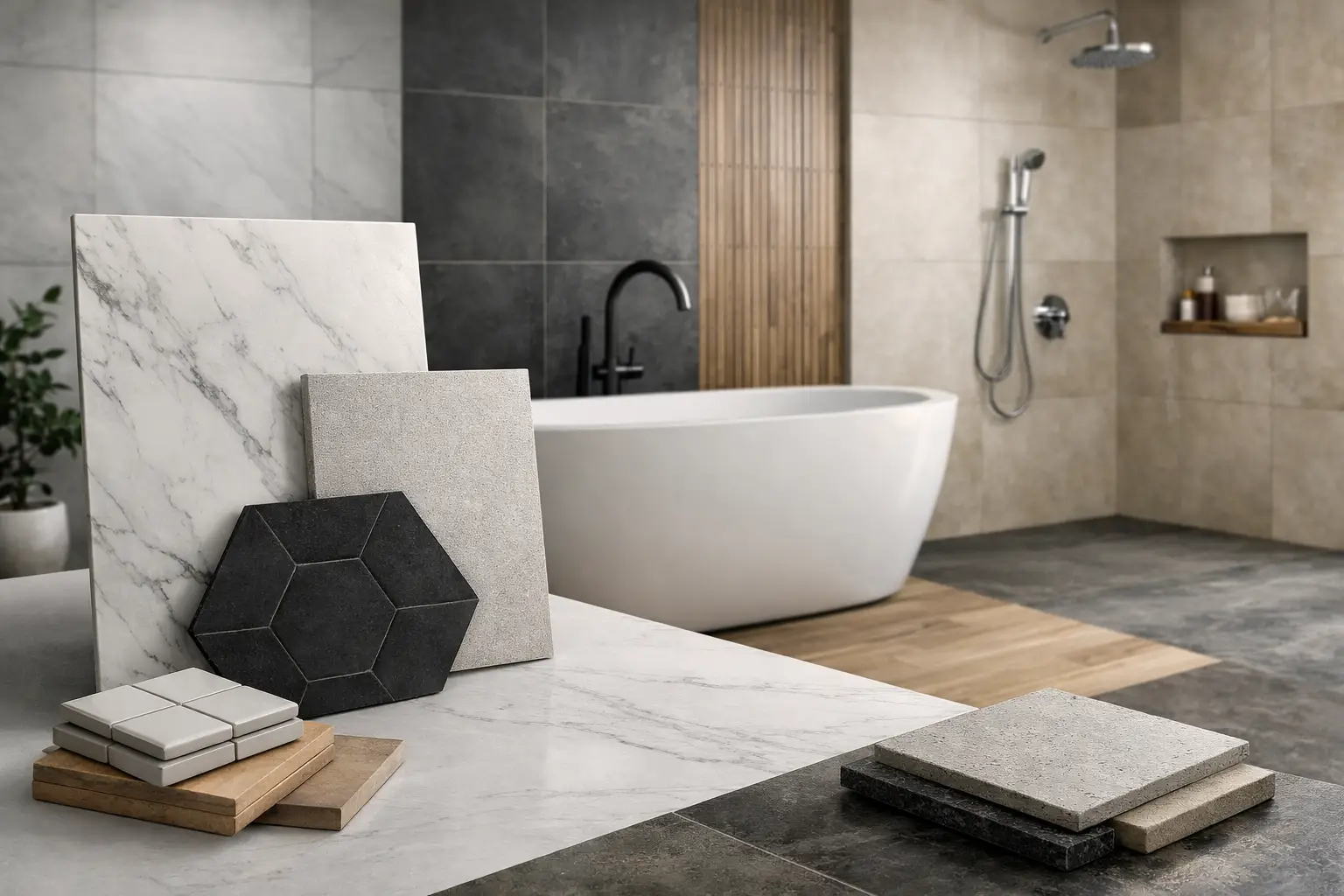
A bathroom can look great on handover day and still be the wrong fit six months later. We see it often – glossy tiles that show every water spot, floor tiles that feel risky underfoot, or trendy choices that date quickly. Picking the best wall and floor tiles for bathroom renovations is not just about style. It is about safety, cleaning, durability and how the whole room performs over time.
If you are renovating properly, tile selection needs to work with the layout, waterproofing, drainage and fixture choices. A good tile can lift the space. The wrong one can make a new bathroom feel harder to live with than the old one.
What makes the best wall and floor tiles for bathroom projects?
The best tile choice usually comes down to four things – water resistance, slip resistance, maintenance and visual balance. Bathrooms are wet areas, so surfaces need to handle moisture without creating extra cleaning or safety problems. That sounds simple, but there are trade-offs.
For example, a highly polished tile may look sharp on a display board, but it can be slippery on the floor and show soap residue fast. A heavily textured tile can improve grip, but if the texture is too aggressive, it can trap grime and make mopping harder. The right answer depends on who uses the bathroom, how much natural light the room gets, and whether this is a family bathroom, ensuite or investment property.
Best tile materials for bathroom walls and floors
Porcelain is the standout choice for most bathrooms. It is dense, hard-wearing and performs well in wet areas. It suits both walls and floors, comes in a wide range of finishes and sizes, and gives you flexibility whether you want a clean modern look or something more natural. For busy households, porcelain is usually the safest all-round option.
Ceramic also works well, especially on walls. It is often more budget-friendly and easier to cut, which can help when working around niches, windows or tighter details. On floors, though, ceramic is not always the first pick for high-traffic bathrooms. It depends on the tile rating and the intended use.
Natural stone can look excellent, but it needs a more careful approach. Stone has character and warmth that manufactured tiles sometimes cannot match, but it also needs sealing and ongoing maintenance. In a bathroom used by a family every day, that extra upkeep is not always welcome. Stone can still be a strong choice in the right project, but it suits homeowners who are happy to maintain it properly.
Wall tiles – what works best in practice
Wall tiles give you more design freedom because slip resistance is not a factor. That is why many people go for smoother finishes, larger formats or decorative feature tiles on the walls.
Large-format porcelain wall tiles are popular for good reason. They create a cleaner look with fewer grout lines, which usually means easier cleaning and a more spacious feel. In smaller bathrooms, that matters. A tight room can feel far less cluttered when the wall tile pattern is simple and the grout joints are reduced.
Gloss tiles can help bounce light around, especially in bathrooms with limited natural light. That said, matte and satin finishes have become more common because they look softer and tend to hide marks better. If you want a bathroom that still looks tidy between cleans, a low-sheen wall tile is often the more practical option.
Feature tiles are best used with restraint. A full room of strong pattern can close the space in. One feature wall, a shower recess, or a vanity splashback area usually gives enough interest without overworking the design.
Popular wall tile styles that last
Stone-look tiles, soft concrete-look finishes and simple white or off-white tiles tend to age well. They give you flexibility with tapware, vanity colours and fittings if tastes change later. Heavily trend-driven colours or busy prints can look good now, but they can also lock the whole room into one era.
For resale, neutral tones are usually the safer move. That does not mean bland. Warm greys, soft beige, sand tones and muted whites can still look premium when the tile size, layout and trim details are done properly.
Floor tiles – where function matters most
Floor tile selection needs more discipline than wall tile selection. Safety comes first. In a wet bathroom, especially around showers and bath areas, the floor tile needs suitable grip without becoming a headache to clean.
Porcelain floor tiles with a matte or lightly textured finish are usually the best choice. They give a good balance between slip resistance and maintenance. This is where many renovations go wrong – people choose based on showroom appearance rather than how the tile performs with wet feet and daily use.
Smaller floor tiles can be useful in shower bases because they follow falls more easily and provide more grout lines for grip. Larger tiles can work on the main bathroom floor, but they need to suit the room size and drainage plan. This is not just a design decision. Tile size affects how well the floor can be laid to fall correctly, especially in showers.
Slip resistance is not optional
If you are comparing floor tiles, ask about slip ratings and where the tile is suitable to be installed. A bathroom floor that looks sleek but becomes slippery after the first shower is not a good result. This matters even more for family homes, older residents, and anyone planning to stay in the home long term.
There is a balance here. Very rough tiles can improve grip, but some are harder to keep clean and less comfortable under bare feet. For most homes, a quality matte porcelain tile in the right rating is the practical middle ground.
Tile size and layout can change the whole room
The best wall and floor tiles for bathroom spaces are not only about material and finish. Size matters more than many homeowners expect.
Large wall tiles can make a bathroom feel more open and reduce visual clutter. On floors, medium to large tiles often create a modern look, but oversized tiles are not always ideal in smaller bathrooms with multiple angles, niches or tight set-outs. More cuts can mean more waste and a busier finish if the layout is not planned well.
Tile layout matters too. A straight lay suits most bathrooms and keeps the look clean. Stacked vertical wall tiles can make the ceiling feel higher. Subway tiles can still work, but they need careful handling. If the whole bathroom uses small-format tiles with contrasting grout, it can feel busy fast.
Grout colour and maintenance matter more than people think
Tiles get the attention, but grout has a huge effect on the final result. Bright white grout on bathroom floors rarely stays looking fresh without regular upkeep. Dark grout can hide dirt better, but if it is too dark against a light tile it can create a grid effect that dominates the room.
A mid-tone grout is often the most practical choice. It softens the joints, hides everyday marks better and still keeps the room looking clean. This is especially useful in family bathrooms where function matters as much as presentation.
Good tile work also depends on proper substrate preparation, waterproofing and installation. Even the best tile on the market will not save a bathroom if the wet-area work underneath is poor. That is why the tile choice should never be separated from the renovation method.
Matching tiles to the type of bathroom
An ensuite usually gives you more freedom to prioritise style because traffic is lighter and fewer people use it. A family bathroom needs tougher decisions. Floors need dependable grip, surfaces need to clean easily, and colours need to hide everyday wear.
For investment properties, simple and durable usually wins. Neutral porcelain tiles, practical grout colours and a finish that stays looking tidy without too much effort will generally hold up better than high-maintenance feature choices.
In many homes across Caroline Springs and Melbourne’s western suburbs, bathrooms are expected to do hard daily work. Kids, quick morning routines, steam, splashes and regular cleaning all put pressure on the finishes. That is why practical tile selection usually gives the best long-term result.
What we usually recommend for a reliable finish
For most full bathroom renovations, the safest combination is porcelain wall tiles in a smooth matte or satin finish, paired with slip-rated porcelain floor tiles in a matte or lightly textured finish. Keep the wall colour light to mid-tone, use a floor tile that grounds the room without making it feel dark, and avoid finishes that demand constant wiping.
If you want a feature, use it in one area only. If you want a luxury look, get it through tile size, clean set-out, sharp mitres and quality fit-off rather than chasing the loudest pattern in the showroom. Well-executed simple choices often look more expensive than complicated ones.
A good bathroom should still feel solid, safe and easy to maintain years after the renovation is complete. That is the real test. Not how the sample looked under bright showroom lights, but how the finished space works on a rushed weekday morning.
The right tile choice is the one that suits your home, your household and the way the bathroom will actually be used. Get that right, and the room will not just look better – it will perform better every day.