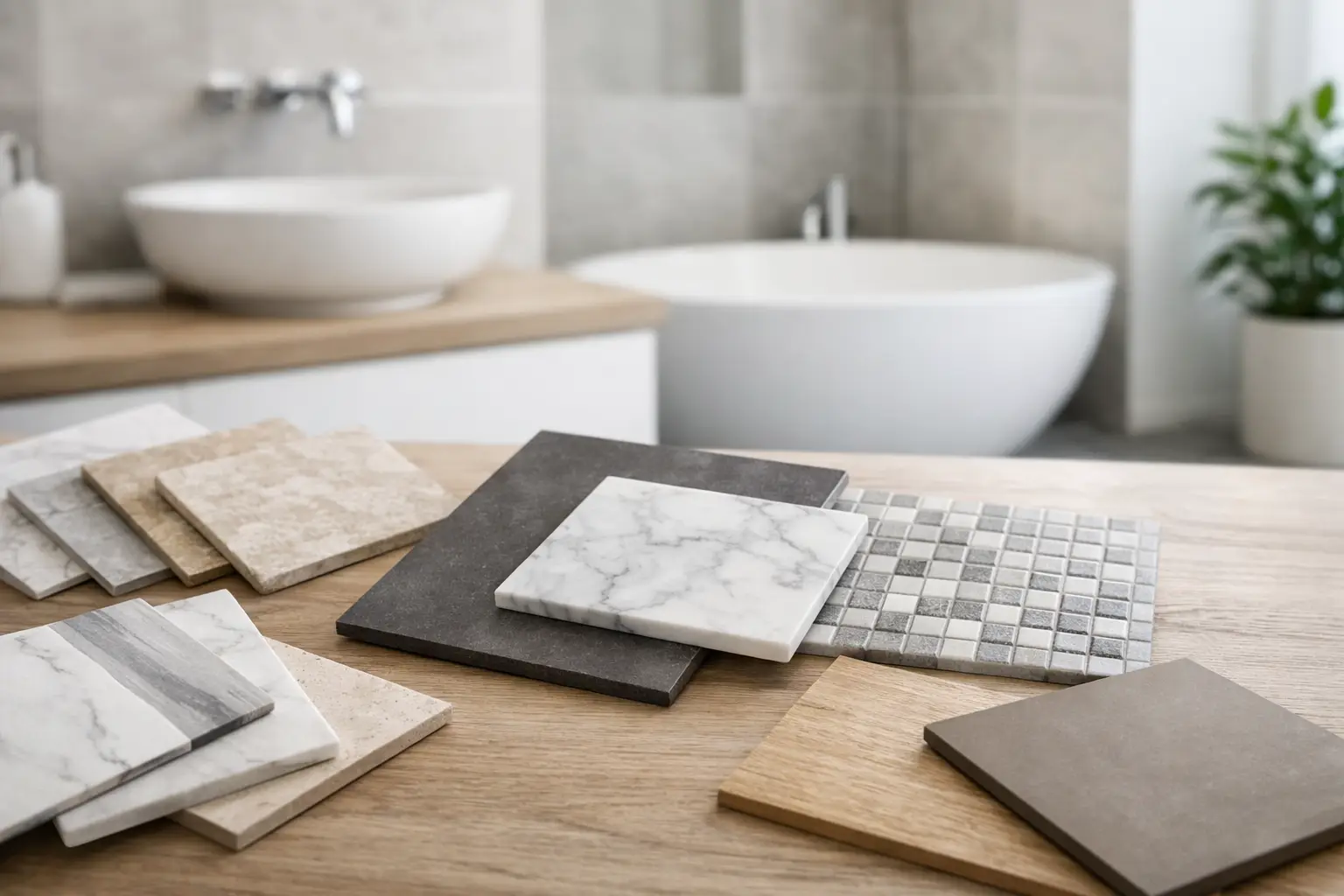
Picking tiles for a bathroom sounds simple until you are staring at dozens of samples that all looked good in the showroom. This is where most people get stuck. If you are wondering how to match bathroom wall and floor tiles, the right answer is not to make everything identical. It is to make sure the tiles work together in scale, finish, colour and day-to-day practicality.
A bathroom has to look good, but it also has to handle water, cleaning, slip risk and years of use. That is why tile selection should never be treated as a purely decorative choice. The best bathrooms get the balance right between appearance and performance.
How to match bathroom wall and floor tiles without guessing
The easiest way to get tile matching right is to start with the floor, not the wall. Floor tiles carry more technical weight because they need to be suitable for wet areas, feel safe underfoot and cope with regular use. Once the floor tile is locked in, wall tiles become easier to select because you are matching around a practical base rather than building a design from loose ideas.
In most bathrooms, the floor should be the more grounded element. That might mean a soft grey porcelain, a warm stone-look tile or a textured neutral with some movement through it. The wall tile can then either lighten the room, add contrast or keep things calm and consistent.
What usually works best is coordination rather than exact matching. A wall tile and floor tile do not need to be from the same range to look right together. They just need to share something in common – similar undertones, a related texture, or a finish that suits the same style of bathroom.
Start with the overall feel you want
Before choosing individual tiles, decide what the bathroom is meant to feel like. Clean and minimal? Warm and relaxed? Crisp and modern? That decision helps rule out combinations that clash even if each tile looks fine on its own.
For a modern bathroom, larger format tiles in neutral shades often create a cleaner finish with fewer grout lines. If you want something softer and more natural, a stone-look floor tile with a simple matte wall tile usually gives a solid result. If the goal is to make a small bathroom feel brighter, lighter wall tiles can help bounce more light around the room while the floor adds some depth.
This is where a lot of homeowners go off track. They pick a feature wall tile they love, then try to force the rest of the room to catch up. In practice, bathrooms usually come together better when the feature is the last layer, not the starting point.
Match the undertones, not just the colour
Two tiles can both be called white, beige or grey and still look wrong together. That is because the undertone is what actually drives whether a pair feels balanced. One grey might lean blue, another might lean brown. One white might be crisp and cool, another creamy and warm.
When working out how to match bathroom wall and floor tiles, undertones matter more than the name on the sample. If your floor tile has a warm base, the wall tile should usually sit in the same family. Mixing warm and cool can work, but it needs a deliberate eye. More often, it just looks like two different jobs ended up in the same room.
Natural light, artificial lighting and even the vanity colour will affect how undertones read. That is why tile samples should always be looked at together in the actual bathroom where possible. A showroom light can flatter a combination that feels flat or mismatched once installed at home.
Use contrast carefully
Contrast is useful, but too much of it can make a bathroom feel chopped up. A dark floor with a much lighter wall is a common choice because it anchors the space and keeps the room feeling open. That said, the contrast should still feel connected.
If the floor tile is charcoal and the wall tile is bright white, the result can look sharp and contemporary, but only if the fittings, vanity and grout support that direction. If everything else in the room is soft and warm, that same contrast can feel harsh.
Low-contrast schemes are often easier to live with. A mid-tone floor with a slightly lighter wall gives a more consistent look and tends to age better. It also makes small bathrooms feel less busy, which matters in many homes where the bathroom footprint is tight.
Think about tile size and scale
Tile size plays a bigger role than many people expect. You can match colours well and still end up with a bathroom that feels off because the scale is not doing the room any favours.
Large format wall tiles can make a bathroom feel cleaner and more spacious because there are fewer grout joints. On the floor, larger tiles also work well in many bathrooms, but they need to suit the falls and drainage requirements, especially in shower areas. In some cases, smaller floor tiles or mosaics are the better option because they allow for proper water run-off and more grip underfoot.
That means wall and floor tiles do not always need to match in size to match visually. In fact, they often should not. A common and practical approach is a larger wall tile with a smaller floor tile in a related tone. This gives the room variety without creating visual noise.
Choose finishes for function first
Gloss wall tiles can help reflect light and are easy to wipe down, so they remain a popular choice. Matte wall tiles have a softer, more contemporary look and can feel a bit less clinical. Both can work, depending on the style of the room.
On the floor, safety matters more. A bathroom floor tile should have enough grip for a wet area. That often points to a matte or textured finish rather than a polished one. A polished floor tile might look sleek on a sample board, but in a real bathroom it can be impractical.
This is a good example of where matching should not mean repeating the same finish everywhere. A matte floor tile paired with a gloss or satin wall tile often gives a better result than trying to keep everything identical.
Don’t ignore grout colour
Grout can either tie the tile scheme together or work against it. If you want a calm, uniform finish, choose grout close to the tile colour. If you want the tile shape or pattern to stand out, a contrasting grout will do that, but it also makes every line more visible.
In bathrooms, grout also needs a practical mindset. Very light grout can show staining more easily, while very dark grout can highlight soap residue or mineral marks. Mid-tone grout is often the safest choice for long-term appearance.
The grout on the wall and floor does not always have to be exactly the same, but it should look intentional. Random changes in grout colour can make even quality tiling look disconnected.
Feature tiles work best in moderation
Feature tiles have their place, especially in shower niches, splashback sections or a single wall. The problem starts when the feature tile fights with both the wall tile and the floor tile for attention.
If you are using a patterned or textured feature, keep the main wall and floor tiles more restrained. The feature should support the room, not dominate every surface. In smaller bathrooms, less is usually more. A compact room can quickly feel crowded when there are too many finishes competing.
A good feature tile often picks up a tone already present in the floor or wall tile. That one link helps the whole space feel thought through.
Practical combinations that usually work
Some tile pairings hold up well because they balance style and function. A stone-look floor tile with a plain white or off-white wall tile is reliable for a reason. It suits a wide range of vanities and fittings, and it does not date quickly.
Warm beige or greige floor tiles with matching neutral wall tiles create a softer bathroom that feels less stark than all-white. For a more contemporary look, concrete-look floor tiles with simple rectified wall tiles can work well, especially when the joinery and fixtures are kept clean and uncluttered.
What matters is not chasing trends too hard. Bathroom renovations are not something most homeowners want to redo in a few years because a fashionable combination already feels tired.
Get the technical side right as well
Tile selection should always sit alongside proper bathroom construction. Falls, waterproofing, substrate preparation and installation quality all affect the final result. A well-matched tile scheme will not save a bathroom from poor workmanship, and even premium tiles can look average if they are laid badly.
That is why the matching process should consider where each tile is going, how it will be installed and how the room is used. In older homes across Melbourne’s western suburbs, for example, bathroom renovations often involve correcting uneven surfaces or outdated layouts before the tiling even starts. Those site conditions can influence what tile sizes and finishes are realistic.
If you are planning a full renovation, it helps to choose tiles with the installer’s advice rather than treating tiling as the last cosmetic step. A qualified team can tell you early if a tile is suitable for shower floors, whether a format will work with the room size, and how the final layout will actually look once cuts, niches and fittings are accounted for.
The right tile combination should feel settled the moment you walk in. Not forced, not overdesigned, and not built around a passing trend. If you are working out how to match bathroom wall and floor tiles, keep your focus on balance, practicality and finishes that will still look right years from now. That is usually what turns a bathroom from a collection of samples into a room that genuinely works.