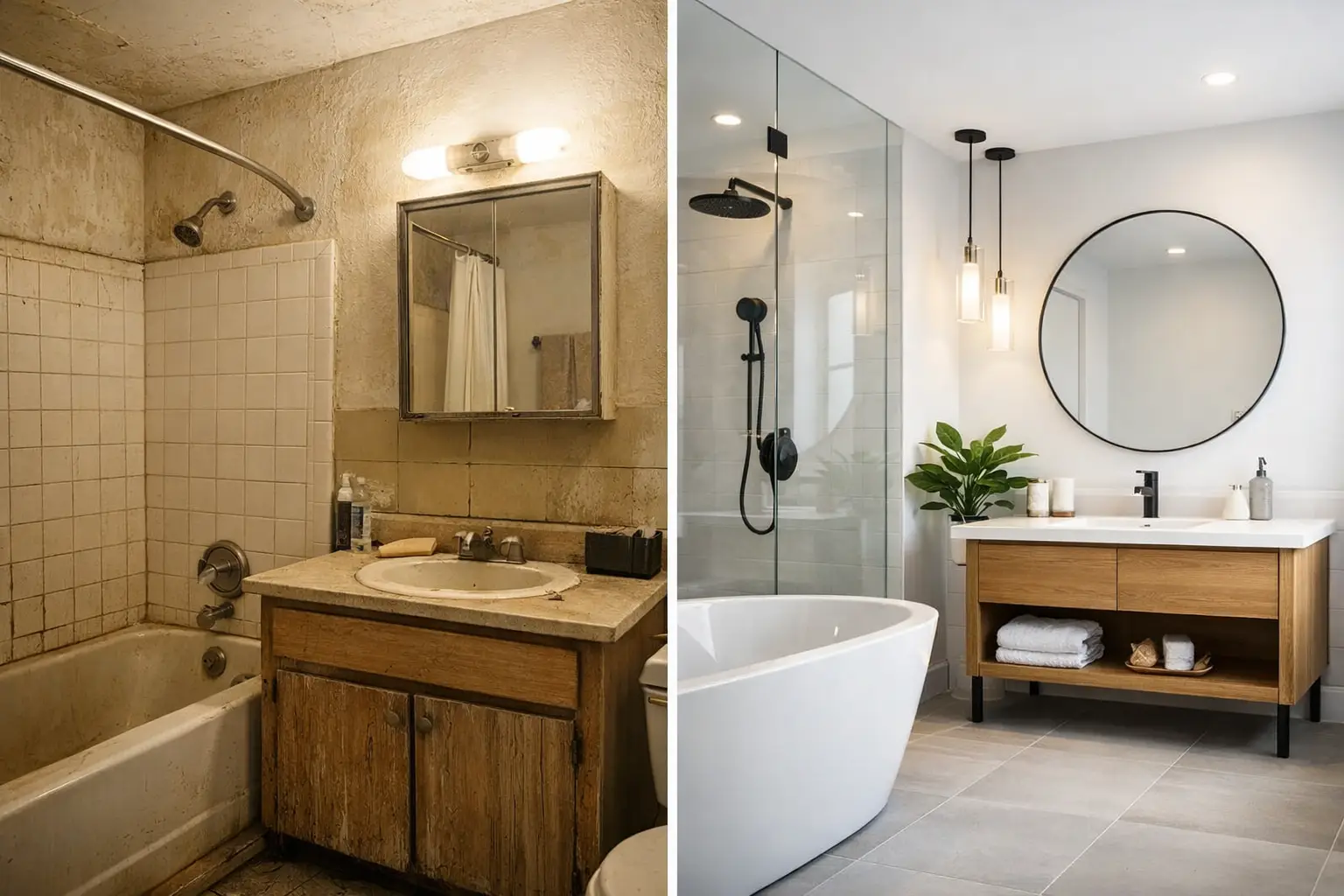
A good bathroom renovation is not simply a change of tiles and tapware. The most convincing bathroom renovation before and after example shows what has changed behind the walls as well as what you can see: a better layout, correct waterproofing, reliable plumbing and a finish that stands up to daily family use.
For homeowners across Caroline Springs and Melbourne’s western suburbs, the starting point is often familiar. The bathroom feels dated, storage is limited, the shower is cramped, and there may be signs of tired sealant, loose tiles or water damage around the vanity. A proper renovation turns those frustrations into a room that works properly every morning – without cutting corners on the trades that protect the home.
A bathroom renovation before and after example
Consider a typical older family bathroom: a boxed-in shower over a small bath, a narrow vanity, worn floor tiles and a separate toilet layout that wastes usable space. The room may technically function, but it feels dark, crowded and difficult to clean. More importantly, the existing waterproofing may be at the end of its life.
The goal is not to make the room look larger through styling alone. It is to create a more open, practical bathroom with a walk-in shower, better storage, improved lighting and durable finishes. That calls for a full strip-out and a coordinated plan, not a cosmetic patch-up.
Before: the issues that needed fixing
In this example, the old shower base has high edges that make access awkward. The bath takes up valuable floor area but is rarely used. A pedestal basin provides almost no storage, while the mirror and lighting leave shadow across the vanity. Grout is stained, silicone has failed in places, and there are signs that moisture has been getting where it should not.
These are common reasons to renovate, but they need different solutions. Replacing the vanity alone will not resolve a leaking shower. Regrouting may freshen the surface, but it cannot repair failed waterproofing below the tiles. The right scope depends on what is found during demolition and whether the existing layout can be retained safely.
The strip-out: where quality starts
A full renovation begins with careful demolition and removal of the old fittings, wall linings and tiles where required. This stage exposes plumbing positions, wall condition and any hidden damage. It is also when a qualified renovation team can identify whether framing needs repair or whether old pipework should be upgraded before the room is closed back in.
There is a practical trade-off here. Keeping plumbing in the same location can help control costs, particularly in smaller bathrooms. Moving the toilet, shower or waste lines can improve the layout, but it may add time and labour. A good plan weighs the daily benefit against the budget rather than automatically moving everything because it looks good on a drawing.
During: building the room properly
Once the room has been stripped back, the new layout takes shape. In this example, the unused bath is removed and replaced with a generous walk-in shower. A fixed glass panel keeps the space open, while a properly formed shower area provides a clean, modern look without a bulky framed enclosure.
The plumbing rough-in is completed before wall linings and tiling. This is the time to set the shower mixer, basin taps, toilet connection and drainage positions accurately. It is also the right time to allow for practical details, such as a recessed shower niche, a larger vanity basin, or an additional power point where permitted and required.
Waterproofing is one of the most important parts of the job. It is not a finish layer and it should never be treated as an optional extra. A certified waterproofer prepares and applies the membrane to the required areas before tiling begins, paying close attention to corners, wall-to-floor junctions, penetrations and the shower zone. The tiles look after the appearance. The waterproofing system protects the structure beneath them.
After waterproofing has cured, wall and floor tiling can proceed. Large-format light tiles can make a compact bathroom feel calmer and more spacious, although they require precise preparation to achieve an even finish. Smaller tiles may suit a shower floor where additional grip and falls are needed. The best selection is not always the most expensive tile – it is the one that suits the room, the required maintenance level and the overall design.
After: a bathroom built for everyday use
The finished room in this bathroom renovation before and after example is brighter, simpler and easier to use. The walk-in shower improves access and removes visual clutter. A wall-hung vanity creates clear floor space and provides drawer storage for everyday items. A larger mirror and well-positioned lighting make the room more functional, particularly during busy mornings.
The updated colour palette helps, but the biggest difference is in the detail. Tile lines are planned around the room rather than left to finish with awkward cuts. The shower screen sits neatly against the tile work. Fixtures are level, drainage falls correctly, and silicone is applied cleanly at junctions. These details are what separate a bathroom that photographs well on handover day from one that continues to perform years later.
A concealed cistern or wall-hung toilet can create a cleaner look, but it is not automatically the best option for every home. Standard toilet suites can be easier and more economical to service. Similarly, a floating vanity looks sharp and makes cleaning easier, while a floor-standing unit may offer more storage in a family bathroom. The right choice comes down to how the household uses the space.
What makes the transformation worthwhile
The visible change in a renovated bathroom is satisfying, but homeowners usually notice the practical improvements first. There is less clutter around the basin, more room in the shower, better ventilation, and fewer surfaces that are difficult to scrub. A sensible layout can also make a small bathroom feel more comfortable without changing the room’s footprint.
The less visible benefits matter just as much. New waterproofing, correctly installed plumbing and sound preparation reduce the risk of expensive water damage. In a wet area, cheap cosmetic work can become costly when leaks appear behind walls or beneath floors. Choosing qualified trades from the beginning protects both the renovation and the home around it.
For an owner-occupier, the return is daily comfort and confidence. For a property owner preparing to sell or lease, a clean, modern bathroom can make the whole home feel more cared for. Either way, durability should sit ahead of short-term trends. Neutral tiles, quality fittings and a layout that works for different age groups are often a safer investment than highly specialised finishes.
Planning your own before and after result
Start by being clear about what is not working now. Is the problem storage, access, ventilation, water damage, an awkward shower or simply an outdated finish? A site inspection and detailed quote should turn those concerns into a clear scope of works, including demolition, plumbing, waterproofing, tiling, carpentry, fixtures and fit-off.
Ask who is responsible for each trade and how the work will be coordinated. Bathrooms involve several critical stages, and the order matters. Rushing waterproofing, tiling over poor preparation, or bringing fixtures in before measurements are confirmed can create avoidable delays and defects.
BP Building & Maintenance manages complete bathroom renovations with registered plumbing, qualified carpentry and certified waterproofing expertise. That gives homeowners one accountable team from strip-out through to the final fit-off, rather than having to coordinate separate contractors themselves.
The best before-and-after result is one that still feels right after the novelty wears off: enough storage, a shower that drains properly, surfaces that are easy to maintain, and workmanship you do not need to worry about. Start with the problems in your current bathroom, then build the renovation around the way your household actually lives.