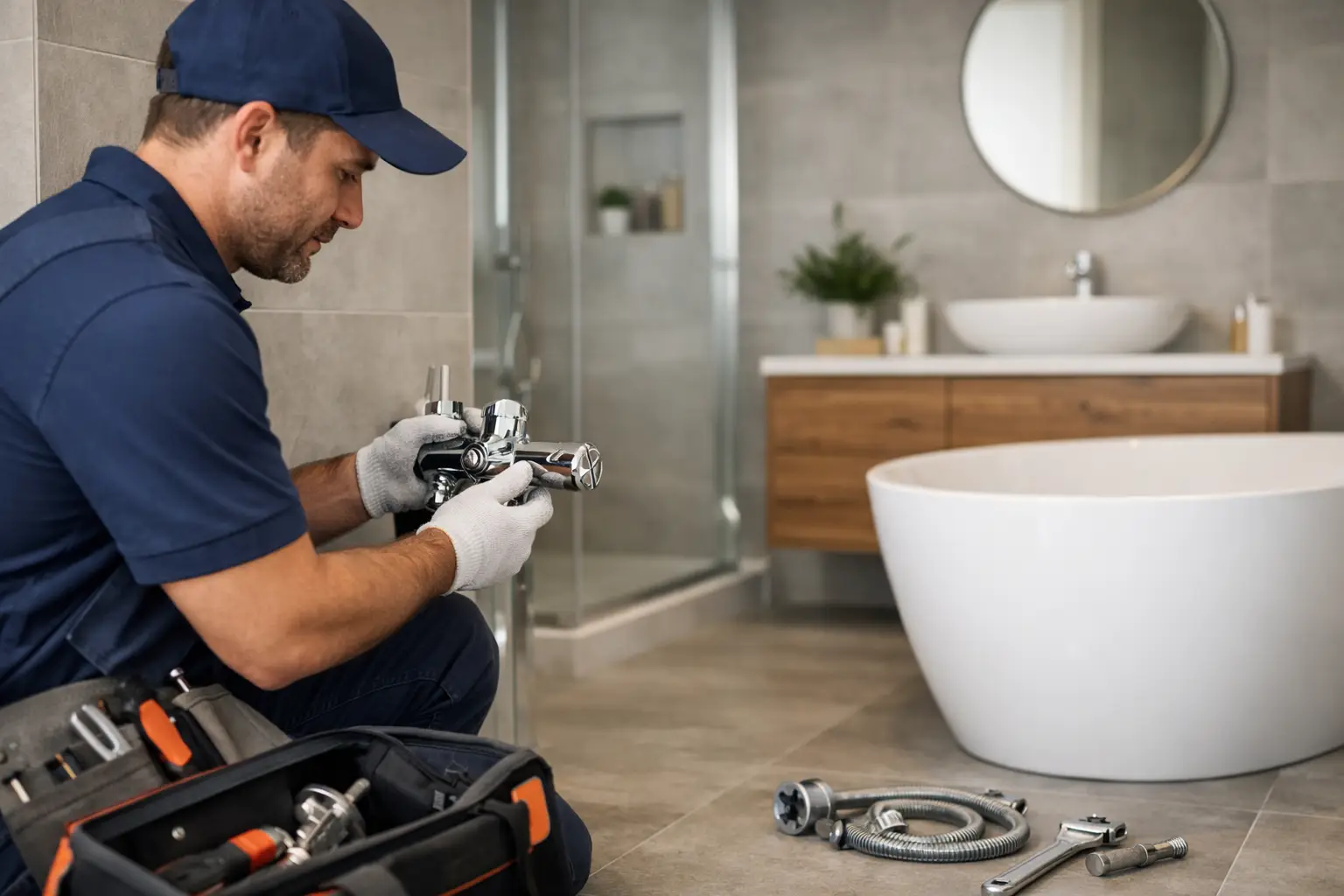
A bathroom can look finished long before it is properly finished. New tiles, a modern vanity and fresh tapware may hide pipework, drainage connections and waterproofing details that will be tested every day for years. Choosing a registered plumber for a bathroom renovation means the work behind the walls and beneath the floor receives the same attention as the features you can see.
For homeowners in Caroline Springs and Melbourne’s western suburbs, that matters. Bathrooms are high-use wet areas, and a small plumbing or waterproofing fault can lead to damaged cabinetry, stained ceilings, mould, loose tiles and expensive repairs well beyond the bathroom itself. A quality renovation is not simply a cosmetic update. It is a carefully managed sequence of qualified trade work.
Why plumbing needs to lead the renovation
Plumbing affects almost every major decision in a bathroom. The location of the toilet, shower, bath and vanity determines where water supply lines, wastes and drainage need to run. Those practical requirements should be considered before tiles are selected or a layout is locked in.
Moving fixtures can create a far more functional room, particularly in older homes with cramped showers or poorly placed vanities. However, it can also increase the scope of work. Relocating a toilet or shower waste may require access below the floor, changes to drainage falls or work within adjoining walls. A registered plumber can assess what is realistic early, explain the implications and help prevent a design that looks good on paper but causes unnecessary cost or compromise on site.
This is particularly valuable when creating a walk-in shower. The floor needs sufficient fall to direct water to the waste, while the shower screen position, niche, hob or hobless entry, waterproofing system and tile choice all need to work together. There is no benefit in a stylish open shower if water regularly escapes into the rest of the room.
What a registered plumber brings to a bathroom renovation
A registered plumber brings trade knowledge to the parts of the project that cannot be safely guessed or patched later. That includes disconnecting and reconnecting water services, installing or altering sanitary drainage, fitting shower and bath outlets, connecting basins and toilets, and completing the final fixture fit-off.
Just as importantly, they understand the order of work. Existing fixtures are removed during demolition and strip-out. New plumbing rough-in work is completed before walls are closed and before waterproofing and tiling begin. Fixtures such as mixers, toilets, shower rails and basins are installed only after the finishes are ready. Rushing that sequence is how avoidable rework occurs.
The compliance side also deserves clear attention. Victorian plumbing requirements apply to renovation work, and the documentation required will depend on the type and scope of plumbing being carried out. Homeowners should know who is completing the plumbing, who is responsible for any required compliance documentation, and whether the work is being performed within the appropriate registration or licensing arrangements. A reputable contractor will answer those questions directly.
Plumbing and waterproofing are one system
Plumbing and waterproofing are often discussed as separate trades, but in a bathroom they must be coordinated as one system. Pipes and outlets penetrate walls and floors. Floor wastes sit within the shower base. Shower mixers, bath spouts and vanity wastes all create points where water needs to be managed correctly.
A certified waterproofer can prepare the wet areas with the right membrane system and detail the junctions around wastes, corners, wall penetrations and shower areas. The plumber then needs to ensure the fixtures and connections are installed without compromising that work. Tilers also have a role, especially in maintaining correct falls and finishing around drains and fixtures cleanly.
This is why a one-stop renovation team can make a genuine difference. It is not about cutting corners by having one person do every job. It is about having qualified trades working to a coordinated plan, with clear responsibility from demolition through to bathroom fit-off.
Questions worth asking before you accept a quote
A cheap bathroom quote can be tempting, especially when several trades are involved. But price alone rarely tells you what has been allowed for, what has been excluded or whether the contractor has properly assessed the existing room.
Ask whether the quote includes demolition, rubbish removal, plumbing rough-in, waterproofing, tiling, fixture installation and final fit-off. If fixtures are being relocated, ask how that will affect drainage and whether any access work is anticipated. It is also sensible to confirm whether the quoted allowance covers the products you want, particularly with feature tiles, wall-hung vanities, freestanding baths and premium tapware.
You should also ask how hidden issues will be handled. Once an old bathroom is stripped out, it may reveal timber damage, poor previous plumbing, uneven floors or signs of water ingress. No honest contractor can promise that every concealed problem will be known before demolition. What they can do is explain the process, show you the issue if one is found and provide a clear recommendation before extra work proceeds.
A detailed quote is not about making the process complicated. It gives you a clearer picture of the work being delivered and reduces the chance of unwanted surprises halfway through the renovation.
The practical benefit of end-to-end coordination
Bathroom renovations involve more than plumbing. A reliable result depends on demolition, carpentry, waterproofing, tiling, electrical coordination, cabinetry and fit-off all being completed in the right order. When each part is treated as a separate job, small gaps in communication can quickly become delays.
For example, a custom vanity needs to suit the plumbing positions before it is manufactured or installed. Recessed shaving cabinets, niches and in-wall cisterns may require carpentry and plumbing decisions to be made before sheeting. Tile sizes can influence waste placement and shower falls. These details are manageable when they are planned early, but difficult once work has already moved on.
BP Building & Maintenance manages complete bathroom renovations with a registered plumber, qualified carpenter and certified waterproofer involved in the delivery process. That practical trade coverage helps keep the project focused on the details that determine durability, not just appearance.
When a simpler bathroom upgrade may be enough
Not every bathroom needs a full strip-out. If the layout works, the waterproofing is sound and there are no signs of leaks or drainage problems, an upgrade to tapware, vanity, mirrors, lighting and selected finishes may be the better value option. This can refresh an ageing room with less disruption.
However, cosmetic changes should not be used to conceal a known issue. Loose tiles, persistent mould, swollen skirting, water marks on a ceiling below, slow drainage or a shower that leaks beyond its screen all warrant a proper inspection. Spending money on new finishes without resolving the cause can leave you paying for the same bathroom twice.
A full renovation is often the smarter choice when the room has an outdated layout, unreliable plumbing, damaged wall or floor linings, poor ventilation, or waterproofing that is nearing the end of its serviceable life. The right scope depends on the condition of the existing bathroom and how long you intend to stay in the home.
Choose workmanship that holds up after handover
The best bathroom renovations feel straightforward once they are complete. Water drains where it should, the shower is comfortable to use, drawers clear pipework properly, fixtures are secure and every finish sits neatly in place. That outcome comes from good planning and qualified work before the final clean.
When comparing contractors, look beyond tile photos. Ask about trade qualifications, waterproofing capability, project coordination, inclusions and how the team handles the work you will never see once the room is closed up. A bathroom should give you confidence every time you turn on the shower, not questions about what is happening behind the wall.
Leave a Reply