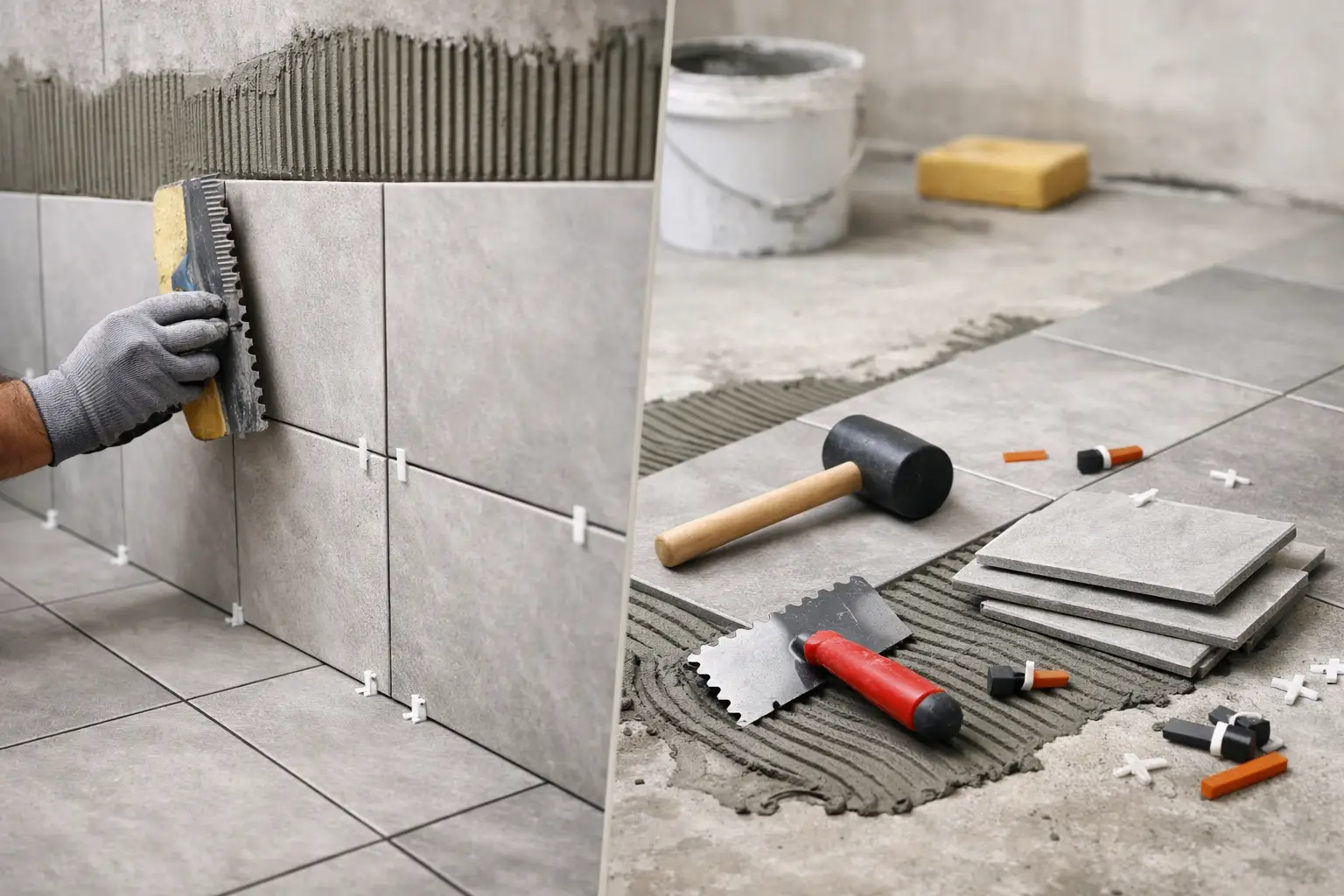
If you’re asking what to tile first wall or floor, you’re usually already thinking about the bigger issue – whether the job will look straight, drain properly and hold up over time. In a bathroom, the order matters because tiling is tied to waterproofing, set-out, fixture positions and how cleanly the whole room finishes.
The short answer is this: in most bathroom renovations, we tile the walls first and the floor last. That approach helps protect the finished floor, keeps cuts cleaner around the perimeter and makes it easier to get a neat result. But like most trade work, there are exceptions, and the right sequence depends on the room, the tile type and the overall renovation plan.
What to tile first wall or floor in a bathroom
For a standard bathroom, wall tiling first is usually the better method. The wall tiles are installed while leaving the bottom row off if needed, then the floor is tiled, and finally the last row of wall tiles is cut in neatly to meet the floor. This allows for a tighter finish and helps hide any slight variation in floor levels.
That matters more than many homeowners realise. Bathroom floors are rarely perfectly level, especially in older homes or where a shower falls to a waste. If the floor is tiled first and the walls are then started off that finished surface, any inconsistency in the floor can show up in the wall lines. By controlling the wall set-out first, a tiler has more room to keep everything visually straight.
There is also a practical reason. A freshly tiled floor is easier to damage. Once floor tiles are down, every ladder, bucket, mixing tub and pair of boots becomes a risk. Even when protection is used, working over a finished floor adds another layer of care and clean-up.
Why walls first is often the cleaner option
In bathroom work, neat finishing is not just about appearance. It also affects how silicone joints, movement gaps and edge details perform over time. Tiling the walls first usually gives better control at the junction where wall meets floor.
A common method is to support the first full course of wall tiles on a straight batten fixed above floor level. That lets the tiler establish a level line around the room, even if the subfloor or screed below has some fall. Once the wall tiles are set, the floor can be laid in with the correct falls, and the bottom row of wall tiles can then be cut to suit the finished floor height.
This is especially useful in showers. The floor often needs a precise fall to the waste, and that means the perimeter may not sit at one perfectly even height all the way around. If the bottom wall tile course is left until the floor is complete, the cuts can be adjusted so the joint line stays tidy instead of forcing awkward gaps.
For homeowners, the result is simple – the bathroom looks sharper, and the finished edges are less likely to draw attention for the wrong reasons.
When floor first can make sense
There are jobs where floor tiling first is the better call. A good tiler won’t follow one rule blindly if the room says otherwise.
If the floor tile layout is the main visual feature, the whole room may be set out from the floor. This can happen with large-format tiles, feature floor patterns or rooms where symmetry matters around a centre line. In some cases, setting the floor first gives the installer the best reference for wall tile cuts and fixture alignment.
It can also make sense when wall tiles are designed to sit directly on top of the floor tile for a particular finish detail. Some tile systems and design briefs call for that sequence. Laundry renovations and powder rooms can sometimes be less demanding than a full shower area as well, so the order may be chosen based on access and efficiency.
That said, floor first needs proper protection and careful planning. If other trades are still moving through the space, the chance of chipping or marking the floor goes up quickly.
The part most people don’t see – waterproofing and set-out
The question of what to tile first wall or floor only makes sense after the prep is right. In a bathroom, tiling order sits behind more critical work such as substrate preparation, floor falls and compliant waterproofing.
If waterproofing is poor, the order of the tiles won’t save the job. The membrane needs to be applied correctly to the required areas, allowed to cure properly and protected during the next stage. The floor and wall sequence must work with that system, not against it.
Set-out is just as important. Good tiling starts well before the first tile goes on. A qualified installer will look at where the most visible lines land, how tile joints align with niches and tapware, where cuts fall in corners, and how the shower waste interacts with floor tile size. That’s why two bathrooms can use the same tiles and still end up with very different results.
The order is not just a habit. It is part of how the whole room is planned for finish, durability and maintenance.
Shower areas are their own case
A shower is where the wall-or-floor question matters most. Unlike the main bathroom floor, the shower base often has multiple falls and tighter tolerances. Even a small error becomes obvious once water starts pooling where it shouldn’t.
In many shower areas, the walls are tiled first, then the shower floor is laid after. That gives the tiler a chance to fine-tune cuts at the bottom edge and keep the perimeter line looking controlled. It also reduces the risk of damaging the finished shower floor while working above.
Mosaic tiles, small-format floor tiles and formed screeds can all change the sequencing slightly, but the principle stays the same – the finished result needs to drain properly and look intentional. That’s the standard that matters.
Why DIY advice often causes confusion
A lot of online advice makes this sound like a simple either-or choice. It isn’t. Bathrooms are one of the more technical rooms in the house because tiling sits on top of plumbing, carpentry, waterproofing and substrate preparation. Each of those affects the next step.
Someone might say floor first because that’s how they tiled a small ensuite once. Another might insist on walls first because that is standard on many renovation jobs. Both can be right in the right conditions. The problem is copying a method without checking the room, the falls, the tile type and the finish detail.
In older homes across Melbourne’s western suburbs, for example, walls may not be plumb and floors may not be level. That changes how a professional approaches the set-out. A bathroom renovation is not just about getting tiles stuck on straight. It is about making sure the room performs properly once everything is in use.
What homeowners should take from this
If you’re renovating, the better question is not only what to tile first wall or floor. It is whether the installer has a clear plan for the whole sequence from strip-out to fit-off.
You want to know that the floor falls have been considered before the first tile is cut. You want the waterproofing carried out correctly. You want tile joints to line up with the room, not fight against it. And you want the finished floor protected if other work is still to come.
A reliable bathroom renovator should be able to explain why they are choosing one order over the other on your specific job. Not in vague terms, and not as a guess. The answer should relate to your layout, your tile selection and the way the bathroom is being built.
At BP Building & Maintenance, that is how bathroom work should be handled – qualified trades, proper sequencing and no shortcuts where moisture and finish quality are involved.
The right tiling order is the one that gives you a bathroom that looks clean on day one and still performs properly years later. If the plan behind the tiles is solid, the finish usually shows it.