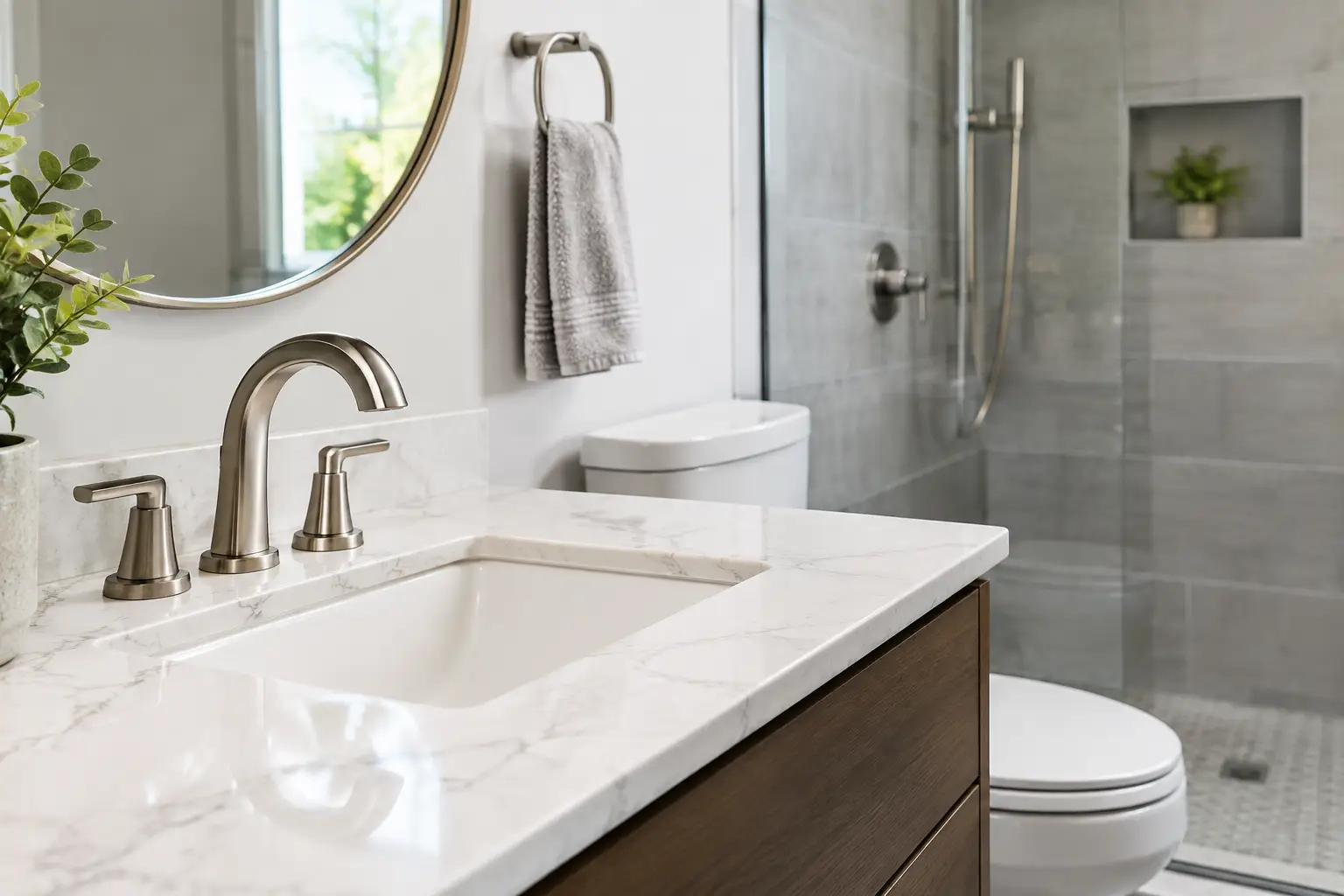
A bathroom can look finished on handover day and still become a source of leaks, stains and loose fittings far too soon. Choosing the best bathroom fixtures for durability means looking beyond a showroom display and selecting products that suit daily use, local water conditions and the way the room has been built.
For busy households, durability is not about buying the most expensive item in every category. It is about choosing proven materials, quality internal components and fixtures that can be properly installed, sealed and serviced when needed. A well-planned bathroom renovation should give you years of reliable use without constant tightening, replacing or repairing.
What Makes a Bathroom Fixture Last?
A durable fixture handles water, cleaning products, heat, regular movement and accidental knocks without losing function or finish. The visible surface matters, but the parts behind it matter just as much. A mixer might feel solid in a display, yet its cartridge, mounting system and connection points determine how it performs over time.
Look for recognised Australian compliance markings where relevant, including WaterMark certification for plumbing products and a WELS rating for water efficiency. These marks do not guarantee a fixture will suit every bathroom, but they are a sensible baseline. Products without the right approvals can create compliance issues and make future repairs more difficult.
Availability of replacement parts is another practical test. Tap cartridges, washers, inlet valves, toilet seats and shower components will eventually need attention. Choosing an established manufacturer with local support often costs a little more upfront, but it can save replacing an entire fixture over one failed part.
Best Bathroom Fixtures for Durability: What to Choose
Solid brass tapware with a quality cartridge
For basin mixers, wall-mounted taps and shower mixers, solid brass construction remains a dependable choice. Brass resists corrosion well and provides a stable base for the finish. It is generally a better long-term option than lightweight, thin-walled alternatives that can feel loose or wear prematurely.
The cartridge inside the mixer is equally important. Ceramic disc cartridges are widely used because they provide smooth operation and generally cope well with everyday use when water quality is reasonable. A good cartridge should be replaceable without removing tiles or disturbing waterproofing.
Chrome is still one of the most forgiving tapware finishes for family bathrooms. It is easy to clean, widely available and less likely to show water spotting than darker colours. matt black, brushed nickel, gunmetal and brushed brass can look excellent, but they need more thoughtful cleaning and should be selected from a reputable range with a proven finish. Avoid harsh abrasives and aggressive bathroom chemicals, as these can damage any plated or coated surface.
Wall-mounted tapware creates a clean vanity area, but it needs precise rough-in work before wall lining and tiling. If the in-wall body is poor quality or inaccessible, a simple future repair can become a larger job. In many bathrooms, a well-made basin mixer installed on the vanity is the most straightforward and serviceable option.
A close-coupled or back-to-wall toilet from a known supplier
Toilets are expected to work without fuss for many years, so the flushing mechanism and pan design deserve more attention than the styling alone. A quality vitreous china pan is hard-wearing, easy to clean and suitable for most homes. Choose a toilet with readily available replacement inlet and outlet valves, and a seat that can be replaced without hunting for a discontinued part.
Back-to-wall toilets are popular because they reduce exposed pipework and make floor cleaning easier. Close-coupled toilets are also reliable and can be a sensible choice where budget and accessibility are priorities. Wall-hung toilets offer a clean modern look and make the floor easier to clean, but their concealed frame and cistern need to be installed correctly and should include practical access for servicing.
Rimless pans can improve cleaning access, but flushing performance varies between models. This is one fixture where a trusted brand and a properly tested flush are more valuable than a fashionable feature list.
A simple, serviceable shower system
A shower is used more often than almost any other fixture in the bathroom. A fixed rail shower with an adjustable hand shower is a practical combination for families, children and older household members. It is easier to direct, simpler to clean and more adaptable than a single fixed overhead outlet.
For longevity, choose metal components in high-use areas rather than relying on plastic brackets and lightweight rails. A quality shower hose, a secure rail and a replaceable shower head are sensible details that make a difference over time.
Large rain shower heads can be appealing, but they are not automatically the best choice. They can require suitable water pressure to perform well, use more water depending on the rating, and may be harder to keep clean. In a compact bathroom or a home with variable pressure, a quality standard shower head can deliver a better day-to-day result.
Tough shower screens and reliable hardware
Frameless glass shower screens create an open look, but the glass thickness, hinges, brackets and installation are critical. Toughened safety glass is the expected standard, while quality hinges and brackets help prevent sagging doors, rubbing seals and loose hardware.
A semi-frameless screen can be an excellent durability choice. It offers a clean appearance while providing extra support around the glass. Fully framed screens are less common in contemporary renovations but can still be practical in certain layouts, especially where keeping water inside the shower area is the main concern.
The screen also needs the right fall to the drain, properly sealed wall junctions and carefully fitted door clearances. No shower screen can compensate for poor waterproofing or incorrect floor levels. The shower zone should be built as a complete system, not treated as separate glass, tile and plumbing jobs.
A moisture-resistant vanity with quality hardware
Vanities fail when moisture reaches exposed board edges, drawer bases or poorly sealed joins. In a bathroom, choose cabinetry designed for wet areas, with durable board construction, sealed edges and a benchtop that can tolerate splashes. Wall-hung vanities are popular because they create more visible floor space and make cleaning easier, but they must be fixed securely to suitable wall framing or noggins.
Soft-close runners and hinges are worthwhile when they come from a quality hardware supplier. They reduce slamming and improve everyday use, though they still need correct alignment during installation. For a family bathroom, drawers are often more practical than deep cupboards because they provide easier access to toiletries without forcing people to crouch and reach into the back.
Stone, porcelain and solid-surface tops can all perform well. The right choice depends on budget, appearance and maintenance expectations. Natural stone may need ongoing sealing, while porcelain offers excellent resistance to staining and moisture. A simple ceramic vanity top with an integrated basin is often one of the easiest options to maintain.
Do Not Overlook the Fixtures Behind the Tiles
The most costly bathroom failures are often hidden. Floor wastes, shower mixers, isolation valves, water connections and waterproofing junctions need the same level of care as tapware and tiles. A premium shower head is of little value if the waterproofing underneath has not been completed correctly.
Where possible, plan for accessible isolation valves and use quality fittings from the start. Concealed mixers, in-wall cisterns and recessed niches can all work well, but they need accurate installation and a clear service strategy. Complex designs are not wrong, but they leave less room for shortcuts.
This is why a complete renovation should be managed by qualified trades. At BP Building & Maintenance, bathroom work is planned around the full build process, from plumbing and waterproofing through to tiling and final fit-off, so the finished fixtures are supported by sound work behind the walls.
Match the Fixture to the Bathroom
A guest ensuite can handle a more decorative approach because it receives less daily use. A main family bathroom benefits from simpler tapware, easy-clean surfaces, accessible storage and shower fittings that can cope with constant adjustment. In an investment property, choosing a known range with readily available parts can be more valuable than selecting an unusual finish that may be difficult to match later.
It also pays to consider who will use the room. Lever-style mixers are easy to operate. An adjustable shower rail suits households with different heights. A vanity with generous bench space makes mornings easier, while a toilet with concealed fixings reduces awkward cleaning around the base.
The right fixture selection should make the bathroom easier to live with, not simply more impressive in photos. Choose products you can clean, service and rely on, then have them installed with the care the room requires. That is how a new bathroom keeps performing well long after the renovation dust has settled.