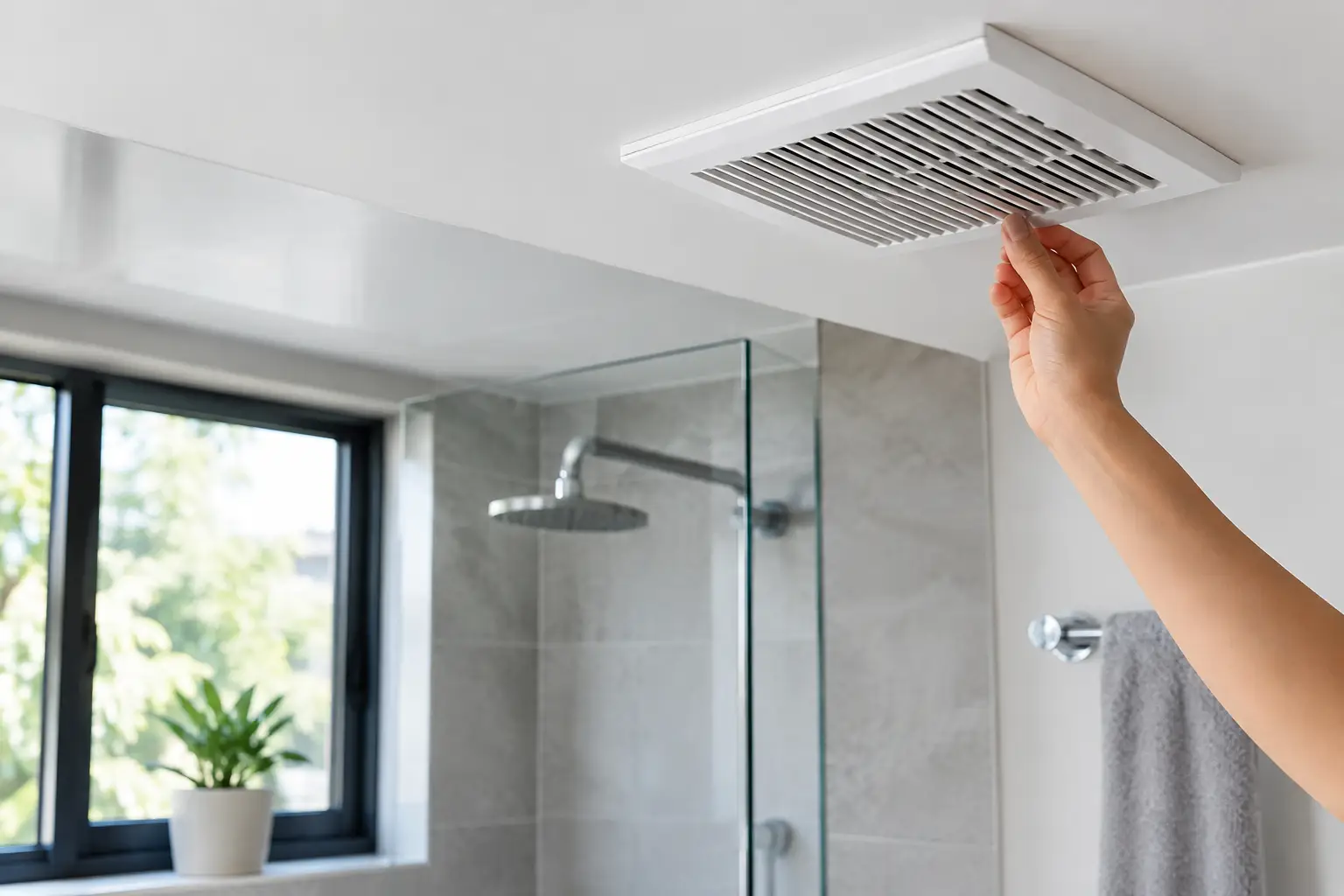
A bathroom can look clean and still be holding far too much moisture. Fogged mirrors that linger, peeling paint above the shower, musty cupboards and dark spotting around silicone are all signs the room is not clearing steam properly. Knowing how to improve bathroom ventilation means dealing with the source of that moisture, not just wiping down surfaces after every shower.
For homes across Melbourne’s western suburbs, ventilation is especially important through cooler months when windows stay shut and condensation builds quickly. A properly ventilated bathroom protects plaster, cabinetry, grout, paintwork and framing, while making the room more comfortable to use.
Start by identifying where the moisture is going
Steam needs a clear path out of the bathroom. If it cannot leave through an effective exhaust system or an open window, it settles on cold surfaces and eventually finds its way into ceilings, walls, vanity units and corners.
Start with a practical check after a normal shower. Does the mirror clear within a reasonable time? Is the ceiling still damp 20 to 30 minutes later? Do towels remain wet for most of the day? Is there a mould smell when the room has been closed overnight? These are useful signs that the existing setup is underperforming.
A working fan is not always an effective fan. Many older bathrooms have an exhaust fan that makes noise but moves very little air. Others vent into the roof space instead of outdoors, which simply relocates the moisture problem above the ceiling. Moist air in a roof cavity can contribute to mould, damp insulation and timber deterioration over time.
How to improve bathroom ventilation with the right exhaust fan
For most bathrooms, a quality exhaust fan ducted directly to the outside is the most reliable solution. The fan should be selected for the size of the room, the length and route of the ducting, and how the bathroom is used. A small ensuite used by one person has different demands to a busy family bathroom with a shower, bath and limited natural airflow.
Fan capacity is commonly measured by airflow. More airflow is not automatically better if the system is poorly installed, excessively noisy or paired with restrictive ducting. The goal is to remove humid air efficiently without making the bathroom unpleasant to use.
Placement matters too. The fan should generally sit close to the main moisture source, often near the shower or bath area, while still being installed safely and in accordance with electrical requirements. In a larger bathroom, one poorly placed fan may struggle to capture steam before it spreads through the room.
Ducting is just as important as the fan itself. Long runs, unnecessary bends, crushed flexible ducting and undersized duct can all reduce performance. A straight, appropriately sized run to an external grille gives the fan the best chance of doing its job. The external outlet should also be positioned to prevent moist air from being drawn back into the home.
Choose controls that suit how the bathroom is used
The best exhaust system is one that runs long enough after the shower ends. A standard switch can work, but only if everyone remembers to leave it on. In busy homes, that is not always realistic.
A run-on timer is a practical upgrade. It keeps the fan operating for a set period after the light is turned off, allowing moisture to clear properly. Humidity-sensing fans are another option. They switch on when moisture levels rise and continue until the air has dried out. These can be particularly useful in bathrooms used by children, tenants or several family members.
There is a trade-off. Humidity sensors need sensible setup and may run more often during damp weather, while timers are straightforward but rely on correct programming. A qualified installer can help match the control method to the room and household.
Do not rely on a window alone
An open window helps, especially when it creates cross-ventilation with another opening nearby. It can reduce condensation and bring in fresh air during warmer weather. But it is rarely enough as the only ventilation strategy for an internal bathroom, a room with one small window, or a bathroom used early in the morning when residents understandably keep windows closed.
Privacy, security, rain and cold weather all limit how consistently windows are used. In many homes, a window is a useful supplement to mechanical extraction, not a replacement for it.
If a renovation includes a new window or an enlargement of an existing one, consider where it opens and whether it can safely stay ajar. Awning windows can allow airflow during light rain, while obscure glazing maintains privacy. The right choice depends on the home’s layout, orientation and neighbouring properties.
Check for airflow into the room
An exhaust fan cannot remove air efficiently if replacement air has nowhere to come from. A bathroom with a tightly sealed door may create negative pressure, reducing the amount of air the fan can draw out.
A modest gap beneath the door can help air enter from the rest of the house while the fan extracts humid air. Depending on the design, a door grille may also be considered. This needs to be balanced against privacy, sound transfer and the overall look of the bathroom, so it is worth discussing during the planning stage rather than treating it as an afterthought.
Fix the conditions that encourage mould
Ventilation is the main defence against bathroom moisture, but a few habits and maintenance checks make a noticeable difference. Run the fan during showers and leave it on afterwards. Hang towels so they can dry fully, rather than piling them on hooks. Keep shower screens, tiles and silicone clean, as soap residue and grime provide a surface where mould can take hold.
It is also worth checking that the bathroom is not dealing with a plumbing leak. A leaking shower mixer, toilet connection, vanity trap or failed shower seal can look like a ventilation issue because it creates persistent dampness. If paint is bubbling, skirting boards are swelling or mould returns in one isolated spot, investigate for water ingress rather than simply installing a larger fan.
Poor waterproofing is another issue that ventilation cannot solve. An exhaust fan manages airborne steam. It does not correct water escaping behind tiles, through cracked grout or around an improperly sealed shower. When signs point to a deeper wet-area problem, the bathroom may need professional assessment before cosmetic repairs are made.
Plan ventilation early in a bathroom renovation
A full renovation is the best time to improve ventilation properly because ceilings, walls and services can be accessed before the finishes go in. The exhaust fan, duct route, external vent, electrical controls and lighting can be planned together instead of being forced into an existing layout.
This is particularly valuable for bathrooms with no external wall, low ceilings or limited roof access. Sometimes the cleanest answer is to relocate the fan, run ducting through a more suitable area, or revise the ceiling design so services are concealed without compromising performance.
Ventilation should also sit alongside waterproofing, plumbing and carpentry decisions. A well-built bathroom is a system: water must stay where it belongs, steam must leave the room, and finishes must be suited to a wet environment. Treating the fan as a last-minute inclusion often leads to compromises that could have been avoided.
At BP Building & Maintenance, complete bathroom renovations are planned with these practical details in mind, from waterproofing and plumbing through to fit-off and final ventilation. That coordinated approach helps avoid the common problem of a good-looking bathroom that starts showing moisture damage too soon.
When to call a qualified professional
Replacing a basic fan cover is one thing. Altering electrical wiring, installing a new exhaust system, cutting external penetrations or working around ceiling insulation requires the right trade expertise. Electrical work must be completed safely, and ducting needs to be installed so it exhausts outdoors without creating new condensation or weatherproofing problems.
Call for professional advice if your bathroom has recurring mould despite regular cleaning, visible water staining, a fan that vents into the roof space, or a ceiling that remains wet long after showers. These are not issues to ignore, particularly before selling, leasing or renovating a property.
A bathroom should dry out quickly, smell fresh and stay that way. If yours does not, a properly designed ventilation upgrade can protect the work already there and make the next renovation investment last longer.