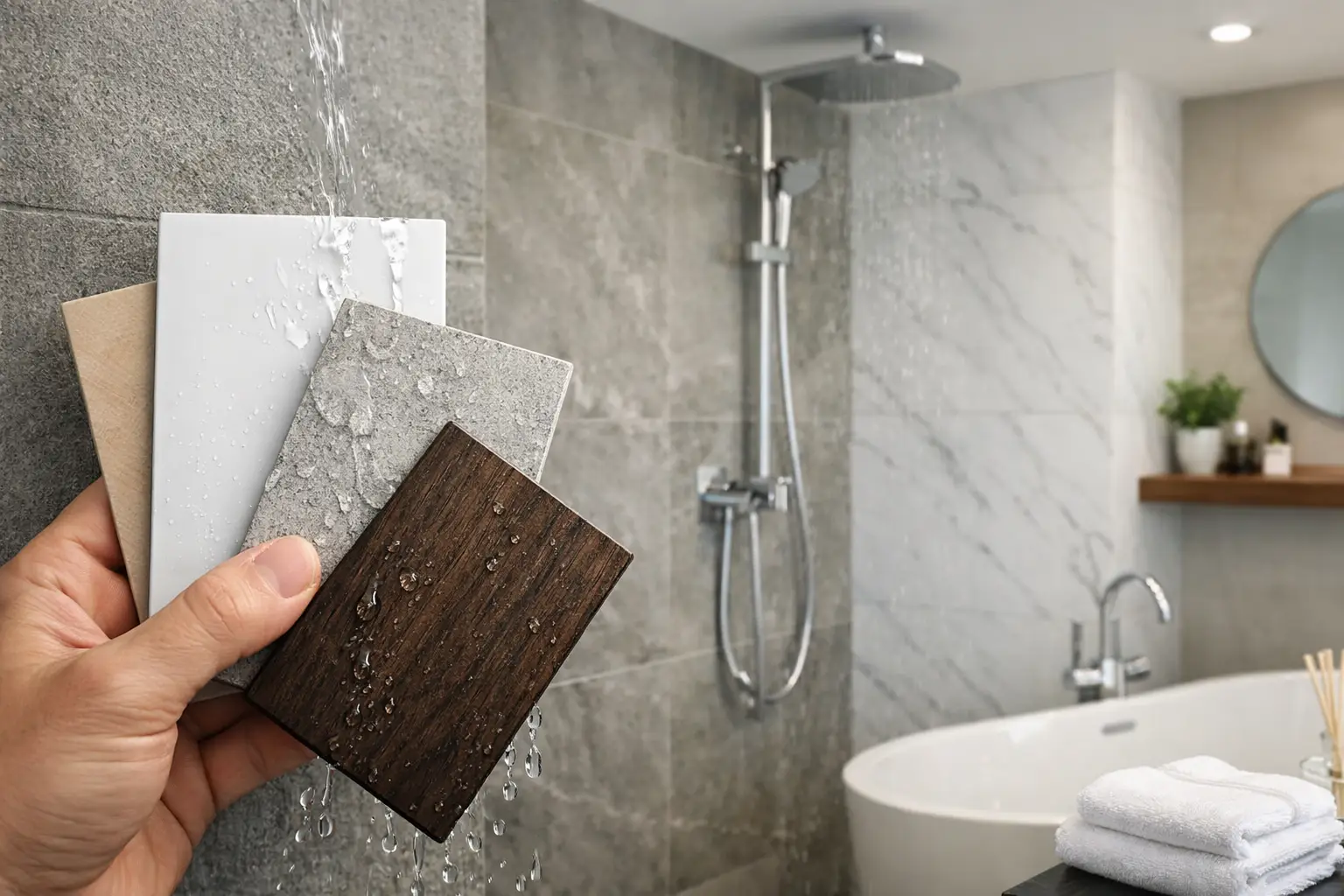
A bathroom wall can look finished on handover day and still be vulnerable behind the surface. The best waterproof bathroom wall materials are not simply the ones that resist splashes. They need to suit the room, the shower layout, the substrate behind them and, most importantly, a properly installed waterproofing system.
For homeowners planning a renovation, this is where a cheap cosmetic choice can become an expensive repair. Tiles, panels and specialty finishes all have their place. The right option depends on how the bathroom will be used, how much maintenance you are prepared to do and whether the existing walls are sound enough for the new finish.
What makes a bathroom wall genuinely waterproof?
A wall finish and waterproofing are two different parts of the job. Porcelain tiles are highly water-resistant, for example, but grout joints, penetrations around taps and the wall structure behind the tiles still need protection. The same applies to wall panels: the panel may resist water, but its joints and edges must be sealed correctly.
In a properly renovated bathroom, the waterproof membrane is the critical barrier. It is installed to the prepared substrate before tiling or another wall finish goes on. It must be compatible with the wall system, properly detailed at corners and junctions, and sealed around plumbing penetrations. This work should meet applicable Australian requirements and manufacturer specifications.
The visible material then provides the finish you see and clean every day. Choosing it well improves durability, cleaning and the overall look of the room. Choosing it without addressing the membrane underneath does not solve a waterproofing problem.
Best waterproof bathroom wall materials compared
Porcelain tiles
Porcelain remains one of the strongest all-round choices for shower walls and full bathroom renovations. It has very low water absorption, handles regular cleaning well and is available in a huge range of sizes, colours and stone, concrete or timber-look finishes.
Large-format porcelain is especially practical in a shower because it reduces the number of grout lines. Fewer joints mean less routine cleaning and a cleaner, more modern finish. It also works well for feature walls, recessed niches and floor-to-wall continuity in a walk-in shower.
The trade-off is installation quality. Large tiles need a flat, well-prepared wall, correct adhesive coverage and accurate cuts around fittings. Poorly laid tiles can leave uneven edges, cracked grout or hollow spots. Porcelain is durable, but it is not a shortcut around good preparation and waterproofing.
Ceramic tiles
Ceramic tiles are a cost-effective option for many bathroom walls, particularly outside the main shower area. They come in plenty of styles, including classic subway tiles, gloss finishes and decorative feature tiles that suit older homes and compact ensuites.
Compared with porcelain, ceramic is generally more porous and less dense. That does not rule it out for shower walls when it is correctly installed over an approved waterproofed substrate, but porcelain usually gives greater confidence in hard-working wet zones. Ceramic can be a sensible way to manage the budget while using porcelain in the shower itself.
Smaller ceramic tiles also mean more grout lines. That can add character, but it does increase cleaning time. A quality grout and proper sealing where required make a real difference over the life of the bathroom.
Acrylic and PVC wall panels
Waterproof wall panels are a practical alternative to tiles, particularly where a fast update, low-maintenance surface or minimal grout is the priority. Quality acrylic and PVC panel systems are installed in large sheets, creating a clean finish with very few joints.
They are popular for shower walls because they are easy to wipe down and avoid the ongoing scrubbing associated with tiled grout. Panels are also available in convincing stone and marble-look designs, so they can suit a contemporary renovation without the cost of natural stone.
Not all panels are equal. Thin, low-grade products can feel flexible, mark easily or discolour over time. Joint trims, sealants and transitions to the shower base must also be carefully installed. For a full renovation intended to last, select a reputable panel system and have the wall condition assessed before installation.
Natural stone
Natural stone creates a premium, individual finish that manufactured products cannot completely replicate. Marble, travertine, slate and other stone products can work beautifully in larger bathrooms where the design calls for a high-end feature.
The practical side is more demanding. Stone is not maintenance-free, and some varieties are porous or sensitive to particular cleaners. It generally needs sealing and periodic resealing, while acidic products can damage certain surfaces. Stone can also add cost through material selection, cutting, handling and installation.
For most busy family bathrooms, a porcelain stone-look tile delivers a similar appearance with less ongoing maintenance. Genuine stone is best reserved for homeowners who want the natural variation and understand the care involved.
Microcement and seamless coatings
Microcement and other seamless decorative coatings can produce a refined, contemporary look with no grout lines. They suit feature walls and can create a continuous finish across floors, walls and built-in shower elements when designed as a complete system.
This option relies heavily on specialist application. Surface preparation, layer thickness, curing and protective topcoats all affect the final result. A crack in the substrate or a failed coating can be difficult to repair invisibly. It is a design-led choice rather than a budget option, and it should only be considered with a proven wet-area system and experienced installer.
The wall behind the finish matters
The best surface material cannot compensate for damaged framing, loose linings or an unsuitable substrate. Before a bathroom is waterproofed, the walls need to be assessed and prepared. In older homes, strip-out can uncover water-damaged timber, failed sheeting, mould or plumbing that needs relocation.
Wet-area wall linings, such as suitable fibre cement products, provide a stable base in high-exposure areas. They are not the finished waterproof barrier on their own. The membrane, joint treatment and detailing around shower niches, windows, tapware and mixer points still need to be completed correctly.
This is why full bathroom renovation work should be coordinated rather than treated as separate jobs. Plumbing locations affect penetrations. Shower bases affect wall junctions. Tile sizes affect set-out around niches and fixtures. Resolving those details before installation produces a neater result and reduces risk later.
Choosing the right material for your bathroom
For a family bathroom with a daily-used shower, porcelain tiles are usually the safest long-term choice. They are tough, widely available and suitable for nearly any style, provided the waterproofing and tiling are carried out properly. Large-format tiles are ideal if low grout maintenance is a priority.
For an investment property, laundry conversion or straightforward bathroom refresh, quality wall panels can be an efficient option. They offer a tidy finish, quick cleaning and less disruption than some tiled solutions, although product quality and joint detailing should not be compromised.
For an ensuite or statement renovation, natural stone or microcement may suit the design brief. Just allow for specialist labour, ongoing care and a realistic budget. A material that looks impressive in a showroom needs to perform under steam, cleaning products and daily shower use in your home.
Colour and finish also matter. Glossy light surfaces can brighten a small bathroom but show water spots more readily. Matte tiles can feel more contemporary but may need a closer look at cleaning requirements. Textured wall tiles add depth, though heavily textured finishes are less convenient where soap residue builds up.
Avoid these common waterproofing shortcuts
Bathroom paint, even moisture-resistant paint, is not a substitute for a waterproof shower-wall system. It can be suitable in low-splash areas when the substrate and ventilation are appropriate, but it is not the answer inside a shower enclosure.
Another common mistake is assuming silicone alone will stop water. Silicone is a finishing sealant at junctions and penetrations. It is not a replacement for a compliant membrane behind the wall finish. Likewise, regrouting over old tiles may improve appearance, but it will not repair a failed waterproofing layer behind them.
If there are signs of loose tiles, swollen skirting, persistent mould, a musty smell or staining on the adjoining wall, investigate the cause before selecting new finishes. Covering the symptoms usually means paying for the work twice.
Get the system right, not just the surface
When comparing wall materials, ask what is included behind the finished surface. A clear renovation scope should cover demolition where needed, wall preparation, waterproofing, plumbing coordination, tiling or panel installation, sealing and fit-off. That is where durability is built into the job.
For homeowners in Caroline Springs and Melbourne’s western suburbs, BP Building & Maintenance approaches wet-area renovations with qualified trades and certified waterproofing at the centre of the work. The material can be tailored to the room and budget, but the standard of preparation should never be optional.
A bathroom should still feel solid and look clean years after the renovation, not just on the day the last fixture is fitted. Start with a wall system that suits the way you live, then make sure the waterproofing behind it is given the same attention as the finish in front.