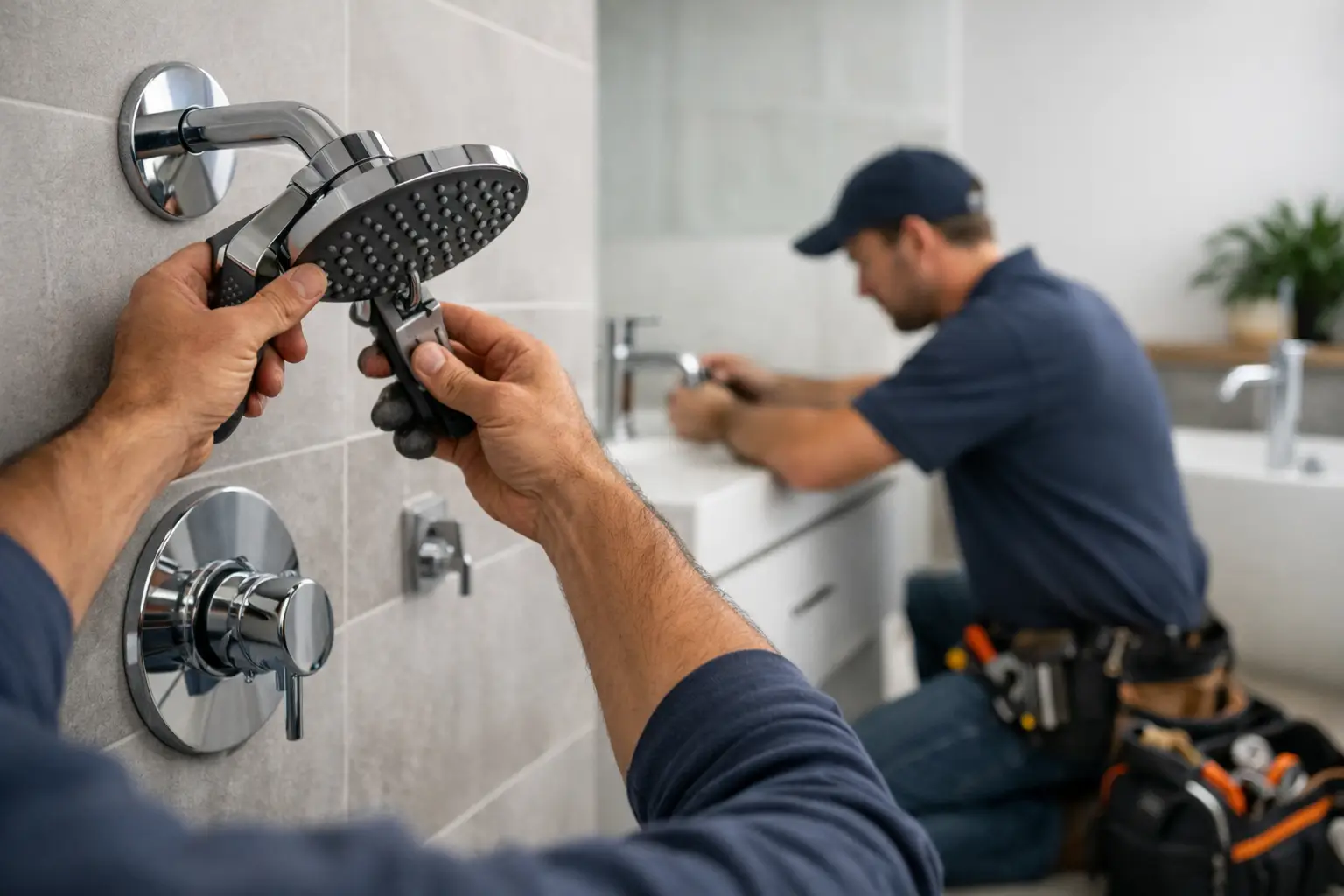
A bathroom can look almost complete once the tiles are laid, but it is not ready to use until the bathroom plumbing fit off is done properly. This is the stage where concealed pipework becomes working taps, showers, toilets and basins – and where small installation errors can quickly become leaks, poor drainage or costly call-backs.
For homeowners planning a bathroom renovation, fit off is one of the most satisfying stages. It is also one of the least forgiving. Fixtures need to sit straight, operate correctly, seal properly and suit the finished layout. The work must be coordinated with the waterproofing, tiling, cabinetry and electrical components that came before it.
What is bathroom plumbing fit off?
Bathroom plumbing fit off is the final plumbing installation stage of a renovation. The rough-in plumbing has already been completed behind walls, below floors or inside service cavities. During fit off, the visible fixtures and final connections are installed once wall linings, waterproofing, tiles and most cabinetry are complete.
This is when the room starts functioning as a bathroom rather than a building site. A qualified plumber connects water supplies and waste lines, installs fixtures, tests the system and checks that everything is operating as intended.
The exact scope depends on the design. A compact bathroom with a shower, vanity and toilet needs a different approach to a larger family bathroom with a freestanding bath, double vanity, wall-mounted tapware and a walk-in shower.
What is usually installed at fit off?
A proper bathroom fit off can include the installation and connection of:
- basin mixers, spouts and pop-up wastes
- shower mixers, rails, hand showers and shower heads
- bath spouts, mixers and bath wastes
- toilets, cisterns and flush plates
- vanity basins and waste connections
- floor wastes and drainage grates
- isolation valves, flexi hoses and water connections
- washing machine taps where the bathroom includes laundry facilities
Not every item is strictly plumbing work. Mirrors, shower screens, towel rails, exhaust fans and accessories may be scheduled around the same time, but they are generally completed by the relevant trade. Good project coordination matters here. There is no point fitting a shower rail before the screen measurements are confirmed, or installing a vanity basin before the benchtop and cabinetry are properly secured.
Why the fit off stage needs careful planning
The best bathroom plumbing fit off work begins well before the plumber arrives to install tapware. Fixture locations, tile set-out, vanity dimensions and wall framing must all align with the approved plan.
For example, wall-mounted basin mixers require precise plumbing positions before walls are sheeted and tiled. If the outlet is even slightly off-centre, it becomes obvious once the basin and mirror are installed. The same applies to shower mixers, niche locations, floor wastes and toilet pan positions.
Tile thickness also affects finished levels. A floor waste that looks correctly positioned during rough-in can end up sitting too high or too low if the final tile build-up has not been allowed for. In a walk-in shower, this can affect drainage and leave water sitting where it should not.
Experienced renovators allow for these details from the start. They do not treat fit off as a quick final visit after the rest of the job is finished.
The order of work makes a difference
Fit off usually happens after waterproofing has cured, tiling is complete and the room has been cleaned of construction debris. In many cases, the vanity is installed first so the basin and tapware can be connected accurately. Shower screens are often measured after tiles are complete, then installed near the end to avoid damage from other trades.
The order can vary depending on the products selected. A back-to-wall bath may need its waste and water connections completed before it is pushed into place. A wall-hung vanity may need backing or noggins installed much earlier, even though the actual basin connection happens at the end.
This is why product selection should be finalised early. Changing from a floor-mounted mixer to wall-mounted tapware halfway through a renovation may require changes to plumbing, wall framing and tiles. It can add time and cost that could have been avoided with a clear plan.
Quality is more than neat-looking tapware
A straight shower head and shiny basin mixer are visible signs of a tidy job, but the important work is often hidden. Water connections need to be secure, wastes need to drain freely and fixtures must be mounted without damaging finished surfaces.
During fit off, the plumber should check for leaks at every connection, test hot and cold water operation, confirm the toilet flushes correctly and make sure water drains as expected. Shower and basin wastes should not gurgle, hold water or release unpleasant odours.
The final appearance matters too. Tapware should be aligned, silicone should be clean where required, and fittings should not be overtightened against tiles or stone. Ceramic tiles and basins can crack under pressure, while poorly supported fixtures can move over time.
There is a trade-off when choosing fixtures as well. Premium tapware can offer stronger finishes, better cartridges and easier access to replacement parts, but it still needs compatible plumbing and correct installation. Budget fixtures may suit some projects, particularly investment properties, but choosing solely on price can create problems if replacement parts are difficult to source later.
Common problems a professional fit off helps prevent
Most post-renovation plumbing complaints stem from poor planning, rushed installation or unsuitable products. A qualified plumber can identify issues before the bathroom is handed back for use.
A vanity waste can clash with drawers or shelving if the cabinet design does not allow enough clearance. A floor-mounted bath mixer may require more room than expected behind the bath. A toilet pan may not sit correctly if the set-out has not accounted for the finished wall and floor surfaces.
Water pressure is another consideration. Some tapware and shower heads perform well only within a particular pressure range. If the home has low pressure, restrictive pipework or an ageing hot water system, the shower experience may not match what was expected from the showroom display.
In older Melbourne homes, existing plumbing conditions can also influence the final result. Corroded pipework, dated drainage arrangements or inconsistent water pressure should be assessed early rather than discovered when new fixtures are ready to be installed.
What homeowners should confirm before fit off
Before the final plumbing stage, make sure all selected fixtures are on site, checked for damage and matched to the approved plan. This includes tapware, basins, toilets, baths, wastes and any special items such as filtered water taps or heated towel rails that require coordination.
It is worth confirming practical details rather than focusing only on finishes. Check whether the selected basin has an overflow, whether the waste supplied suits it, whether the vanity allows for plumbing access and whether the shower rail height works for everyone in the household.
Keep product manuals and warranty information together. Quality fixtures are easier to maintain when you know the brand, model and cartridge type. This becomes useful years later if a washer, valve or cartridge needs replacing.
For a full renovation, using one team to manage demolition, plumbing, waterproofing, tiling and fit off reduces the risk of gaps between trades. BP Building & Maintenance coordinates these stages with qualified trades, so the final connections are made with the finished bathroom design, waterproofing and long-term use in mind.
A finished bathroom should be ready for daily life
The fit off stage is where a bathroom earns its place in the home. The taps should feel solid, the shower should drain cleanly, the vanity should work around your morning routine and the toilet should sit properly without movement or leaks.
When the work is planned carefully and completed by qualified trades, the final result is not just a good-looking room for handover day. It is a bathroom built to handle busy family mornings, weekend cleans and years of everyday use with confidence.