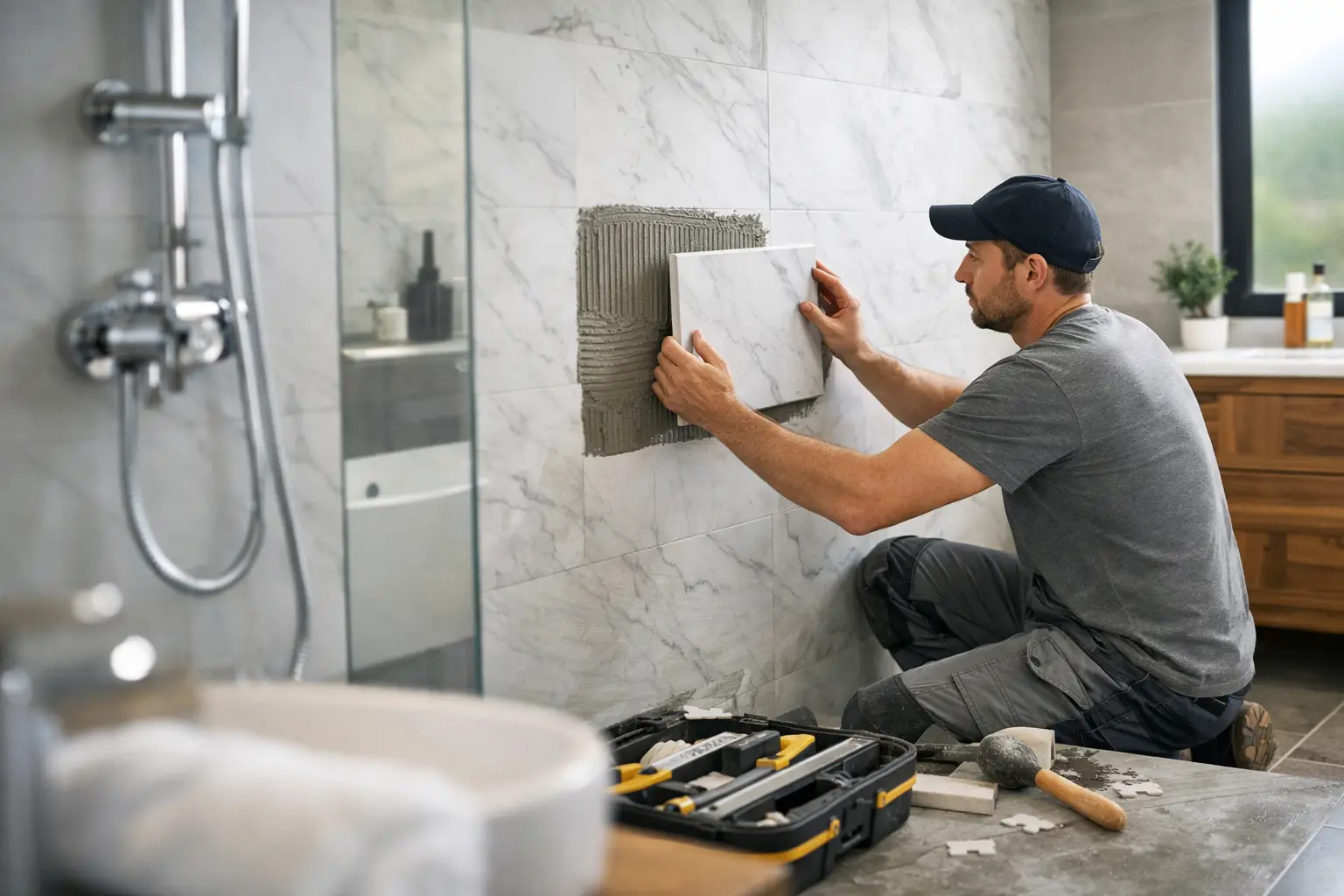
A bathroom can look finished on handover day and still be hiding expensive problems behind the tiles. Hollow spots, poor falls to the drain, cracked grout and failed waterproofing rarely announce themselves straight away. That is why choosing a bathroom tiler Melbourne west homeowners can rely on is about far more than finding someone who can lay tiles neatly.
For a renovation that lasts, tiling needs to be part of a properly managed wet-area build. The preparation, waterproofing, plumbing set-out and final fit-off all need to work together. Get the early stages right and the finished bathroom will look sharp, drain correctly and stand up to daily family use.
What a Bathroom Tiler in Melbourne West Should Handle
Tiles are the visible finish, but the work underneath determines whether they stay in place and keep water where it belongs. A quality tiler assesses the existing surfaces before starting, checks floor levels and plans the tile layout around drains, niches, shower screens and fixtures.
In a full bathroom renovation, the tiling work should be coordinated with demolition, plumbing, carpentry and waterproofing. For example, the shower waste must be set at the correct height before the screed is formed. A recessed niche needs to be framed and waterproofed before wall tiles go on. A vanity position should be confirmed early so the tile set-out does not leave awkward cuts or poorly placed joints.
This is where an end-to-end renovation team makes a real difference. Instead of chasing separate trades and hoping each one understands the next stage, homeowners have one team managing the sequence of work. At BP Building & Maintenance, bathroom work is delivered with a registered plumber, qualified carpenter and certified waterproofer involved in the right stages of the job.
Waterproofing Is Not an Optional Extra
A fresh tile finish cannot compensate for poor waterproofing. Grout and tile are not waterproof barriers. Moisture can pass through grout lines, junctions and penetrations, which is why the membrane behind the finished surface is so critical.
A properly prepared bathroom requires the right substrates, clean junctions, correct sealing around penetrations and appropriate waterproofing to shower walls, bathroom floors and wet-area transitions. The membrane must also be allowed to cure before tiling begins. Rushing this stage to save a day can create a problem that costs far more to fix later.
The requirements vary depending on the room layout, whether it is a walk-in shower, the location of the bath and how the wet area is constructed. A ground-floor concrete slab bathroom may present different preparation needs to an upstairs bathroom with timber flooring. There is no one-size-fits-all shortcut.
If you are comparing quotes, ask what waterproofing is included and who carries it out. A vague allowance for “bathroom waterproofing” is not the same as clear, qualified work completed as part of a planned renovation.
Walk-In Showers Need Correct Falls
Walk-in showers are popular across Melbourne’s western suburbs because they create a clean, open look and make smaller bathrooms feel less boxed in. They also demand accurate construction.
The floor needs sufficient fall towards the waste without making the rest of the room feel uneven underfoot. Large-format tiles can look excellent in a walk-in shower, but they are not always the easiest option around a central floor waste. Smaller tiles or a linear drain may allow the required falls to be formed more cleanly.
This is one of the key trade-offs to discuss before tiles are selected. The tile you love in a showroom may need a different drain position, a different layout or a practical alternative to perform properly in your shower.
Tile Selection Should Suit the Room, Not Just the Look
Bathroom tiles need to handle water, cleaning products, foot traffic and daily temperature changes. A tile choice should suit how the room will be used, not only the colour scheme.
Large tiles can reduce the number of grout lines and give a bathroom a modern, spacious feel. They also need flatter wall and floor preparation, and can involve more waste and more detailed cutting around pipes and fixtures. Smaller tiles work well on shower floors and curved or detailed areas, but have more grout joints to maintain.
Porcelain is a popular option because it is hard-wearing and available in many finishes. Natural stone offers character, although it can require more ongoing care. Matte finishes are often practical underfoot, while highly polished tiles may suit walls but need careful consideration on wet floors.
The grout colour matters too. A close match can create a quieter, more continuous finish, while contrasting grout makes the tile pattern more pronounced. White grout may look crisp, but it can show marks more readily in a busy family bathroom. A good tiler will help you make choices that work in real life, not just in a display room.
The Details That Separate a Tidy Job From a Lasting One
Good tiling is often recognised in the details. Tile lines should be straight and balanced. Cuts around fixtures should be neat. Corners, niches and transitions should be carefully finished. The visual result should feel planned rather than adjusted as the work went along.
Set-out is particularly important in small bathrooms. Starting with a full tile in the wrong location can leave a narrow strip at the door, an uneven line above the vanity or mismatched cuts in the shower. Before fixing tiles, an experienced tiler measures the room and works through the layout to avoid those obvious compromises where possible.
Movement joints, trims and silicone also matter. These elements allow for movement between different surfaces and help finish edges cleanly. They should not be treated as an afterthought. The right trim can protect exposed tile edges, while quality silicone at changes of plane helps prevent cracking and water entry.
Questions Worth Asking Before You Accept a Quote
Price matters, but the cheapest quote can become the most costly if major preparation work has been skipped. A clear quote should show what is included, what materials are supplied and what may be treated as an extra.
Ask whether demolition and rubbish removal are included, how wall and floor surfaces will be prepared, who is completing the waterproofing, and whether plumbing changes are allowed for. Confirm whether tiles, grout, trims and silicone are supplied or selected separately. It is also worth asking how the job will be staged and how long the bathroom will be unavailable.
For a straightforward tiling refresh, the scope may be smaller. But if there are signs of water damage, loose tiles, soft flooring, cracked shower bases or an outdated layout, a full renovation approach is usually the safer choice. Covering over a failed substrate may save money at the start, but it does not remove the cause of the problem.
Local Experience Makes Renovations Easier
Homes across Caroline Springs, Taylors Hill, Werribee, Tarneit and nearby western suburbs vary widely in age, layout and construction. Some bathrooms simply need a modern update. Others need a complete strip-out, plumbing changes and waterproofing replacement before new finishes can be installed.
A local bathroom specialist can inspect the room, identify what is practical and explain the scope without overselling work you do not need. That includes being honest where an existing layout can be retained to keep costs under control, and where moving plumbing or rebuilding a shower is the better long-term decision.
The right bathroom tiler brings accuracy to the finish, but the right renovation team protects the work beneath it as well. Start with a clear on-site assessment, choose materials that suit your household, and make sure every stage is completed properly before the next one begins. That is how a new bathroom stays a good investment long after the grout has dried.