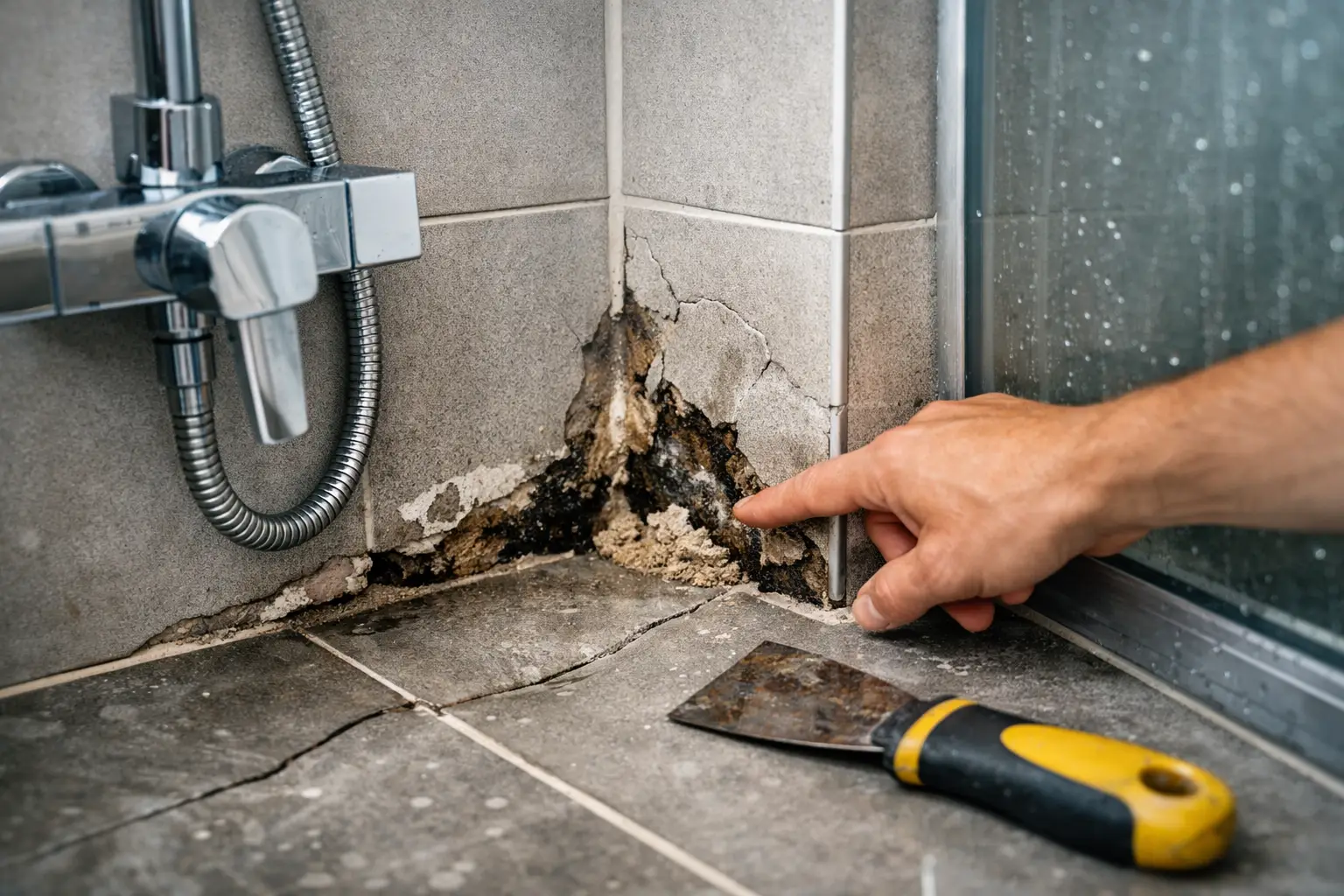
A shower can look freshly tiled, drain properly and still be leaking behind the walls. That is the problem with failed waterproofing: by the time obvious damage appears, water may already have reached plaster, timber framing, adjoining rooms or the floor structure. So, can shower waterproofing fail? Yes – and the failure is often hidden until it becomes an expensive repair.
For homeowners, waterproofing is not a cosmetic part of a bathroom renovation. Tiles, grout and silicone help create a finished surface, but they are not the primary barrier that protects the building. The waterproof membrane underneath is what needs to do the hard work every day.
What shower waterproofing is meant to do
A properly waterproofed shower has a continuous membrane system beneath the tiles and around vulnerable junctions. This includes the shower floor, wall-to-floor junctions, internal corners, penetrations for taps and pipes, the hob or linear drain detail, and the wall areas required for the shower design.
The membrane needs to be applied to a suitable prepared surface, at the correct coverage and thickness, then allowed to cure before tiling starts. It also needs to connect properly with the drainage system. If any of those details are missed, water can find a path through.
This is why a shower is more technical than it appears. The tiling may be neat and the fixtures may be high quality, but neither can compensate for a poor waterproofing system beneath them.
Can shower waterproofing fail after a renovation?
It can fail soon after a renovation, or gradually over many years. A newly renovated bathroom that leaks is usually a workmanship, preparation or detailing issue. An older shower may fail because materials have deteriorated, movement has opened weak points, or previous repairs only treated the visible surface.
Not every damp mark means the membrane has failed. A leaking shower screen, cracked grout, failed silicone joint, damaged pipe or blocked drain can produce similar symptoms. The right response is to identify the source before removing tiles or spending money on a repair that does not address the cause.
The common causes of failure
Poor surface preparation is one of the biggest problems. Dust, moisture, loose material or an unsuitable substrate can prevent the membrane from bonding correctly. Applying the product too thinly, missing a second coat where required, or tiling before it has cured can also compromise the system.
Corners, pipe penetrations and drains are the pressure points. These areas need careful detailing because they are where movement and regular water exposure occur. A membrane that is not properly reinforced or sealed around a penetration may allow water to travel behind the wall lining.
Incorrect falls to the drain are another issue. Water should move efficiently towards the drain, not sit in low spots or escape from the shower area. Standing water increases the load on grout, sealants and drainage details. Over time, it can expose weak workmanship.
Building movement can contribute too. Homes settle, materials expand and contract, and timber floors can flex. A waterproofing system needs to be compatible with the substrate and installed with the right junction details. Rigid finishes over movement-prone areas can eventually crack or separate.
Finally, some showers have been repaired repeatedly at surface level. Regrouting or resealing may improve the appearance and stop minor surface leaks, but it will not fix a failed membrane behind the tiles.
Warning signs of failed shower waterproofing
The most common signs appear outside the shower itself. You may notice a musty smell, peeling paint on the wall beside the bathroom, swollen skirting boards, loose tiles, bubbling plaster or stains on a ceiling below. In a single-storey home, damage may show up in an adjoining room rather than directly beneath the shower.
Mould that keeps returning despite regular cleaning is worth investigating, particularly where it is concentrated around lower wall edges, corners or outside the shower screen. Surface mould can be caused by poor ventilation, but persistent mould combined with dampness may point to water getting where it should not.
Pay attention to changes underfoot as well. Tiles that sound hollow, move slightly, or have cracked grout lines may indicate moisture has affected the adhesive or substrate. A soft floor near the shower is more urgent, especially in an older bathroom or upstairs wet area.
Higher water bills can also be a clue, although they more often relate to plumbing leaks. If there is any doubt, a proper inspection can separate a pipe issue from a shower waterproofing issue.
Why grout and silicone are not the whole fix
Homeowners are often told that cracked grout is the reason a shower leaks. Cracked grout should be repaired, and failed silicone should be removed and replaced, but these are maintenance items. They are not a substitute for waterproofing.
Grout is porous to some degree and can allow moisture through over time. Silicone seals movement joints and helps direct water, but it can break down through cleaning products, age and movement. The membrane is designed to manage moisture that gets past the tiled surface.
There is a trade-off with small repairs. If the problem is genuinely limited to silicone around a screen or a local grout crack, a targeted repair may be sensible. If water damage is visible beyond the shower, tiles are lifting, or the issue has returned after several patch jobs, a proper strip-out and rebuild is usually the more reliable path.
What a proper investigation should involve
Before approving major bathroom work, ask for the shower to be assessed methodically. The investigation should look at the shower screen and silicone joints, drainage performance, plumbing connections, tile movement, adjoining walls and any signs of moisture damage.
In some cases, testing can help isolate whether water is escaping from the shower enclosure, pipework or the waterproofed area. Access from an adjoining room or ceiling space may reveal damage without immediately pulling up the entire bathroom.
The findings should guide the scope of work. A reputable tradesperson will not promise that regrouting will solve a problem without checking whether the damage is deeper. Equally, they should not recommend a full renovation where a clear, contained repair is appropriate.
When a shower needs to be rebuilt
A rebuild becomes the practical option when the membrane has failed, the substrate is water damaged, the shower falls are wrong, or the bathroom has multiple ageing components. Removing the tiled surface allows damaged materials to be replaced and gives the waterproofing system a clean, suitable base.
A complete shower rebuild also creates the opportunity to correct design problems that contribute to leaks. This may include improving drainage falls, replacing an old hob, upgrading a shower screen, repositioning fixtures or creating a more functional walk-in shower.
For homes in Caroline Springs and Melbourne’s western suburbs, choosing qualified trades for the full sequence matters. Demolition, plumbing, carpentry, waterproofing, tiling and fit-off all affect the final result. When those stages are planned together, there is less risk of one trade inheriting a problem created earlier in the job.
BP Building & Maintenance approaches bathroom renovations as an end-to-end project, with qualified trade work focused on the details that sit behind the finished tiles as much as the finish you can see.
How to reduce the risk in a new bathroom
The best time to prevent waterproofing failure is before the first tile is laid. Confirm who is completing the waterproofing, whether they are appropriately qualified, and how the work will be managed around plumbing penetrations, corners, drains and shower junctions. Waterproofing should not be treated as a rushed step between demolition and tiling.
It is also worth discussing the shower design early. Large-format tiles, linear drains, recessed showers and walk-in layouts can look excellent, but each requires accurate substrate preparation and drainage planning. The right design is one that suits the room, the structure and how the household will use it.
Once the bathroom is complete, maintain sealants, keep drains clear and deal with cracked tiles or persistent mould promptly. Good ventilation helps protect the room, although it cannot compensate for a failed membrane.
If a shower is showing signs of dampness or recurring leaks, acting early can protect more than the bathroom. A careful inspection now may prevent water damage from reaching the rooms and structure around it.
Leave a Reply