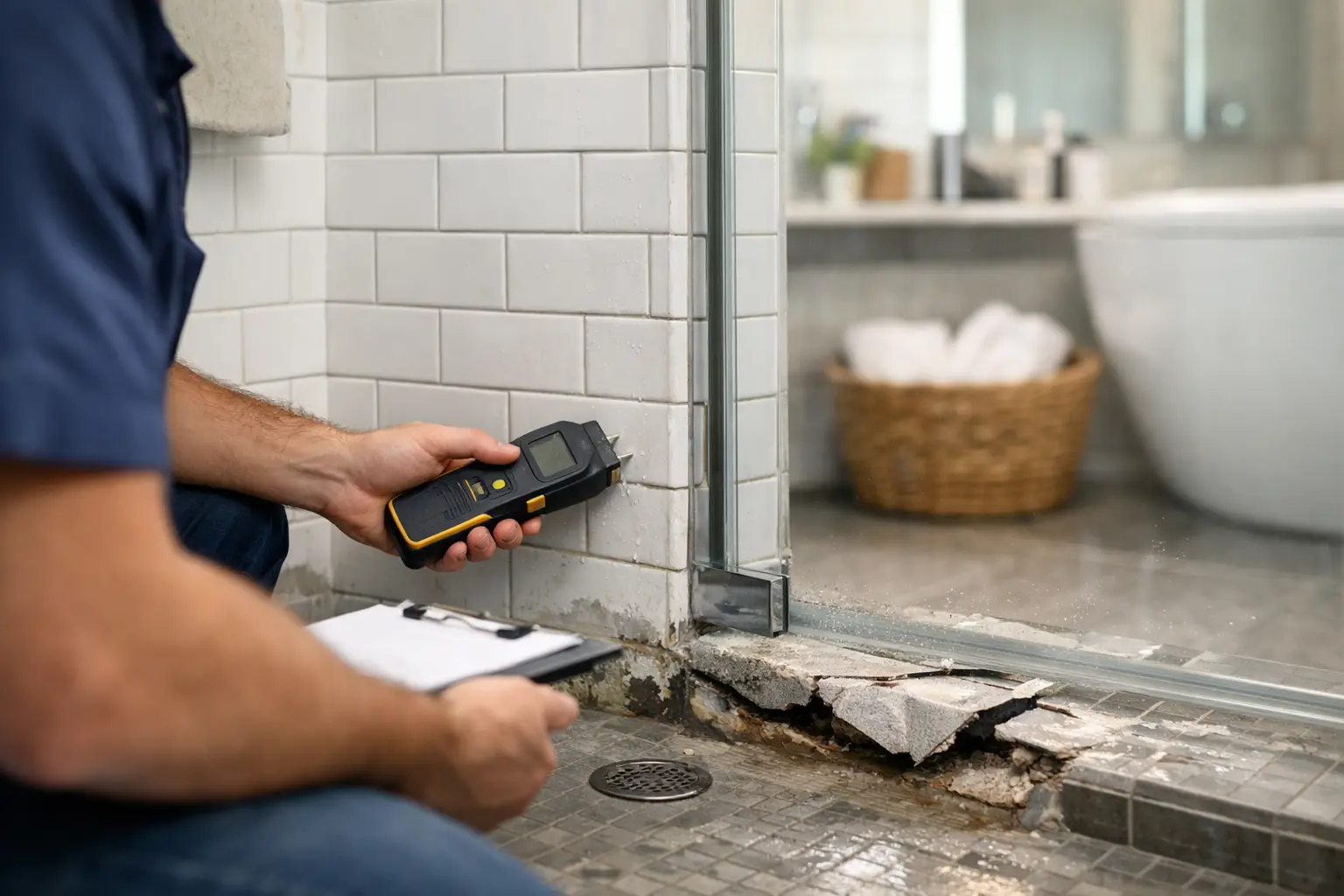
A bathroom can look clean, modern and completely sound while water is slowly getting behind the tiles. A bathroom waterproofing assessment looks past the visible finishes to identify whether the wet area is protecting the structure underneath, or allowing moisture to cause damage that will become far more expensive later.
For homeowners planning a renovation, this assessment is not an unnecessary extra. It helps establish what needs to be repaired, what can remain, and whether a cosmetic update is likely to hide a bigger problem. In older homes across Melbourne’s western suburbs, it can be the difference between a planned renovation and a mid-project discovery of rotted framing, swollen flooring or mould-damaged walls.
What a bathroom waterproofing assessment involves
Waterproofing is the concealed membrane system installed beneath tiles and around wet areas such as showers, baths, floors and wall junctions. Its job is to direct water away from vulnerable building materials. Tiles, grout and silicone help manage surface water, but they are not the waterproofing system themselves.
A proper assessment considers the full wet-area setup, not just whether the shower grout looks worn. The condition of tiles, sealants, drainage, flooring, wall linings and adjacent rooms can all provide clues about a failure below the surface.
The scope depends on the age of the bathroom, the symptoms present and whether demolition is already planned. In a bathroom due for a full renovation, opening up the room may be the most reliable way to confirm the extent of any damage. If the bathroom is staying in use, the assessment should focus on evidence, risk areas and sensible next steps without causing avoidable disruption.
Signs your bathroom may need assessment
Waterproofing failure does not always start with a dramatic leak. More often, it begins as a small issue that repeats every time the shower is used. That is why early investigation matters.
Common warning signs include a persistent musty smell, cracked or drummy tiles, crumbling grout, peeling paint on the wall outside the shower, loose silicone, staining on a ceiling below, or swollen skirting and door jambs near the bathroom. Mould that returns quickly after cleaning can also indicate ongoing moisture rather than a simple ventilation issue.
Pay close attention to a shower that drains slowly or holds water near its edges. Poor falls toward the waste allow water to sit where it should not, placing extra pressure on junctions and seals. A shower screen that leaks onto the floor may appear minor, but repeated water exposure around a doorway or wall base can cause real damage over time.
Not every cracked tile means the membrane has failed. Movement in the building, poor tile adhesion or an isolated impact can be responsible. Likewise, surface mould can result from poor extraction and condensation. The assessment is valuable because it separates a maintenance problem from a waterproofing or structural concern.
Where waterproofing failures are most often found
The highest-risk areas are usually the points where surfaces meet or water concentrates. Shower recesses deserve close attention, particularly wall-to-floor junctions, internal corners, hob edges, niches, screen channels and the connection around the floor waste.
A walk-in shower needs careful design because there is no hob to contain water. Falls, drain placement, waterproofing continuity and the transition to the rest of the bathroom all need to work together. A large-format tile may suit the design, but it can be harder to form correct falls with larger tiles in some shower areas. Good-looking finishes do not compensate for poor drainage underneath.
Bathrooms on timber subfloors can require closer scrutiny than those on a concrete slab. Timber moves more, and prolonged moisture can affect flooring and framing. This does not mean timber-floor bathrooms are unreliable. It means preparation, compatible materials and proper installation are especially important.
Other common trouble spots include bath surrounds, freestanding bath plumbing penetrations, vanity splash areas, laundry connections within a combined wet area, and bathrooms built over living spaces. A leak above a downstairs ceiling is often noticed late, after water has already travelled beyond the original entry point.
What happens during a bathroom waterproofing assessment
A qualified trade professional starts with the practical history of the room. When was it renovated? Has the issue appeared after showering, heavy rain or a plumbing event? Is the room above another living area? Have there been repeated repairs to grout, silicone or paint?
Visual inspection follows. This includes checking surface falls, drainage behaviour, cracks, tile movement, sealant condition, shower screens, penetrations and visible moisture damage. Depending on the situation, moisture readings and targeted testing may help identify areas requiring further investigation.
If a plumbing fault is suspected, it needs to be separated from a waterproofing failure. A leaking pipe, waste connection or mixer can produce similar symptoms, but the repair path is different. A registered plumber can assess plumbing-related causes rather than assuming every moisture issue is a membrane problem.
Where there is clear evidence of concealed damage, selective removal of tiles or linings may be recommended. This is not always required, and it should not be treated as a first response in every case. However, when a bathroom is already being renovated, stripping back to a sound substrate is often the only dependable way to inspect, repair and rebuild the waterproofing system correctly.
Why surface repairs are sometimes not enough
Fresh silicone and regrouting can improve the appearance of a tired bathroom and help with small maintenance issues. They can be worthwhile when the membrane is sound and the problem is limited to a local surface defect.
They will not restore a failed waterproofing membrane behind the tiles. If water has bypassed the membrane, or if the membrane was never correctly installed at critical junctions, patching grout may only delay a larger repair. The same applies to painting over a water stain without finding the source.
This is where homeowners can be caught by a cheap quote. Replacing a few tiles or resealing a shower may sound attractive, but the right solution depends on the cause and extent of the issue. A reliable assessment should explain the options plainly, including what can reasonably be repaired and when full replacement is the better long-term investment.
Bathroom waterproofing assessment before renovation
Before committing to a new layout, fittings and tiles, assess the existing bathroom properly. This gives the renovation team a clearer picture of what sits behind the finishes and reduces the chance of budget surprises once demolition begins.
It also helps with planning. If the subfloor needs repairs, plumbing needs relocation or wall linings have been affected by water, these works need to be allowed for before the new bathroom is installed. Choosing a vanity or feature tile is easier once the essential building work has been accounted for.
For a full bathroom renovation, the waterproofing stage should be treated as a key quality checkpoint. The old room is removed, the substrate is prepared, plumbing and carpentry work are completed as required, and the membrane is applied before tiling begins. Rushing this sequence to save time is false economy.
At BP Building & Maintenance, complete bathroom renovations are managed with qualified trade involvement across demolition, plumbing, carpentry, waterproofing, tiling and fit-off. That coordinated approach matters because waterproofing does not work in isolation. It needs the falls, substrate, drainage and final fixtures to be right as well.
Questions worth asking before work starts
When you receive advice or a quote, ask what evidence supports the recommended repair. You should also ask whether the issue appears to be plumbing, drainage, waterproofing or a combination of these.
For renovation work, confirm who is carrying out the waterproofing, how the substrate will be prepared, and how shower falls and floor wastes will be handled. It is also reasonable to ask what parts of the existing room will be removed and whether any damaged framing, flooring or wall linings are included or treated as a possible variation.
The aim is not to turn the homeowner into a building inspector. It is to make sure the scope addresses the cause of the problem, not only the visible symptom.
A bathroom should cope with daily showers, family routines and years of use without quietly damaging the home around it. If you have signs of moisture, or you are planning to renovate an older wet area, arrange an assessment before selecting finishes. Finding the real condition early gives you a clearer scope, a more honest budget and a bathroom built to last.