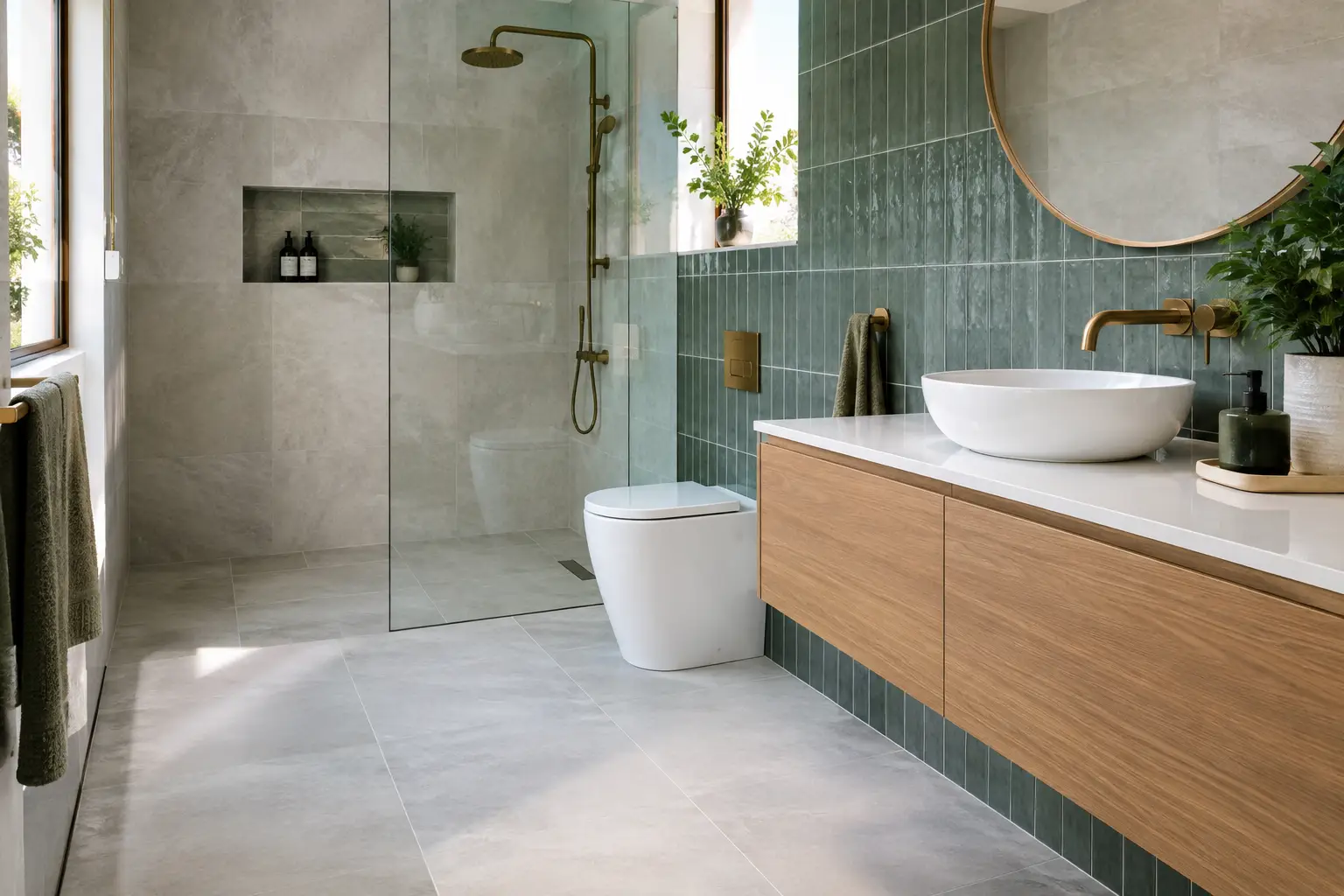
A bathroom can look freshly renovated on day one and still cause trouble within a few years if the wrong tile has been chosen for the job. Bathroom tiles need to handle regular moisture, cleaning products, foot traffic and changing temperatures while still suiting the room’s layout. The best result is not always the most expensive tile or the latest showroom trend. It is the tile that fits the space, is installed properly and supports a waterproof bathroom build.
Start with How the Bathroom Will Be Used
Before choosing colours or patterns, consider who uses the bathroom and where each tile will go. A main family bathroom has very different demands to an ensuite used by two adults, while a rental property may need a hard-wearing finish that is easy to maintain and broadly appealing.
Floor tiles need grip, particularly in walk-in showers, around baths and in households with young children or older family members. Wall tiles can be smoother and more decorative because they are not carrying foot traffic. This simple difference is why a tile that looks excellent across a feature wall may not be suitable underfoot.
In Melbourne’s western suburbs, many homes also have compact bathrooms where every design choice is noticeable. Large-format tiles can make a small room feel calmer by reducing grout lines, but they need a reasonably flat surface and careful setting out. Smaller tiles can suit shower floors because the extra grout joints help follow the fall to the drain, but they take longer to install and clean.
Bathroom Tiles: Choose the Right Material
Porcelain is often the practical first choice for bathroom floors and walls. It is dense, low-porosity and available in a wide range of stone, concrete, timber-look and plain finishes. Quality porcelain handles everyday bathroom use well and gives homeowners plenty of design flexibility without the maintenance demands of natural stone.
Ceramic tiles are also a sound option, especially for bathroom walls. They are generally more economical and come in many shapes, colours and finishes. For low-impact areas, ceramic can deliver a sharp result. The trade-off is that it is usually less dense than porcelain, so product suitability matters more for floors and wet areas.
Natural stone brings genuine character, with variations that manufactured tiles cannot exactly copy. It can suit a premium bathroom, but it is not a set-and-forget choice. Stone may need sealing and ongoing care, and some finishes are more vulnerable to staining or etching from bathroom products. If low maintenance is the priority, porcelain with a convincing stone finish is often the more sensible option.
Mosaic tiles are commonly used on shower floors, niches and feature areas. Their small format works well where falls are required, but more grout means more cleaning. They are best used where the visual benefit or drainage requirement justifies the extra maintenance.
Size, Layout and Grout Lines Matter
Tile size changes how a bathroom feels. Large rectangular tiles can make a room appear wider or taller depending on their orientation. Square tiles tend to give a more balanced, classic appearance. Slim subway tiles offer detail and texture, but the layout needs to be deliberate. A simple stacked pattern looks clean and modern, while a herringbone pattern creates impact but adds labour and cutting.
The room should be measured and the layout planned before installation starts. This helps avoid narrow tile cuts at doorways, visible off-centre lines or awkward tile positioning around a vanity and shower screen. A good tiler considers the main sightlines when entering the room, aligns tile joints where possible and plans the shower drain, niche and fixtures as part of the overall layout.
Grout colour is another decision that affects the finished look. A close match to the tile creates a more continuous surface and can make a small bathroom feel less busy. A contrasting grout highlights the tile shape and pattern, but it also makes every line more visible. On floors, mid-tone grout is often practical because it does not show everyday marks as readily as bright white.
Do Not Overlook Slip Resistance
A glossy floor tile may look impressive in a showroom, but bathrooms are wet areas. Floor tile selection should account for slip resistance, particularly in shower zones and homes where safety is a concern. Ask about the tile’s slip rating and whether it is appropriate for the specific area.
This does not mean every bathroom floor needs to feel rough under bare feet. There are many matte and textured porcelain tiles that offer a good balance between grip, comfort and easy cleaning. The key is matching the finish to the location. A smooth wall tile is usually straightforward to wipe down, while a shower floor needs more consideration.
It is also worth remembering that the tile is only one part of bathroom safety. Correct floor falls, drainage placement and shower screen design all affect whether water stays where it should. A well-designed walk-in shower needs more than attractive tiles to work properly.
Waterproofing Comes Before Tiling
Tiles and grout are not waterproofing. They are the visible finish over a properly prepared wet area. This is one of the most common misunderstandings in bathroom renovations and one of the reasons cheap cosmetic upgrades can create expensive damage later.
Before tiling begins, the substrate must be prepared, floor falls formed correctly and the waterproofing system applied to the required areas. Plumbing rough-in, wall framing, shower recess construction and waterproofing details all need to work together. If any of these stages are rushed, the bathroom may look finished but still be at risk of leaks behind walls or beneath the floor.
For this reason, tile selection should happen alongside the renovation plan, not after the technical work has been locked in. Large tiles, linear drains, recessed niches and floor-to-ceiling wall tiles can all affect construction details, cutting requirements and installation time.
BP Building & Maintenance manages bathroom renovations as a complete trade-led project, including demolition, plumbing, waterproofing, tiling and fit-off. That coordinated approach helps prevent the gaps that occur when individual trades are working without a clear plan.
Budget for the Full Tiling Scope
The purchase price of a tile is only part of the cost. Installation can vary considerably depending on tile format, pattern, site access, surface preparation and the number of cuts required. A large porcelain tile may cost more to handle and install, while a small mosaic can require more labour because of the extra joints and detailed drainage work.
Allow for adhesive, grout, trims, sealants, waterproofing, screed work and removal of old tiles as part of the overall bathroom budget. Tile trims are worth discussing early too. They provide a neat finish on external corners, niches and exposed edges, and they are available in finishes that can match tapware or complement the room’s colour scheme.
Choosing a tile solely because it is on sale can be false economy if there is not enough stock available for cuts, breakages or future repairs. It is sensible to order an allowance for wastage, especially with patterned, imported or batch-sensitive tiles. Keeping a few spare tiles after the renovation is complete can save significant trouble down the track.
A Simple Direction for a Lasting Finish
For most homes, a matte porcelain floor tile, practical grout colour and easy-clean wall tile create a bathroom that looks current without being difficult to live with. Add a feature tile only where it has room to stand out, such as inside a shower niche or behind a vanity. Too many competing tile styles can make even a large bathroom feel crowded.
The right bathroom tile should suit your routine as much as your taste. When the layout, waterproofing, drainage and installation are handled with the same care as the colour selection, the finished room will stay comfortable, safe and reliable long after the renovation is complete.