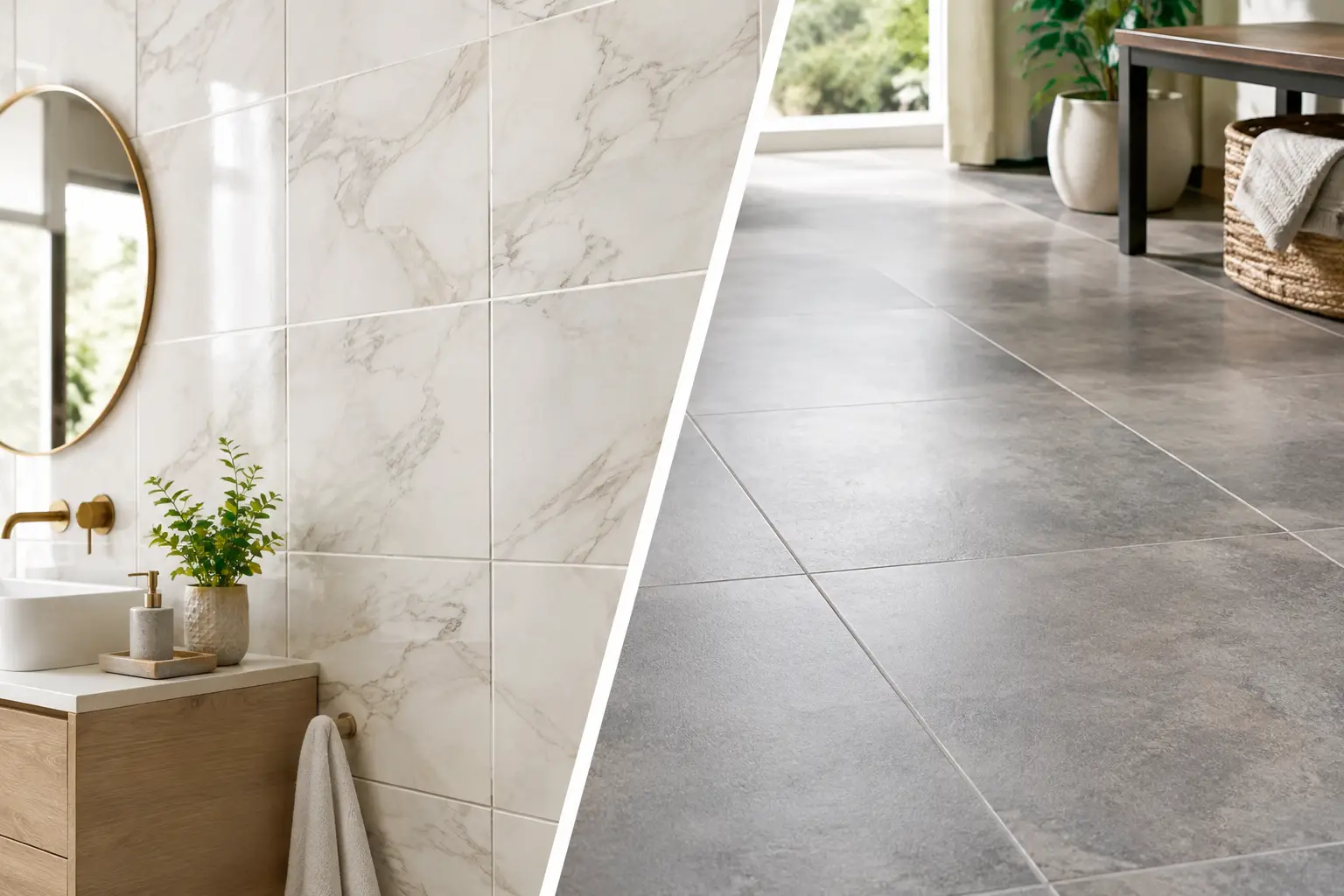
A tile that looks right on a bathroom wall can be the wrong choice underfoot. That is the key issue with wall tiles versus floor tiles. While many ranges are designed to coordinate, the two surfaces do very different jobs. Floors carry weight, cope with constant foot traffic and need dependable grip when wet. Walls need neat alignment, stable adhesion and a finish that suits the room.
For a bathroom renovation, choosing by appearance alone can create problems that only show up once the room is in use. The right tile selection supports a safer, longer-lasting bathroom and helps the whole installation perform as intended.
Wall tiles versus floor tiles: the practical difference
The main difference is strength. Floor tiles are manufactured and tested to withstand regular loading from people, bathroom furniture and day-to-day movement. They are generally denser and more durable than standard wall tiles, particularly in porcelain ranges.
Wall tiles are often lighter and can be thinner. This makes them easier to cut, handle and fix vertically, which is useful when tiling around niches, windows, vanities and shower fittings. Ceramic wall tiles also come in a broad range of gloss finishes, handmade looks and decorative profiles that are not always suitable for a floor.
Using a wall-only tile on the floor is a risk. It may crack under load, wear prematurely or fail to provide enough grip. A floor-rated tile can usually be installed on a wall, provided the wall structure, adhesive and fixing method are suitable. However, heavier large-format porcelain tiles need proper preparation and installation to prevent lipping, movement or adhesion issues.
Slip resistance matters most on bathroom floors
A bathroom floor becomes slippery quickly when water, soap and shampoo are involved. This is why the slip rating and surface finish deserve more attention than the colour sample in the showroom.
Highly polished tiles can look sharp, especially in a display setting, but they are not always the sensible choice for a wet bathroom floor. A matt, textured or structured finish usually gives better underfoot grip. For shower floors, smaller tiles are often a practical option because the additional grout joints help with traction and allow the surface to follow the required fall towards the waste.
There is no single finish that suits every bathroom. A sleek, low-texture porcelain tile may be appropriate outside the shower in a low-traffic ensuite, while a family bathroom with children or older residents may benefit from a more slip-resistant surface throughout. The best choice depends on who uses the room, where water is likely to land and how easy the tile will be to clean.
Tile size changes the installation
Large-format tiles are popular for their clean, modern appearance and fewer grout lines. On walls, they can make a compact bathroom feel more open. On a bathroom floor, they can also work well in the main area where the substrate is flat and the drainage layout is straightforward.
The shower area is different. The floor needs a consistent fall so water drains to the waste instead of pooling in corners. Larger tiles are more difficult to shape over that fall, particularly with a centre waste. This is why mosaics or smaller-format tiles are commonly used in walk-in showers.
Smaller wall tiles have their own advantages. Subway tiles, stacked rectangles and finger tiles can add detail without taking over the room. They also suit areas that need more cuts, such as splashbacks and feature niches. The trade-off is that more grout lines mean more cleaning and more careful installation to keep the layout straight.
Before selecting a tile size, it is worth considering the room dimensions, floor waste location, doorway transitions and the position of fixtures. A tile plan should work with the bathroom, not force the bathroom to work around the tile.
Water resistance is not the same as waterproofing
Tiles and grout are not a waterproofing system. They form the visible finish, but moisture can still pass through grout joints, movement gaps and service penetrations over time. The waterproof membrane beneath the tiles is what protects the structure behind the walls and under the floor.
This distinction matters when renovating an older bathroom. Replacing tiles without addressing failed waterproofing may improve the appearance while leaving the original water-damage risk in place. In a full renovation, the strip-out, substrate preparation, waterproofing and tiling need to be treated as connected stages of one job.
The shower is the most critical area. The floor falls must direct water to the waste, waterproofing must be applied correctly, and junctions around walls, screens and penetrations need careful attention. Good tiling cannot compensate for poor preparation underneath.
Choose wall finishes for cleaning and durability
Bathroom walls do not need the same slip resistance as floors, so there is more freedom with finish. Gloss tiles can reflect light and are easy to wipe down, making them a good fit for smaller or darker bathrooms. Matt wall tiles offer a softer, more contemporary look, but some textured finishes can hold soap residue and require more regular cleaning.
Consider where each tile will sit. A smooth wall tile behind a vanity is generally easy to maintain. A heavily textured tile inside a shower may look impressive, but it can trap moisture and grime. If low-maintenance cleaning is a priority, keep the shower wall finish practical and use texture in a feature area that does not take the same daily spray.
Grout colour also changes the result. Light grout gives a crisp, continuous look but can show discolouration sooner in high-use areas. Mid-tone or darker grout can be more forgiving, especially on floors, though it should still complement the tile rather than create a patchwork effect.
Weight, movement and the right fixing materials
Not every wall is ready for heavy porcelain tiles. Existing plaster, fibre cement sheeting, wall straightness and the condition of the substrate all affect what can be installed safely. Large tiles need a sound, level backing and the correct adhesive coverage. Voids behind tiles can lead to cracking or poor adhesion later.
Floors also need a stable base. If the substrate moves, tiles and grout can crack even when quality materials have been used. In renovation work, this may mean repairing or levelling the floor before waterproofing begins. It is less exciting than choosing finishes, but it has far more impact on how long the bathroom lasts.
Expansion and movement joints are another detail that should not be skipped. Homes naturally move, and wet areas are exposed to changing temperatures and moisture. Properly planned joints help manage that movement instead of allowing stress to show up as cracked grout or tiles.
Matching wall and floor tiles without making the room flat
Matching does not have to mean using the exact same tile everywhere. Many homeowners choose a coordinating range: a durable matt porcelain on the floor, a lighter or larger version on the walls, and a feature tile for the shower niche or vanity wall. This keeps the room cohesive while giving each surface a finish suited to its job.
For a smaller bathroom, running the same floor tile partway up a wall can create continuity, particularly in a walk-in shower. In larger rooms, contrast can help define zones. A calm wall tile with a slightly deeper floor tone can ground the space and hide everyday marks more effectively.
Samples are useful, but view them in the actual room where possible. Bathroom lighting, natural light and surrounding finishes can change how a colour reads. Check tiles both dry and wet, especially when considering any polished or textured finish.
Get the technical decisions made before ordering
Tiles are often ordered early, but the right choice depends on design decisions that should be settled first: shower layout, waste position, screen type, vanity footprint, wall preparation and floor levels. Ordering before these details are confirmed can lead to unsuitable tile sizes, unnecessary waste or a design that is difficult to install correctly.
For homeowners across Caroline Springs and Melbourne’s western suburbs, BP Building & Maintenance can manage the practical parts of a complete bathroom renovation, from demolition and waterproofing through to plumbing, tiling and final fit-off. That means tile choices can be checked against the actual site conditions, not just a display board.
The best bathroom tiles are not simply the ones that photograph well. They are the ones that suit the space, drain properly, feel safe underfoot and stay looking good after years of real use.