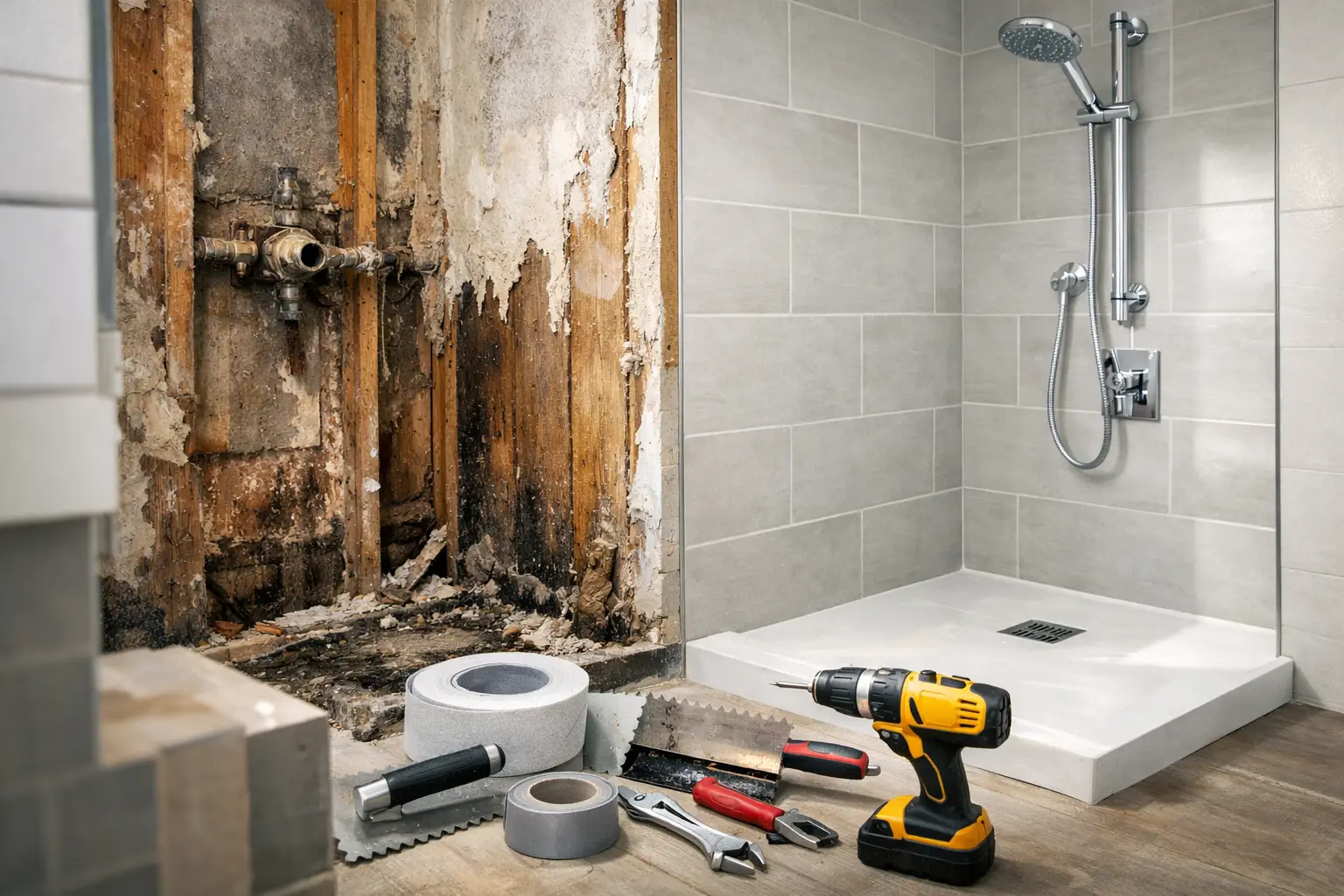
A leaking shower renovation is not a job to cover up with fresh silicone and hope for the best. If water is getting behind tiles, through a shower screen junction or into the wall and floor structure, the damage can keep spreading long after the visible signs disappear. The right repair identifies where the water is escaping, removes compromised materials and rebuilds the shower with waterproofing that is designed to last.
For homeowners, the frustrating part is that a shower can still look presentable while failing underneath. Loose tiles, cracked grout, peeling paint in the next room, a musty smell or swollen skirting boards are all signs that deserve proper investigation. Acting early can protect the rest of the bathroom and prevent a smaller renovation becoming a much larger rectification job.
When a Leaking Shower Renovation Is the Right Fix
Not every leak means a complete bathroom renovation is required. A leaking shower head, worn mixer cartridge or damaged waste connection may be a plumbing repair. A shower screen that leaks only when water hits one corner may need adjustment, resealing or a replacement seal.
The issue becomes more serious when water has breached the waterproofing system or has been travelling behind tiled surfaces. In many older bathrooms, waterproofing has deteriorated over time, was poorly installed originally, or has been punctured during previous work. Grout is not waterproof, and silicone is a finishing sealant, not a substitute for a sound waterproof membrane.
A full shower renovation is often the sensible option where tiles are drummy or loose, cracks are appearing around corners, adjoining walls show moisture damage, or the shower base has movement. Removing the shower area allows the trades to inspect the substrate, address damaged framing or sheeting where needed, and rebuild from a clean, stable base.
This approach costs more than a cosmetic patch, but it avoids paying twice. Regrouting a shower with failed waterproofing may make it look better for a while, yet water can continue finding a path behind the tiles.
Find the Cause Before Choosing the Scope
A reliable renovation starts with diagnosis, not assumptions. Water does not always show up directly below the point of failure. It can track along framing, sheeting, pipes and floor structures before becoming visible on a ceiling or wall some distance away.
A qualified trade should first consider whether the leak is plumbing-related, caused by shower-screen failure, or linked to the tiled shower enclosure. This affects both the scope of work and the order in which it is completed. There is little value in replacing tiles if an unaddressed pipe connection is leaking behind the wall.
Signs the Waterproofing May Have Failed
Moisture damage is not always obvious, but several signs commonly point to a failed shower enclosure. These include persistent mould around corners despite cleaning, cracked or missing grout, silicone pulling away from junctions, bubbling paint, damaged walls outside the shower and tiles that sound hollow when tapped.
A soft or swollen vanity panel near the shower is another warning sign. So is a bathroom floor that feels uneven or moves underfoot. These symptoms do not confirm the exact cause on their own, but they are a strong reason to stop relying on surface repairs and arrange a proper assessment.
Why a Patch Can Be a False Economy
Silicone, grout repair and shower screen sealing all have their place. They are worthwhile when the underlying waterproofing remains intact and the issue is genuinely localised. The trade-off is that no surface treatment can restore a membrane that has already failed behind the tiles.
If the shower has leaked repeatedly, or if there is evidence of hidden damage, stripping out the affected area is usually the more dependable decision. It gives the renovation team access to the work that matters most: substrate preparation, drainage details, wall-to-floor junctions and waterproofing continuity.
What a Proper Leaking Shower Renovation Involves
The process should be planned as a sequence of connected trades, not a collection of separate fixes. Good workmanship at one stage can be undone by shortcuts at the next, particularly in a wet area where plumbing, waterproofing, tiling and fit-off all meet.
The work generally begins with protecting adjacent areas and removing the existing shower finishes. Tiles, shower base components, old sheeting and damaged materials are stripped out as required. Once the area is exposed, the condition of the wall framing, floor and plumbing can be checked properly.
Any necessary plumbing changes are completed before the new linings and waterproofing are installed. This is also the right time to improve the layout if the current shower is cramped, difficult to clean or poorly positioned. A walk-in shower, recessed shelf, better drainage arrangement or more practical screen configuration can be considered while the room is open.
The substrate must then be prepared correctly. Floors and walls need to be stable, suitable for tiling and appropriately detailed around penetrations and junctions. The waterproofing system is applied over prepared surfaces, with close attention to corners, hob or shower base transitions, wastes and pipe penetrations. These are the areas where rushed work commonly creates future problems.
After waterproofing is complete and ready for the next stage, tiling can begin. Tile selection is not only about appearance. Larger tiles can create a clean, modern look with fewer grout lines, but they need careful planning around falls and drainage. Smaller tiles are often more practical on shower floors because they suit the required fall and provide more grout lines for grip.
The final stages include grouting, silicone sealing at movement joints, shower-screen installation and fixture fit-off. The completed shower should drain efficiently, feel solid underfoot and have clean finishes without relying on excessive sealant to hide poor preparation.
Choosing the Right Shower Design During the Rebuild
A leak is an inconvenience, but it can also be the right time to correct a bathroom layout that no longer works. Many homes in Caroline Springs and Melbourne’s western suburbs have bathrooms that are structurally sound outside the shower area but feel dated, dark or short on storage. Depending on the extent of the water damage, homeowners may choose to renovate the shower only or use the opportunity for a complete bathroom upgrade.
A frameless or semi-frameless screen can make a small bathroom feel more open, while a properly designed walk-in shower reduces visual clutter and can improve access. However, a walk-in design needs enough space and well-considered falls to keep water contained. It is not the right solution for every room.
For family bathrooms, practical decisions often matter more than trends. A tiled niche can reduce clutter from bottles, a hand shower can make cleaning easier, and a vanity with useful storage helps keep the room functional. Durable fittings and tiles are also worth prioritising in a high-use bathroom.
Workmanship Matters More Than the Surface Finish
Bathrooms are one of the least forgiving areas of a home renovation. A tile can look straight and still conceal poor preparation. A shower can look finished on handover day and develop costly problems later if waterproofing, drainage or plumbing details were not handled properly.
That is why homeowners should look for a renovation provider that can coordinate the full scope with qualified trades. A registered plumber, qualified carpenter and certified waterproofer bring the right skills to the stages that cannot be judged by appearance alone. Clear communication about what will be removed, repaired and rebuilt also helps avoid surprises once demolition begins.
BP Building & Maintenance provides complete bathroom renovation work with the practical trade coordination required for leaking shower rectification. The focus is on getting the structure, waterproofing and finish right, rather than applying a quick cosmetic fix over an unresolved issue.
Plan for Access and Drying Time
A shower renovation involves stages that cannot be rushed. Waterproofing and adhesives need appropriate curing time, and trades must work in the correct order. While fast turnaround is valuable, cutting drying time or overlapping stages prematurely can compromise the result.
If the bathroom is the household’s only shower, discuss access and timing before work begins. A clear schedule helps families plan around demolition, waterproofing, tiling and fit-off without unnecessary disruption. It is also sensible to remove personal items from the bathroom and nearby storage areas before the strip-out starts.
A leaking shower rarely improves by being ignored. If the signs are there, a careful inspection and properly scoped renovation can protect your home, improve the way the bathroom works and give you confidence every time the shower is used.
Leave a Reply