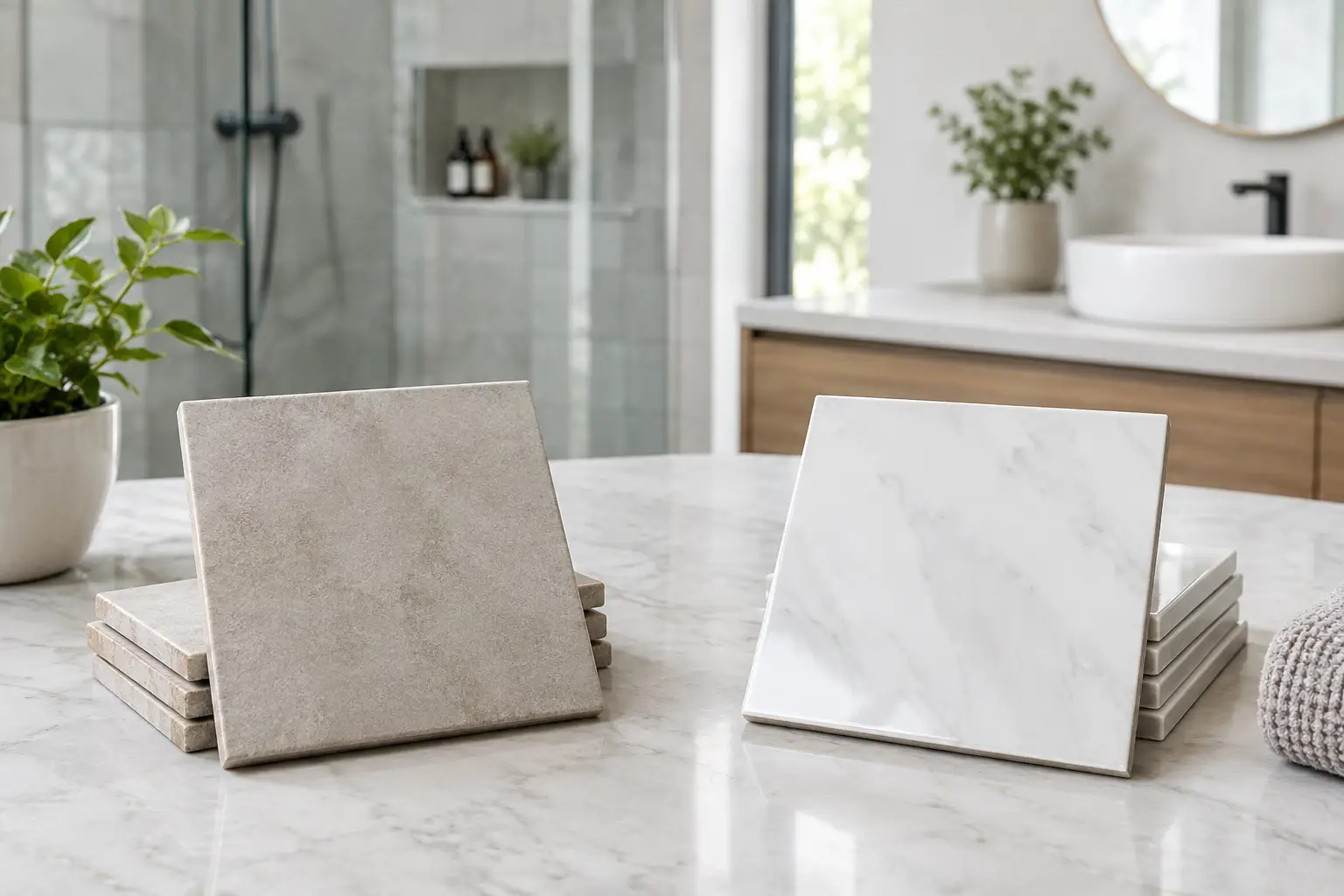
A bathroom tile can look right in a showroom and still be the wrong choice once it is exposed to daily showers, wet feet, cleaning products and family traffic. When comparing ceramic versus porcelain bathroom tiles, the best option depends on where the tile is going, how the room will be used, and the standard of finish you want from the renovation.
Both can produce a durable, attractive bathroom. The difference is not simply that porcelain is ‘better’. Porcelain generally performs better in demanding areas, while ceramic can be a practical and cost-effective choice for walls and lower-wear spaces. Getting the balance right helps avoid paying for performance you do not need – or choosing a tile that will not suit the job.
Ceramic versus porcelain bathroom tiles: the main difference
Porcelain is a type of ceramic tile, but it is manufactured from finer, denser clay and fired at higher temperatures. This creates a harder tile with very low water absorption. A tile classified as porcelain typically absorbs 0.5 per cent water or less.
Standard ceramic tiles are usually more porous and less dense. They are still suitable for many bathroom applications, particularly walls, but they are generally not as hard-wearing or moisture-resistant as porcelain. The actual quality varies between products, so the manufacturer’s specification matters more than the label on its own.
A glazed ceramic wall tile, for example, has a finished surface designed to resist moisture and stains. It can perform very well behind a vanity, around a bath or across shower walls when it is installed properly. The more relevant question is whether the tile is suitable for its exact location, rather than assuming every ceramic tile is unsuitable for a wet area.
Water resistance matters, but waterproofing matters more
Porcelain is the stronger choice where water exposure is frequent. Its low porosity makes it well suited to bathroom floors, walk-in shower floors, shower walls and areas that receive regular cleaning. It is also less likely to absorb moisture through an unglazed edge or a chip.
That said, tiles and grout are not the waterproofing system. Water can move through grout joints and around penetrations, particularly in a shower. The membrane installed beneath the tiles is what protects the structure behind the finished surface.
For a long-lasting bathroom, tile selection needs to sit alongside compliant waterproofing, correctly prepared substrates, suitable adhesive, proper falls to the floor waste and carefully sealed junctions. A premium porcelain tile cannot compensate for a poor waterproofing job. Equally, a well-installed ceramic wall tile can give years of reliable service when it is used in the right area.
Durability and day-to-day wear
Porcelain is typically denser and more resistant to scratching, chipping and wear. This makes it a sensible option for bathroom floors in busy family homes, especially where sand, grit or pets may be tracked in from outside. Through-body porcelain can also be more forgiving if the surface is chipped because the colour may run further through the tile.
Ceramic is softer and usually easier to cut. This can make it a practical choice for detailed wall layouts, feature splashbacks and smaller-format tiles with plenty of cuts around niches, windows and fixtures. However, it can be more vulnerable to damage on a floor, particularly if a heavy object is dropped.
The glaze is also worth considering. A glazed porcelain tile can be highly durable, but a polished finish may show water marks and need more frequent cleaning. A matte or lightly textured finish often hides everyday marks better and provides a more practical surface underfoot.
Slip resistance is not a detail to leave until last
A bathroom floor should feel secure when it is wet. This is particularly important in walk-in showers, homes with young children, and bathrooms being updated for ageing in place.
Do not choose a floor tile based on appearance alone. Ask about its slip-resistance rating and whether it is suitable for internal wet areas. Ratings should be considered alongside the tile size, surface texture, grout joints, drainage and the way the room will be used. A large, smooth-format tile may suit a bathroom floor outside the shower, while a smaller mosaic or textured porcelain tile can provide more grip within the shower area.
Small tiles create more grout joints, which can improve traction on shower floors. The trade-off is more grout to clean. Large-format tiles offer a cleaner, more continuous look, but they require accurate substrate preparation and careful planning to achieve correct falls around the waste.
Cost and installation considerations
Ceramic tiles are often less expensive to buy than porcelain, although designer ceramic ranges can still carry a premium price. Porcelain can cost more because of its density, manufacturing process and performance characteristics.
Installation costs also depend on more than the tile material. Porcelain is harder to cut and drill, so it requires the right blades, equipment and experience. Large-format porcelain, rectified edges, patterned layouts, mosaics and mitred corners can all add time and precision to the job.
A low-cost tile may not deliver a low-cost installation. For example, a small mosaic can be economical per sheet but take longer to lay and grout. Conversely, a large tile can reduce grout lines but may require more preparation to ensure walls and floors are flat enough for a clean result. It is better to select the tile after considering the full bathroom scope, not just the price per square metre.
Where each tile usually works best
Porcelain is generally the safer all-round choice for bathroom floors, shower floors and high-use wet areas. It combines low water absorption with strong wear resistance and is available in finishes that suit both modern and traditional bathrooms. Timber-look, stone-look and concrete-look porcelain tiles are particularly popular because they give a natural appearance without the maintenance concerns of some natural materials.
Ceramic remains an excellent choice for bathroom walls. It is available in a huge range of colours, shapes, glazes and decorative finishes, making it ideal for feature walls, shower walls, vanity splashbacks and subway-tile designs. A ceramic tile can bring warmth, colour and character to a room without placing extra demand on the floor budget.
Many well-planned renovations use both. Porcelain on the floor provides durability and practical slip resistance, while ceramic on the walls gives more flexibility in colour, texture and format. There is no rule that says every surface must use the same material.
Choosing the right look for your bathroom
The tile should suit the room’s size, natural light and cleaning expectations. Pale tiles can make a compact bathroom feel larger, while darker tiles can create contrast and depth but may show soap residue or water spots more easily. A tile sample should be viewed in the actual room where possible, not only under showroom lighting.
Consider grout colour early in the design. Matching grout creates a quieter, more continuous finish. Contrasting grout makes the tile pattern stand out but can require more attention as it ages. In a busy household, mid-tone grout is often more forgiving than bright white on a bathroom floor.
For homes across Melbourne’s western suburbs, practical finishes usually earn their keep. A floor tile that handles wet mornings, is easy to clean and complements the rest of the home will remain a better choice than a striking tile that becomes difficult to maintain.
Make the tile choice part of the full renovation plan
The right tile is one part of a bathroom that needs to work as a complete system. Before ordering, confirm the intended application, slip rating, tile thickness, edge profile, drainage requirements and compatibility with the planned floor waste and shower design. Allow for spare tiles from the same batch for future repairs.
At BP Building & Maintenance, tile selections are considered alongside the waterproofing, plumbing, shower layout and fit-off work, not as an isolated finish. That approach helps prevent avoidable issues once installation is underway.
Choose porcelain where moisture, wear and grip demand it. Choose ceramic where wall design, budget and decorative flexibility are the priority. A bathroom built on sound preparation and qualified workmanship will make either material look its best for years to come.