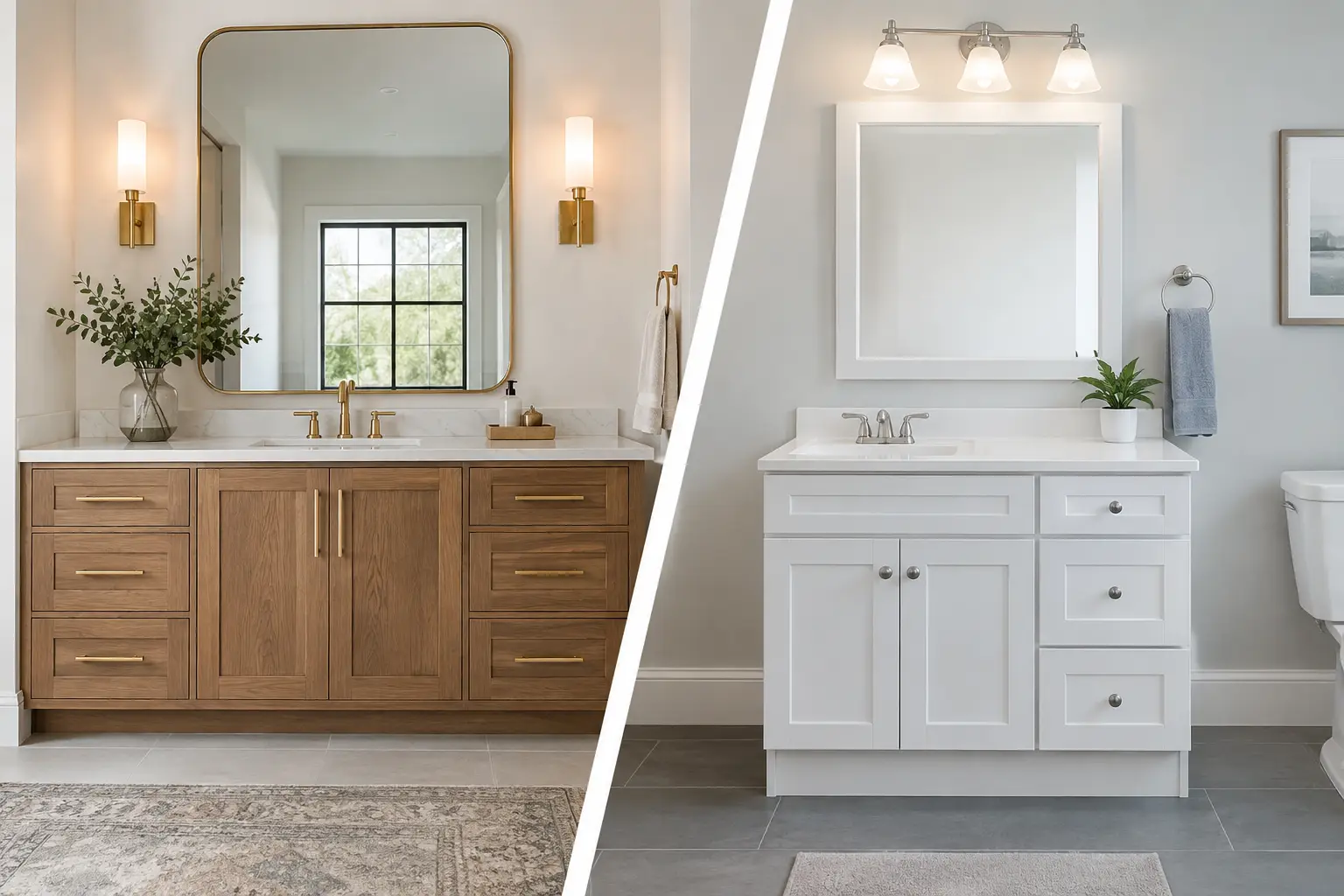
A vanity can make or break a bathroom that otherwise looks well finished. It sets the storage capacity, affects how easily people move through the room, and often determines whether plumbing and power points need to be relocated. When weighing up custom vanity vs stock vanity, the right choice is not simply the most expensive option. It is the one that properly suits your room, household and renovation scope.
For many homes in Caroline Springs and Melbourne’s western suburbs, bathrooms were built with limited space and standard layouts that no longer work for a growing family. A well-planned vanity can recover wasted space, hide plumbing neatly and give everyday items a proper home. The key is to look beyond the showroom finish and consider dimensions, materials, installation and long-term use.
Custom Vanity vs Stock Vanity: The Main Difference
A stock vanity is a pre-made unit supplied in set sizes, finishes and configurations. These units are widely available and can be a sensible choice where the bathroom layout is straightforward. A 600 mm, 750 mm, 900 mm or 1200 mm vanity may fit the available wall space with little or no alteration.
A custom vanity is built or specified for the exact room. Its width, depth, height, drawer layout, finish, benchtop and basin position can be tailored to suit the space. It is particularly useful where walls are out of square, a toilet or shower sits close to the vanity, or existing plumbing does not line up with a standard unit.
Neither option is automatically better. A quality stock vanity installed correctly can be durable and attractive. A custom vanity gives more flexibility, but it comes with additional design decisions, a longer lead time and usually a higher cost.
When a Stock Vanity Makes Sense
Stock vanities work well in bathrooms with a conventional layout and a clear, uninterrupted wall. If the selected size fits neatly, leaves suitable clearance around the toilet and shower, and provides enough storage, there is no need to overcomplicate the job.
They can also help keep a renovation moving. Because the cabinet is already manufactured, the selection process is often quicker than commissioning a made-to-measure piece. This can be helpful for investment properties, secondary bathrooms, laundries and renovations where the existing plumbing position is staying put.
The value is not only in the purchase price. A stock unit can reduce joinery costs and make replacement easier down the track. That said, the unit still needs to be suitable for a wet area. Look for moisture-resistant cabinetry, durable edge sealing, quality drawer runners and a benchtop that will cope with daily splashes and cleaning.
A low-cost vanity can be false economy if thin board swells near the basin, doors lose alignment or drawers cannot handle regular use. The visible finish matters, but the cabinet construction and installation matter more.
Check the measurements before ordering
The most common problem with a stock vanity is choosing it based on wall width alone. The basin projection, door or drawer opening, tap position and walking clearance all need to be allowed for. A vanity that technically fits can still make a compact bathroom feel cramped.
Measure from finished wall surfaces, not from bare framing or old tiles. Also consider skirting, tiled splashbacks, shower screens and the location of plumbing outlets. In a renovation, those details should be confirmed before cabinetry is ordered, not on fit-off day.
When a Custom Vanity Is Worth It
A custom vanity earns its place where standard sizing leaves awkward gaps or forces a compromise. In a narrow ensuite, for example, reducing the depth slightly may improve circulation without sacrificing meaningful storage. In a larger family bathroom, a full-width double vanity with deep drawers may provide a far better result than two small off-the-shelf units.
Custom joinery also gives you control over how the storage works. Deep drawers can hold towels and bottles, while shallower drawers keep grooming items organised. A dedicated section can be built around existing pipework, and a laundry vanity can be designed to work with a benchtop, hamper space or appliances.
The finish can be matched more closely to the rest of the room as well. This is useful when you have chosen a particular tile, timber-look feature or stone benchtop and want the vanity to feel part of the overall design rather than an item added at the end.
Custom does not mean unlimited. The vanity still needs practical clearances, reliable hardware and materials suited to bathroom humidity. It should also allow access to isolation valves and plumbing connections where required. Good design solves problems without making future maintenance difficult.
Cost, Timing and Renovation Scope
The purchase cost of a stock vanity is generally lower, while a custom vanity involves design, manufacture and installation costs. However, comparing cabinet prices alone does not show the full picture.
A stock vanity may become more expensive if it requires extensive plumbing relocation, wall repairs or filler panels to deal with poor fit. On the other hand, a custom vanity may cost more upfront but avoid dead space, improve storage and make better use of a difficult layout.
Timing is another factor. Stock units can sometimes be available quickly, although popular finishes and sizes can still have lead times. Custom pieces need to be measured, approved and manufactured, so they should be planned early in the renovation. Ordering cabinetry before final site measurements are confirmed can create expensive problems, especially where new wall tiles affect the finished dimensions.
For a full bathroom renovation, the vanity should be considered alongside demolition, waterproofing, tiling, plumbing rough-in and electrical work. The basin and tapware affect water connections. Wall-hung vanities may require proper structural support or noggins behind the wall before plastering and tiling. A floor-standing unit may be more forgiving on an uneven floor, but it can make cleaning underneath harder.
Storage and Daily Use Matter More Than Display Appeal
A vanity can look excellent in a showroom but be frustrating at home. Think about who uses the bathroom at the busiest time of day. A couple sharing an ensuite may value twin basins and separate drawers. A family bathroom may need wide drawers for hair products, first-aid supplies and spare towels. In a small powder room, a compact basin and modest cabinet may be all that is needed.
Also consider the basin type. An above-counter vessel basin can look striking, but it changes the required benchtop height and may reduce usable splashback space. An under-mount or inset basin can provide a cleaner working surface and simpler cleaning. These choices influence the vanity design, tap placement and plumbing set-out.
Handles, drawer fronts and finishes should suit the people using the room. Finger-pull profiles offer a clean appearance, while handles can be easier for children or people with limited grip. Matte finishes may hide water marks better than high-gloss surfaces, but both need materials that stand up to moisture.
Make the Decision With the Whole Bathroom in Mind
Choose a stock vanity when it fits the room properly, offers the storage you need and suits the renovation budget without forcing compromises elsewhere. Choose custom when the layout is tight, the space is irregular, storage needs are specific or the bathroom deserves a tailored finish.
The best result comes from planning the vanity before plumbing and tiling are locked in. At BP Building & Maintenance, we look at the complete bathroom rather than treating the vanity as a last-minute purchase. That means checking the layout, service positions, wall support and finished dimensions so the cabinetry fits as it should.
A bathroom should work just as well on a busy weekday morning as it does the day it is finished. Start with the way you use the room, then select the vanity that makes that routine easier for years to come.