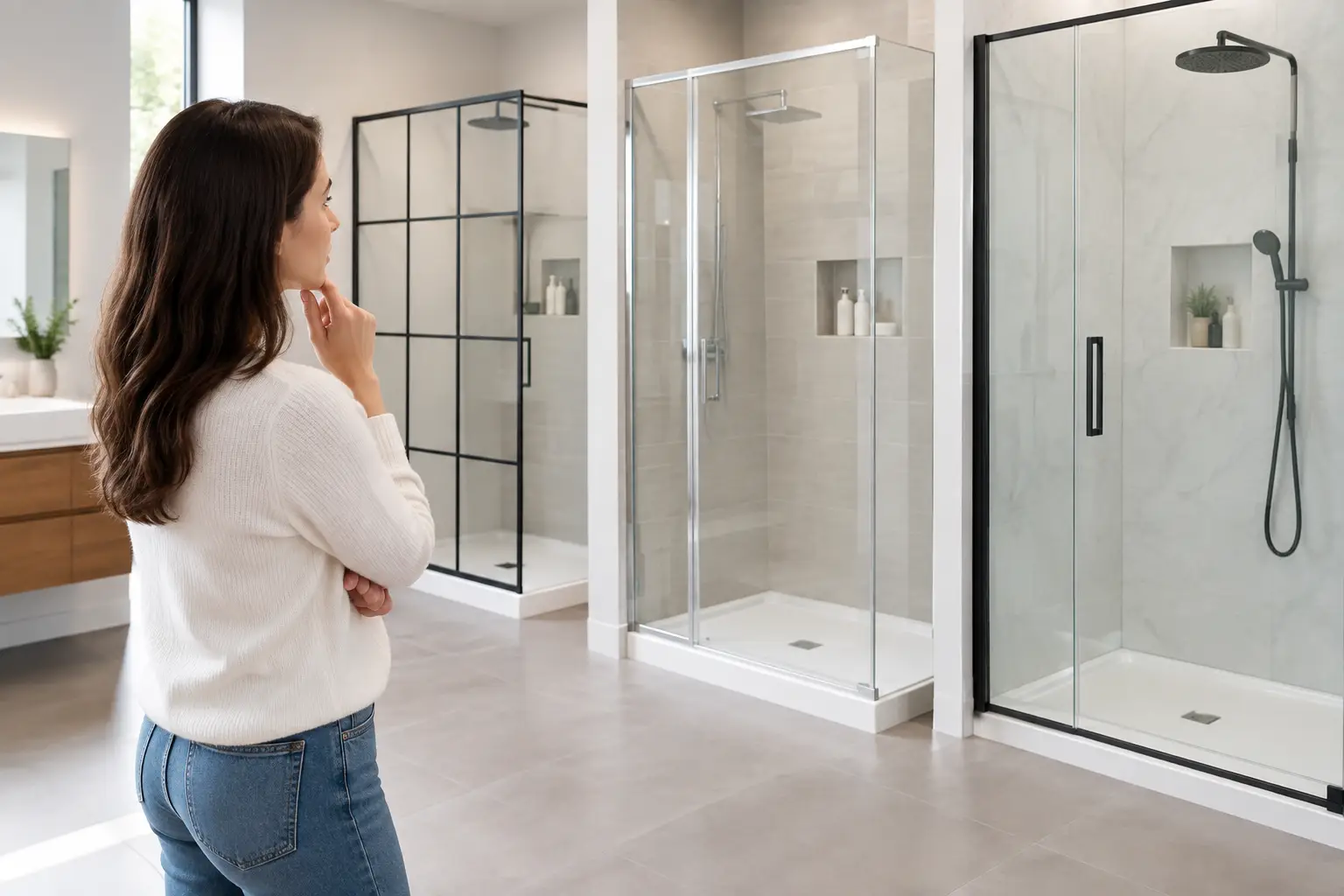
A shower screen can make a compact bathroom feel open and modern, or make it frustrating to use every morning. Knowing how to choose a shower screen means looking beyond the glass. The right choice needs to suit the room’s layout, the people using it, the drainage design and the level of cleaning you are prepared to do.
For a full bathroom renovation, the screen should be selected early rather than treated as a final add-on. Its size, fixing points and door swing can affect tile set-out, shower recess dimensions, plumbing positions and even where a vanity can sit comfortably.
Start with the bathroom layout
The best shower screen is one that allows people to move through the bathroom without squeezing past a door or stepping around a wet floor. Measure the available shower area, but also consider the clearance around it. A screen that looks right on a plan can be impractical once a toilet, vanity drawers and towel rail are in place.
In smaller bathrooms, a fixed walk-in panel is often a clean option. There is no door to open, fewer moving parts and less hardware to maintain. However, it needs enough screen length and a well-designed shower area to contain spray. A walk-in layout that is too open can leave water outside the shower zone, particularly when used by children or anyone who prefers a strong shower head.
A hinged door offers a more enclosed shower and better water containment, but the door needs clear swing space. Sliding doors can work well where there is limited room in front of the shower, although their tracks and rollers require more regular cleaning than a simple fixed panel. Pivot doors are another practical option, provided the opening direction has been properly planned.
Choose the screen style to suit how you use the room
Frameless, semi-frameless and fully framed screens each have a place. The best option depends on the budget, style of the renovation and the condition of the surrounding walls.
Frameless shower screens
Frameless glass creates a sharp, open finish and is a popular choice for contemporary bathrooms. With minimal visible hardware, it lets feature tiles and quality tapware stand out. It is particularly effective in a walk-in shower where the aim is to make the room feel larger.
The trade-off is that frameless screens rely on accurate measurements, sound wall fixing and quality installation. Walls must be plumb enough for the glass to align correctly, and the screen should be measured after tiling is complete. Trying to finalise glass sizes too early can lead to unnecessary adjustments or poor gaps around the edges.
Semi-frameless shower screens
Semi-frameless designs combine cleaner glass lines with a frame around selected edges. They are generally more forgiving where walls are slightly out of square, and they can offer good water control at a lower price point than fully frameless glass.
For many family bathrooms, this is a sensible middle ground. You still get a modern result without paying for every last minimal-detail feature.
Fully framed shower screens
A fully framed screen is often the most budget-conscious option. The frame provides structure, helps accommodate minor irregularities and can improve water sealing around the perimeter. It may not have the same high-end appearance as frameless glass, but it remains a practical choice for investment properties, secondary bathrooms and renovations where value matters most.
Select safe glass and reliable hardware
A shower screen is a safety item as well as a design feature. Bathroom glass should be toughened safety glass and installed in line with relevant Australian requirements. Quality glass, correctly positioned hinges and properly fixed channels are not areas to cut corners.
Ask what glass thickness is being supplied and how the screen will be secured. Thicker glass can give a more solid feel, especially on larger fixed panels and hinged doors, but heavier glass also places greater demands on the wall structure and hardware. The best specification is not always the thickest one. It is the one suited to the panel size, configuration and fixing conditions.
Hardware finish matters as well. Chrome is versatile and easy to match, while matte black, brushed nickel and brushed brass can tie the screen into the room’s tapware. Dark finishes can show water spots more readily in hard-water areas, so consider the cleaning routine before choosing purely on appearance.
Hinges, handles and channels should feel firm and operate smoothly. A door that drops, rubs on the floor or fails to close properly is usually a sign that the installation or hardware quality needs attention.
Get the size and shower entry right
When deciding how to choose a shower screen, do not focus only on the overall width. The usable entry opening is just as important. A narrow opening can make the shower awkward for larger adults, older family members or anyone assisting young children.
Think about who will use the bathroom over the next five to ten years. A spacious walk-in entry can make a bathroom more comfortable as mobility needs change. On the other hand, a completely open entry may not suit a busy family bathroom where water containment is the priority.
For a door screen, check that the handle will not clash with a vanity, toilet, heated towel rail or other fixture. Allow for practical access to the shower controls too. Ideally, you should be able to turn the shower on without standing directly under cold water, depending on the layout.
Match the screen to drainage and waterproofing
A good screen cannot solve poor falls or failed waterproofing. Water needs to drain efficiently towards the floor waste, with the shower area designed to minimise pooling at the screen opening.
This is especially relevant for walk-in showers and doorless screens. The position of the shower head, screen return, floor gradient and drain all work together. If the shower head sprays directly towards an open edge, even a large panel may not prevent water escaping.
The waterproofing system must also be completed correctly behind the tiles and at all shower junctions. A screen is fixed over finished surfaces, but the waterproofing underneath is what protects the structure of the home. During a renovation, it makes sense to have the shower design, waterproofing, tiling and screen installation considered as one job rather than handled in isolation.
Consider cleaning before choosing the finish
Every shower screen needs cleaning, but some designs make the job easier. Frameless panels have fewer tracks and corners where soap residue can build up. Sliding doors, by comparison, can collect grime around rollers and bottom tracks if they are not maintained.
A protective glass coating may help reduce water marks, but it is not a replacement for regular cleaning. A quick squeegee after use and a suitable non-abrasive cleaner will help keep glass clear and hardware looking better for longer. Avoid harsh products that can damage protective coatings or dull metal finishes.
If low maintenance is a priority, a simple fixed panel or hinged frameless door is often easier to live with than a complicated multi-panel configuration.
Do not measure for glass until the room is ready
Final shower screen measurements should be taken after wall tiles and floor tiles are installed. Tile thickness, adhesive build-up, wall variation and finished floor levels all affect the final size. This is one reason made-to-measure screens tend to deliver a neater result than trying to make a standard-size unit fit an unfinished opening.
It is also worth checking what sits behind the wall tiles where hinges or channels will be fixed. Proper backing or suitable fixing locations help ensure the screen is secure without compromising the finished surface. An experienced bathroom renovator will coordinate these details before the walls are closed and tiled.
Make the decision with the whole renovation in mind
The right shower screen should support the way the bathroom works, not just finish it off visually. In Caroline Springs and across Melbourne’s western suburbs, BP Building & Maintenance plans shower screens alongside the waterproofing, tiling, plumbing and fit-off work, so the finished bathroom is practical as well as polished.
Choose a design that gives you enough access, contains water where it needs to, suits your cleaning habits and is installed with care. Those details are what turn a good-looking shower screen into one that still performs properly years after the renovation is complete.