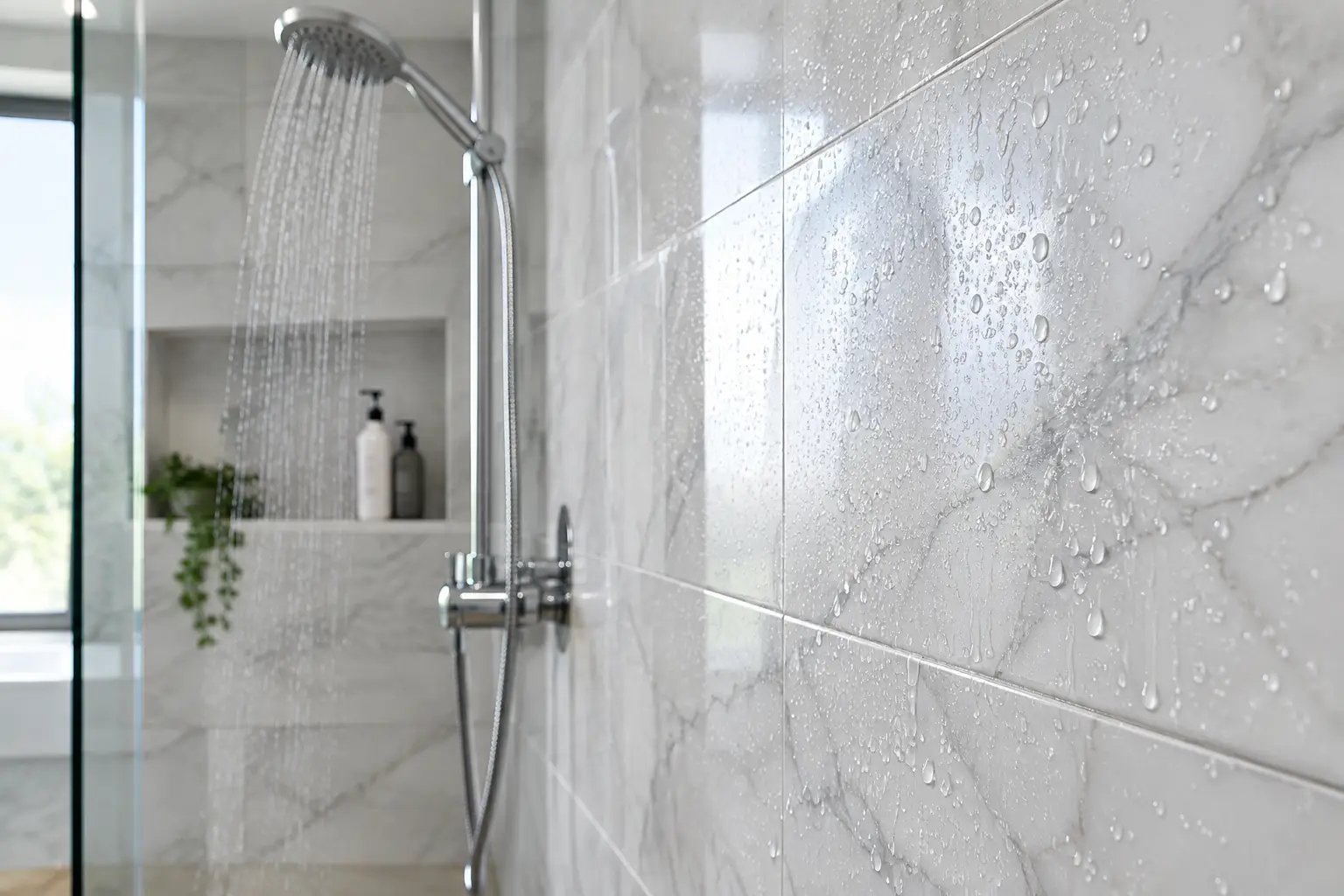
A shower can look perfectly finished while water is slowly getting behind the tiles. That is why homeowners often ask, are wall tiles waterproof? The short answer is no. Many wall tiles resist water very well, but the tiled surface is not the waterproofing system that protects the wall framing, adjoining rooms or floor structure.
In a properly renovated bathroom, tiles are the durable, easy-clean finish you see. The waterproof membrane behind them is the critical layer that keeps water where it belongs. Get that order wrong, or cut corners around joints and plumbing penetrations, and an otherwise attractive bathroom can become an expensive repair job.
Are Wall Tiles Waterproof on Their Own?
Porcelain and ceramic wall tiles are generally highly water-resistant. Porcelain, in particular, has very low water absorption, which makes it a practical choice for showers, bathroom walls and other wet areas. Natural stone and some handmade tiles can be more porous and may require sealing, but even a dense porcelain tile does not make the whole wall waterproof.
The issue is the joins. Every tiled wall has grout lines, internal corners, movement joints, tile edges and openings where taps, shower rails and mixers come through. Water can work through or around these points over time. Grout is not a waterproof barrier. It is a cement-based finishing material that fills the gap between tiles, and it can absorb moisture, crack or deteriorate.
Silicone at the wall-to-wall and wall-to-floor junctions is also essential, but it is not a substitute for waterproofing behind the tiles. Silicone manages movement and seals exposed corners. The membrane does the serious work behind the surface.
What Actually Makes a Bathroom Wall Waterproof?
A waterproof bathroom wall is built as a system. The substrate must be suitable and properly prepared, the membrane must be applied to the required areas, and the tiling needs to be installed without damaging that barrier.
In a shower, waterproofing commonly extends across the shower walls and floor, with careful treatment at corners, hob or walk-in shower transitions, drains and plumbing penetrations. The exact requirements depend on the bathroom layout, construction type and applicable Australian standards. A qualified waterproofer will assess the wet-area zones rather than applying a one-size-fits-all approach.
Before membrane is applied, the wall sheeting and framing need to be sound, plumb and dry. There is little value in applying high-quality waterproofing over unstable backing boards, swollen materials or poorly prepared surfaces. Movement in the wall can later crack grout, break silicone seals and place stress on tiles.
The membrane is then installed in multiple coats or as part of an approved system, with reinforcing fabric or banding at changes of direction and other vulnerable areas. It must cure properly before tiling begins. Rushing this stage to save a day can compromise adhesion and performance.
Why Grout and Silicone Still Matter
Although grout and silicone are not the primary waterproof layer, they remain important to the lifespan and appearance of a bathroom. Sound grout supports the tile edges and helps keep routine shower water from sitting in open gaps. Flexible silicone allows for normal building movement where rigid grout would crack.
Grout can fail for several reasons. Poor mixing, inadequate tile preparation, movement in the substrate, harsh cleaning products and general age can all contribute. Cracked grout should not be ignored, particularly in a shower recess, but simply regrouting is not always the complete answer. If water damage is already occurring behind the tiles, the cause needs to be investigated before surface repairs are carried out.
Silicone also has a service life. Mould, separation from the tile edge or gaps around a shower screen are signs it may need replacing. Re-siliconing is worthwhile maintenance when the underlying waterproofing is intact. It cannot repair a failed membrane behind the wall.
The Weak Points Behind Most Tile Leaks
Leaks rarely happen through the middle of a well-laid porcelain tile. They usually begin at the detail work. Plumbing penetrations are a common example. Mixer bodies, taps and outlets need correct waterproofing treatment before the wall is tiled, then neat finishing around the visible fittings.
Internal corners, niches and shower screens also need careful attention. A recessed shampoo niche is useful, but it adds more corners, ledges and junctions where water can sit. It should be properly formed, waterproofed and tiled with appropriate falls so water does not pool on the shelf.
Walk-in showers require the same level of care. Their clean, open look can be excellent for access and modern bathroom design, but the floor falls, drainage position and waterproofing transition need to work together. A shower that drains slowly or allows water to escape into adjoining areas is not a cosmetic issue.
Other warning signs include loose tiles, recurring mould in the same area, peeling paint on the other side of a bathroom wall, swollen skirting boards, musty smells and staining below an upstairs bathroom. None automatically proves a membrane failure, but each is worth checking before the damage spreads.
Can You Make Existing Tiled Walls Waterproof?
There are products marketed as grout sealers and surface sealers. These can reduce staining and moisture absorption in certain tile and grout types, especially natural stone. They can be useful as part of ongoing care, but they do not turn an existing tiled wall into a properly waterproof wet area.
A clear sealer cannot bridge failed joints, repair a cracked substrate or create the continuous membrane needed behind tiles. If a shower is leaking because the waterproofing has failed, the reliable solution is usually to remove the affected finishes, inspect the wall and rebuild the area correctly.
The scope depends on the cause. Sometimes a local repair is possible, such as replacing failed silicone or addressing a damaged fitting. In other cases, particularly with an older shower recess or widespread hollow tiles, a full strip-out and rebuild is the better long-term decision. It avoids spending money twice on surface fixes that do not solve the underlying problem.
What to Expect During a Proper Bathroom Renovation
Waterproofing should not be an invisible afterthought. During a complete bathroom renovation, it sits between the preparation work and the tiling stage, and it should be treated as a key quality checkpoint.
A well-managed process starts with demolition and inspection. Old tiles, screeds and wall linings are removed as needed, allowing hidden water damage, plumbing issues and unsuitable substrates to be identified. The trades can then complete plumbing rough-in, carpentry adjustments and wall or floor preparation before waterproofing begins.
Once the membrane has been applied and cured, tiling can proceed with the right falls, tile layout and joint spacing. Fixtures, shower screens, vanities and accessories are installed after the wet-area work is complete. This sequence protects the waterproofing and produces a cleaner finish around every penetration and junction.
For homeowners in Caroline Springs and Melbourne’s western suburbs, the practical question is not simply whether the chosen tile is waterproof. It is whether the bathroom has been built by people who understand how every layer works together. BP Building & Maintenance coordinates qualified trades across the full renovation process, including certified waterproofing, plumbing and tiling, so the finish is backed by sound preparation.
Choosing Tiles Without Overlooking the Waterproofing
Choose wall tiles based on the look, maintenance level and budget that suit your home. Porcelain is a dependable option for most bathrooms because it is durable, low-absorption and available in a wide range of sizes and finishes. Larger tiles can mean fewer grout lines, though they need a flat substrate and careful handling to achieve a clean result.
Natural stone can create a premium look but requires more ongoing care. Textured tiles may improve visual interest, yet highly textured finishes can be harder to clean in a shower. These are worthwhile design discussions, but they should come after the waterproofing method, substrate condition and shower layout have been properly resolved.
A bathroom should not rely on grout, sealant or a good-looking tile to hold back water. It should rely on a correctly installed waterproofing system, with tiles providing the durable finish on top. If you are planning a renovation or concerned about a leaking shower, getting the wet-area construction assessed early is the simplest way to protect the home behind the tiles.