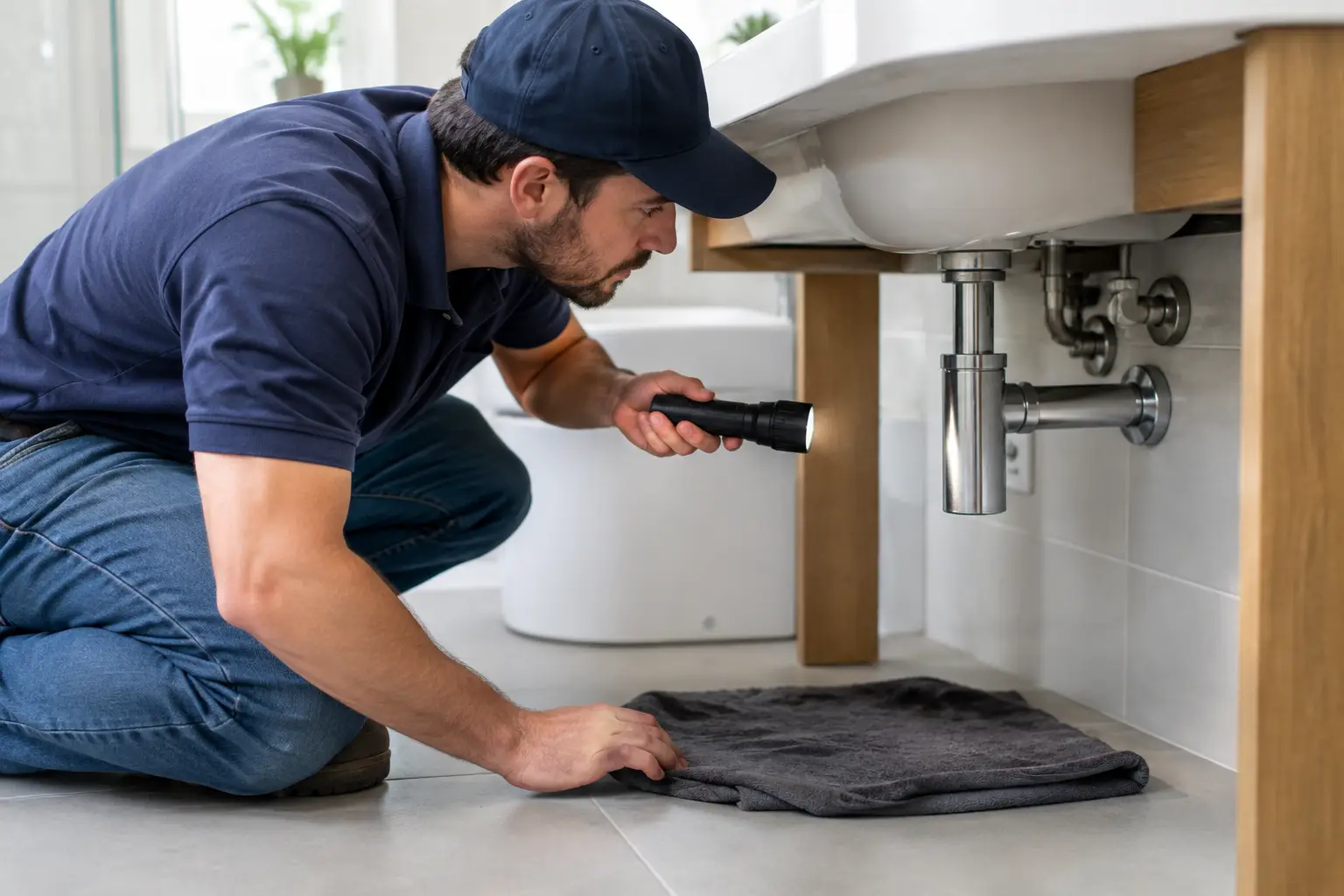
A bathroom leak rarely starts with water pouring through the ceiling. More often, it begins with a loose shower screen seal, a failed waterproofing membrane behind the tiles, or a slow pipe leak hidden inside a wall. By the time paint bubbles, tiles loosen or mould appears, the damage may already extend well beyond the bathroom.
For homeowners asking what causes bathroom leaks, the short answer is that water has found a path past the surfaces and systems designed to contain it. Finding that path properly matters. Replacing a few cracked tiles or adding more silicone can make the room look better, but it will not fix a failed membrane or leaking pipework underneath.
The most common causes of bathroom leaks
Bathrooms are wet areas, so every part of the build needs to work together: plumbing, drainage, waterproofing, tiling, sealing and ventilation. A fault in any one area can allow moisture into floors, walls and adjoining rooms.
Failed or damaged waterproofing
Waterproofing is the barrier behind the finished surface. It protects the structure when water passes through grout lines, around fixtures or into the shower area. Tiles and grout are not waterproof on their own, despite what many people assume.
A membrane can fail because it was applied poorly, damaged during tiling, not carried high enough on shower walls, or not correctly treated at corners, wall-to-floor junctions and pipe penetrations. In older bathrooms, the waterproofing may simply have reached the end of its serviceable life.
This is one of the more serious causes of bathroom leaks because the problem is concealed. You may notice a persistent musty smell, swollen skirting boards in the next room, flaking paint, loose tiles or discolouration on a ceiling below. In a ground-floor bathroom on a concrete slab, the signs can be less obvious, but the moisture can still damage wall framing, cabinetry and surrounding finishes.
Cracked grout, failed silicone and worn seals
Grout and silicone have different jobs. Grout fills the gaps between tiles, while flexible silicone seals movement joints, corners, shower screens, baths and vanity edges. Both wear over time.
Cracked grout may let more water reach the substrate, especially in a heavily used shower. Failed silicone is often more immediately troublesome because it opens a direct gap at a corner or fixture. Blackened, lifting, split or missing silicone should be dealt with promptly.
However, there is a trade-off here. Regrouting or resealing can be a sensible maintenance repair where the underlying waterproofing is sound. It is not a reliable cure for a leak caused by failed waterproofing behind the tiles. A proper inspection helps separate a surface-maintenance issue from a renovation-level problem.
Leaking pipes and plumbing connections
Not every bathroom leak comes from the shower. Water supply pipes, waste pipes, tap bodies, toilet connections, mixers and flexi hoses can all leak inside cabinetry, walls or floors.
A pressure leak from a water line may appear even when nobody is using the bathroom. A waste-pipe leak usually shows up only when the basin, shower or bath is draining. Toilets can leak at the pan collar or cistern connection, while a loose basin waste may cause damage inside the vanity long before water becomes visible on the floor.
These faults need a registered plumber. The source may be behind a wall, under a floor or inside a vanity, and guessing can lead to unnecessary demolition. A plumber can assess the pipework, connections and drainage before repair work is planned.
Poor shower drainage and incorrect falls
Water should run towards the floor waste, not sit along the shower edge or travel out into the bathroom. If a shower floor has poor falls, an incorrectly placed drain or a low shower screen, water can escape every time the shower is used.
Ponding is more than an annoyance. Standing water puts extra pressure on grout, seals and waterproofing, and it can soak into the bathroom floor outside the shower. A walk-in shower needs particularly careful design because it relies on correctly formed falls and a well-detailed waterproofing system rather than a raised shower base.
Sometimes the issue is as simple as a blocked floor waste. Hair, soap residue and general build-up can slow drainage and cause water to back up. If cleaning the waste does not improve it, the drainage layout or pipework may need investigation.
Cracked tiles and movement in the substrate
A cracked tile does not always mean the bathroom is leaking, but it should not be ignored. Tiles can crack because of impact, movement in the floor or walls, inadequate substrate preparation, or a lack of movement joints.
When tiles sound hollow, lift, crack in a pattern or separate at the joints, there may be moisture affecting the adhesive or movement beneath the tile bed. Simply replacing the visible cracked tile may be possible in a localised area, but widespread cracking or drummy tiles calls for a closer look at the substrate and waterproofing.
Shower screens, baths and fixtures that are not sealed correctly
The junctions around showers, baths, vanities and toilets are common weak points. A shower screen can leak where it meets the wall or floor. A bath may allow water down the wall cavity if the wall junction has not been sealed and waterproofed correctly. A vanity that is tight against a tiled wall can hide a slow leak from the basin waste or tap connections.
Water can also enter around poorly sealed pipe penetrations. These small openings are easy to overlook, yet they are exactly where water tends to track behind finishes. Good wet-area work pays close attention to these details, not just the tiles you can see.
Why bathroom leaks can become expensive quickly
Water follows gravity, gaps and framing. A leak from an upstairs ensuite can damage ceilings, insulation, electrical fittings and rooms below. On a single level home, moisture may travel into adjoining bedrooms, hallways or kitchen walls before it becomes obvious.
Mould is another concern. It thrives where materials stay damp, particularly behind vanities, within wall cavities and under flooring. Ventilation helps manage steam and condensation, but an exhaust fan cannot solve water entering through a failed membrane or pipe connection.
There is also the question of compliance. Bathroom waterproofing is specialist work with requirements around substrate preparation, membrane application and detailing. Cutting corners during a renovation may save money at the start, but rectifying a leaking bathroom often means removing tiles, fixtures and sometimes wall linings to reach the cause.
Signs you should arrange an inspection
A one-off splash outside the shower is not necessarily a building issue. Repeated signs of moisture, however, deserve professional attention. Watch for:
- peeling or bubbling paint on walls, ceilings or nearby skirting boards
- mould or persistent musty smells that return after cleaning
- loose, cracked or hollow-sounding tiles
- swelling vanity panels, warped flooring or staining in an adjoining room
- water pooling away from the floor waste or leaking from the shower screen
- unusually high water bills or a water meter that continues moving when taps are off
If water is visible near electrical fittings, turn off the affected circuit if it is safe to do so and arrange urgent professional help. Do not keep using the shower while water is reaching a ceiling below or spreading into another room.
The right fix depends on the source
The best repair is not always a full bathroom renovation. A leaking flexi hose, failed basin waste or deteriorated shower seal may be resolved with a targeted repair. That is why diagnosis comes first.
Where a bathroom has widespread tile movement, leaking shower areas, damaged wall linings or failed waterproofing, a more complete strip-out may be the honest option. This allows the structure to dry, defective materials to be removed, plumbing to be checked, and a new waterproofing system to be installed before tiling and fit-off. It is more involved, but it addresses the cause rather than covering up the symptoms.
For homes in Caroline Springs and Melbourne’s western suburbs, BP Building & Maintenance can assess bathroom leak concerns as part of a planned bathroom upgrade or rectification project. The work should be managed by qualified trades who understand plumbing, waterproofing, carpentry and tiling as one connected system.
A bathroom should handle daily showers without making you inspect the ceiling below. If the same damp patch, mould growth or shower leak keeps returning, treat it as a signal to find the source properly before a minor repair becomes a major rebuild.