A bathroom can look freshly renovated on handover day and still cause problems within a few years if the work behind the tiles has been rushed. The bathroom renovation trends 2026 homeowners should pay attention to are not just about colours or tapware. They focus on better layouts, easier cleaning, improved comfort and materials that hold up to daily family use.
For homes across Melbourne’s western suburbs, the best bathroom choices are practical as well as current. A well-designed space should work on a busy weekday morning, cope with moisture properly and add lasting value to the home. Here is what is shaping bathroom renovations in 2026, and where it pays to think beyond the showroom display.
Bathroom renovation trends 2026: warmth with purpose
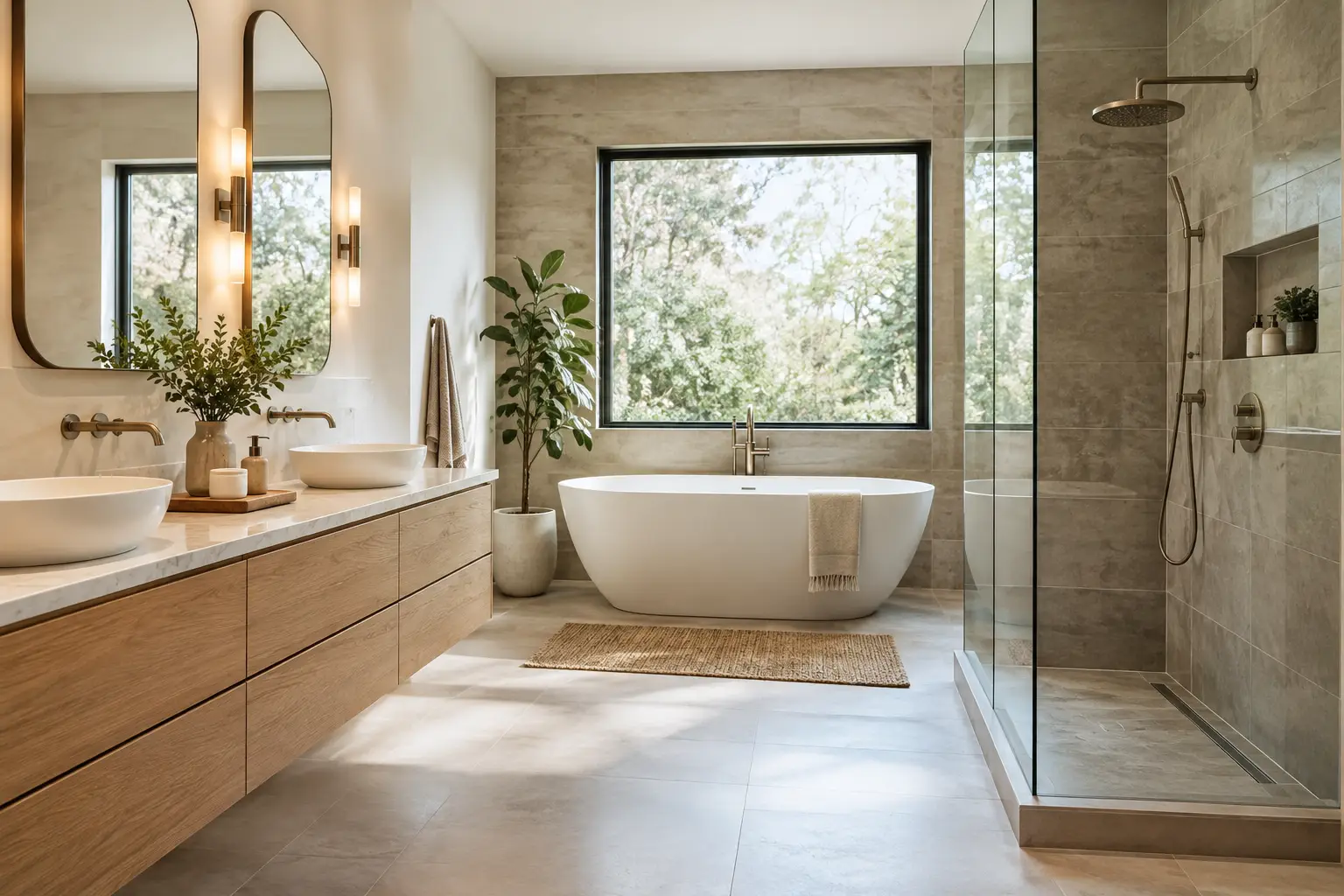
Cool grey bathrooms had a long run, but 2026 is moving towards warmer, more grounded finishes. Soft stone colours, clay tones, warm whites, muted greens and natural timber-look surfaces are replacing harsh all-grey schemes. The result is a bathroom that feels less clinical without becoming difficult to match or date quickly.
Large-format tiles remain popular because fewer grout lines can make a room feel more open and reduce cleaning. In a compact ensuite, a light warm-toned tile carried across floor and walls can create a calmer, more generous feel. In larger bathrooms, homeowners are using a feature tile in the shower recess or behind the vanity to add character without covering every surface in a bold pattern.
Texture is also being used more carefully. Fluted vanity fronts, handmade-look wall tiles and brushed metal tapware give a bathroom depth that flat finishes can lack. The trade-off is maintenance. Deeply textured tiles and overly matte black fixtures may show soap residue, hard-water marks or dust more readily. Choose a finish you are prepared to clean, not only one that looks good under showroom lighting.
Timber-look vanities and stone-style tops
Custom vanities are becoming a key part of the design rather than an item chosen at the end. Wall-hung units are still a strong option, particularly in smaller rooms, as they reveal more floor and make cleaning easier. Timber-look cabinetry adds warmth, while a durable stone-style or porcelain top provides a hard-wearing surface around the basin.
Storage should be planned early. Deep drawers, internal organisers and mirrored shaving cabinets keep benchtops clearer than a vanity with one large, awkward cupboard. For family bathrooms, allow room for towels, cleaning products and the everyday items that otherwise end up on the floor.
Walk-in showers designed for real life
Walk-in showers continue to lead 2026 bathroom design, but the best versions are designed around water control, access and cleaning. A fixed glass panel can give the open look homeowners want while keeping splashing contained. Recessed shower niches provide useful storage without adding wire shelves or cluttering the floor.
A curbless or low-profile shower entry is increasingly requested by homeowners planning to stay in their property long term. It can make the room feel larger and improve access for children, older family members or anyone with limited mobility. However, it must be correctly planned with the right falls, drainage and waterproofing details. This is not an area for shortcuts.
Linear drains are another popular choice, especially where large tiles are used. They can simplify the tile fall and create a clean finish, but their placement should suit the room layout and plumbing requirements. In some homes, a standard centre drain is the more sensible and cost-effective option.
Freestanding baths, used selectively
Freestanding baths are still appealing in spacious main bathrooms, particularly when there is a genuine place for one to sit comfortably. They create a strong visual focal point and suit homeowners who use a bath regularly.
In a tight room, though, a freestanding bath can consume valuable floor space and make cleaning more difficult. A built-in bath with a tiled hob may offer better practicality for young families, especially if it includes a shower over bath arrangement. The trend worth following is not simply adding a statement bath. It is selecting the bathing option that suits how the household lives.
Better lighting and less visual clutter
Bathrooms in 2026 are moving away from a single central light fitting. Layered lighting gives better results: general lighting for the room, task lighting at the mirror and softer lighting for early starts or late-night use. Vertical lights beside a mirror, or a well-positioned backlit mirror, can reduce the shadows that make shaving and applying make-up harder.
Electrical work must be planned alongside the layout. Mirror size, vanity height, power point placement, exhaust fan location and lighting zones all need consideration before wall linings and tiles go on. Making these decisions early avoids visible compromises later.
Concealed cisterns, in-wall niches and recessed cabinets support the cleaner, less cluttered look many homeowners want. They can be worthwhile, but access for future servicing needs to be considered. A neat finish should never come at the expense of being unable to repair a component when needed.
Sustainability that improves day-to-day use
Sustainability in bathroom renovations is becoming less about a single eco label and more about making sensible, durable choices. Water-efficient tapware, shower heads and toilets can reduce water use without sacrificing a comfortable experience when the products are selected and installed properly.
Durability matters just as much. Replacing a cheap vanity, poorly sealed shower or failing tapware after only a few years creates more cost and waste than choosing reliable materials from the start. Porcelain tiles, quality mixers, moisture-resistant cabinetry and correctly installed exhaust ventilation are practical investments.
Good ventilation deserves particular attention in Melbourne homes. An underpowered or poorly located exhaust fan can leave moisture sitting in the room, contributing to mould, peeling paint and swollen cabinetry. The right solution depends on room size, the presence of windows and the existing ducting path, but it should be part of the renovation scope rather than an afterthought.
The non-negotiable trend: work behind the tiles
The most valuable bathroom renovation trend for 2026 will never be the one photographed for social media. It is proper preparation behind the finished surfaces. Waterproofing, plumbing rough-in, substrate preparation, tile falls and junction detailing determine whether a bathroom performs over time.
A walk-in shower needs a correctly formed base and appropriate falls so water drains where it should. Wall and floor surfaces need to be prepared for the selected tile and finish. Plumbing locations need to be confirmed before tiling begins, particularly when changing a vanity, shower position or toilet layout.
This is why a complete renovation should be managed as one coordinated job, not a collection of disconnected tasks. Demolition can reveal concealed damage, uneven framing or old plumbing that affects the plan. Allowing for these possibilities and using qualified trades helps protect the finished result.
For homeowners in Caroline Springs and surrounding western suburbs, working with a renovation team that can manage demolition, plumbing, waterproofing, carpentry, tiling and fit-off removes much of the uncertainty. BP Building & Maintenance approaches bathroom work with that full-project mindset, with attention on the details that must be right before the final fixtures are installed.
Choose trends that suit your home, budget and routine
A successful renovation does not need every 2026 feature. Start with the problems your current bathroom creates. Perhaps the shower leaks, the vanity offers no storage, the lighting is poor or the layout wastes space. Addressing those issues first will guide better design decisions than copying a display bathroom wholesale.
Keep your tile selections and main fixtures timeless, then add personality through mirrors, handles, paint tones or a feature tile. These are easier to update later than a full room of highly distinctive finishes. If budget needs to be controlled, direct more of it towards waterproofing, drainage, plumbing and durable surfaces before spending heavily on decorative extras.
The right bathroom should feel current now and continue working properly for years. Begin with a clear scope, choose finishes that suit your cleaning routine, and make sure the work behind the tiles receives the same care as the finishes everyone can see.